An Address in Switzerland—Christmas 1943

The following address from among Stanley Thomas Dunn’s papers from the war appears to be remarks given before a Christmas evening dinner at the Sonne Wolfertswil—the Sonne Restaurant—in Flawil, a municipality in the canton of St. Gallen, Switzerland.

See “Stanley Thomas Dunn” for more details.

A Christmas Address

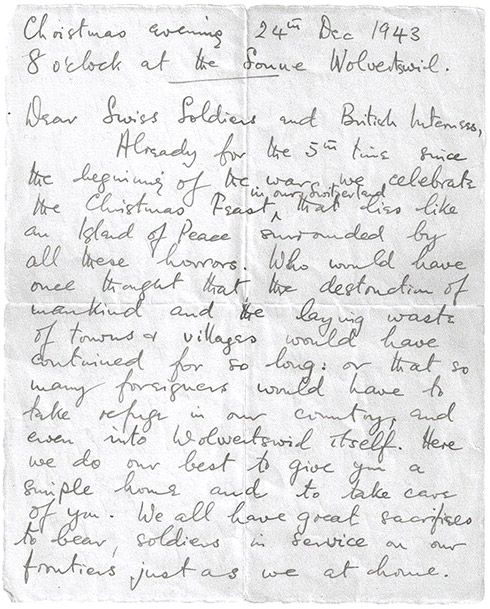
Christmas Evening 24th Dec 1943 8 o’clock at the Sonne Wolvertswid.

Dear Swiss Soldiers and British Internees,

Already for the 5th time since the beginning of the war we celebrate the Christmas Feast in our Switzerland that lies like an Island of Peace surrounded by all these horrors. Who would have once thought that the destruction of mankind and the laying waste of towns & villages would have continued for so long; or that so many foreigners would have to take refuge in our country, and even into Wolvertswid itself. Here we do our best to give you a simple home and to take care of you. We all have great sacrifices to bear, soldiers in service on our frontiers just as we have at home.

Your thoughts will naturally be at home with your dear ones; your fathers, mothers & sweethearts and children which we quite understand. When will they see you again and embrace you with the desire “For no more war in all the world.” So let us celebrate Christmas in my family circle simply & modestly. This little celebration will bring us nearer to one another until the star of peace shines brighter and you will be at your own fireside. We hope and pray that this desire will bring the reality “Peace be unto men of good will”.

So only take courage brothers; tomorrow cares and troubles will be swept away and the sun will shine again on our native land. Above all we thank you especially for your excellent behavior and chivalry.

We wish you luck and a very Merry Christmas.

from Loser Hofstetter his family and children.
Continue reading

Stanley Thomas Dunn

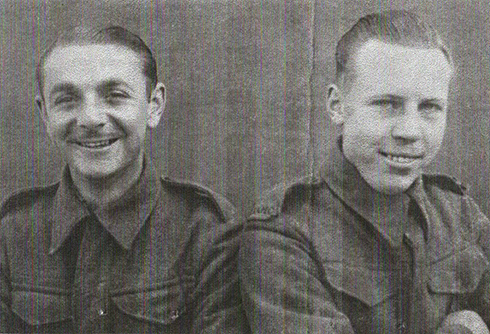
At left, Stanley Thomas Dunn, 5th Battalion Royal Tank Regiment; at right, James (Jimmy) Peters, Royal Army Medical Corps. Photo taken in Camp 59, Servigliano.

My friend Anne Copley met Vanda Jessopp and her husband Peter last November at the 2017 Fontanellato–Monte San Martino Trust Luncheon in London. They have since exchanged information about Vanda’s father, Stanley Dunn, that they are allowing me to share here.

Stanley Thomas Dunn (Trooper 7908395, 5th Battalion, Royal Tank Regiment), was captured in North Africa on April 8, 1941.

He was born November 6, 1919. He died February 22, 2003.

Here is the apparent chronology of his internments:

From Africa, Stanley was transported to Sicily (where the POWs built a road). From Sicily he was sent to Servigliano (P.G. 59), then Fontanellato (P.G. 49), and finally Sforzesca (P.G. 146/18). He escaped from Sforzesca and in time was able to make his way to Switzerland, where he lived in Camp d’Eoades in Arosa, Switzerland, until his repatriation.

It’s somewhat of a mystery why Stanley would have been sent from Servigliano, which was an “other ranks” camp to Fontanellato, which was an officers’ camp before being transferred to Sforzesca.

After his escape in Italy, Stanley was helped by Eric Newby’s wife-to-be Wanda Skof.

British travel writer Eric Newby, who during the Second World War served in the Black Watch and Special Boat Section, was captured in August 1942. He escaped from Fontanellato POW camp after the Italian Armistice and was befriended by Wanda Skof, a Slovenian woman living with her family nearby. Eric married Wanda after the war.

Continue reading

Douglas Allum’s Camp 59 Prisoner List

I’ve exchanged several notes with Bruce Allum throughout 2017. Bruce’s father, Douglas Walter Allum, Service Number 2585112, Royal Signals (2nd Middlesex Yeomanry) was captured in Libya on December 29, 1941.

Douglas was in P.G. 66 Capua (February 2–March 10, 1942), P.G. 59 Servigliano (March 11, 1942–June 2, 1943) and P.G. 146/18 Sforzesca (June 3–September 10, 1943), before escaping and making his way to Switzerland on November 17, 1943.

He passed away on November 6, 2014.

Bruce sent me a two-page prisoner list kept by his father. A note at the bottom of the list indicates “All at Campo P.G. 59.” It contains details on rank, bed, section, and hut.

On the list, there are check marks after four names; a different kind of mark precedes 12 names. There is no indication what these marks signify.

Continue reading

Escaped Prisoners and Airman at Fontanaluccia

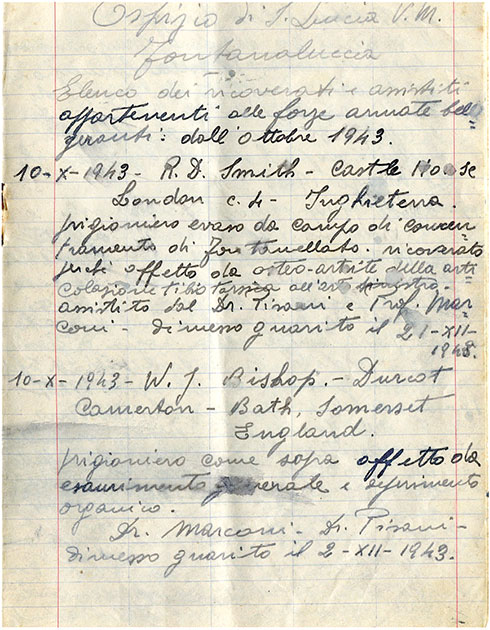
A page from the register of the Partisan Hospital of Santa Lucia

I received valuable information from Italian researcher Michele Becchi several days ago.

He wrote, “I’m sending to you a page from the register of the Partisan Hospital of Santa Lucia, in the village of Fontanaluccia, not far from Montefiorino (the partisan republic).

“There are names of British ex-POWs that may be interest you.

“In the register are also some names of Allied pilots, Russians, and Germans.”

“The word ‘ospizio’ means hospital but also nursing home. Don Mario Prandi, the parish priest of Fontanaluccia, opened it in the ’30s and during the war, with the help of some antifascist doctors, it became one of the four or five partisan health centers of the mountains open to partisans, prisoners, civilians, and anyone needing help. The acronym ‘S. Lucia V.M.’ is a religious abbreviation for ‘Santa Lucia, Virgin and Martyr.’”

Continue reading

Onore al Merito—Search for a Long-Lost Film

I would like to draw readers’ attention to an interesting article that appeared last week on The Text Message Blog, on online publication of the U.S. National Archives.

“‘Let’s Make a Movie:’ The Allied Screening Commission (Italy) and the documentary Onore al Merito (To Whom Honor is Due), 1946″ was written by Dr. Greg Bradsher, Senior Archivist at the National Archives at College Park.

The story is intriguing. As early as April 1944, an idea was proposed for a film to recognize and honor the scores of Italians who helped Allied evaders and escapees from prisoner-of-war camps. The film concept quickly drew interest and support, and the work came to fruition in the summer of 1946, a joint effort of the Allied Screening Commission (Italy) and the British Embassy in Rome.

Entitled Onore al Merito (To Whom Honor is Due), the film was about 25 minutes in length. Both Italian and English language versions were produced.

The Italian version of the film premiered in the village of Camarda, Italy, where much of the film was shot. It was later shown both formally and privately in Rome. It’s doubtful the film was ever shown in the United Kingdom.

Greg Bradsher writes in his post that neither the U.S. nor British National Archives possesses a copy of the film.

“Perhaps a reader knows where a copy might reside,” he writes. “My guess is that it will be in Italy.”

If any readers of this post have knowledge of the film, please contact me at hilld@iu.edu. I will gladly pass along any information.

American Escapers from P.G. 59

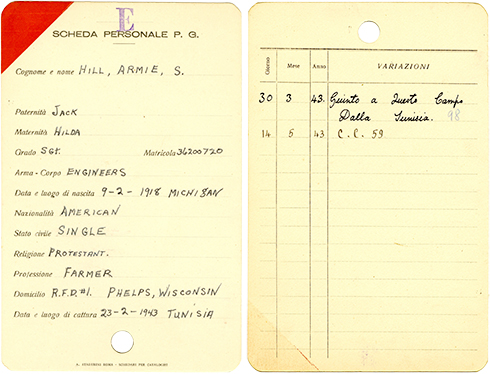
The “Scheda Personale P.G.” Italian personal identification card for my father, Sgt. Armie S. Hill. Greg Bradsher describes these prisoner of war cards, now held at the U.S. National Archives, in his research below.

Last month, I received an excellent paper written by historian Greg Bradsher of Silver Spring, Maryland.

He has generously allowed me to share his research on this site:

Stories of American Escapers from Prisoner of War Camp 59, Servigliano

Greg Bradsher, Ph.D.

At the time of the Italian Armistice on September 8, 1943, there were almost 80,000 Allied prisoners of war in Italian prisoner of war camps. Among these prisoners of war were 1,310 Americans; many were soldiers captured in North Africa and airmen shot down over Italy. (1)

Most of the American prisoners of war were confined at Camp 59, at Servigliano. This camp, 15 miles north of Ascoli, in the foothills of the Apennines, held perhaps as many as 3,000 prisoners, mostly Allied enlisted personnel. Although the camp was well-guarded and thorough searches were frequent, numerous tunneling projects were continually in progress. There were quite a few escapes, but most of the prisoners were recaptured. (2)

When the Allied prisoners of war learned of the Armistice, most were in a quandary as to what action to take. Under orders received earlier in the summer, most remained in their camps under the mistaken impression Allied forces would soon liberate them. Italian camp authorities also faced their own quandaries. Without clear orders as to what to do, many simply opened the gates to allow the prisoners to leave their camps. During the first days after the Armistice, perhaps as many as 50,000 prisoners remained in their camps and quickly became prisoners of the Germans. Another 30,000 left their camps. Some 16,000 were recaptured and 4,000 found safety in Switzerland. The remaining 10,000 found safety in hiding with the help of Italians, and many found their way back to Allied lines.

Continue reading

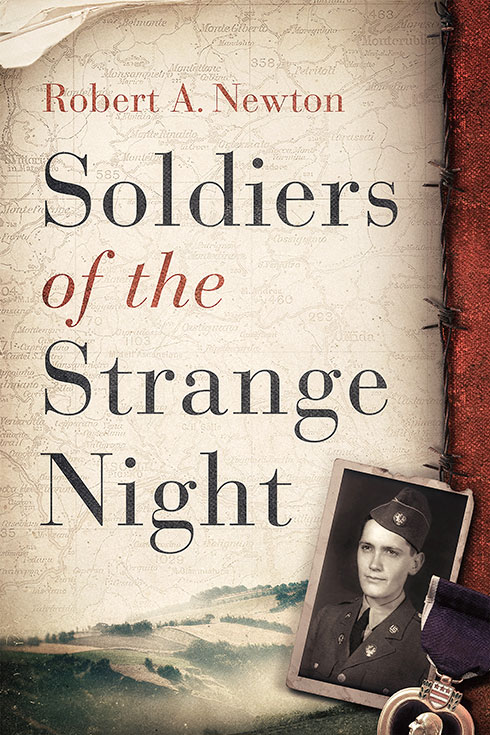
Robert Newton Story in Kindle Edition

Robert A. Newton’s biography of his uncle, Corporal Robert Alvey Newton, Soldiers of the Strange Night, is now available in a Kindle edition through Amazon.

Here is the Amazon description of the book:

“During the night of September 14, 1943, an estimated 3,000 Allied prisoners of war escaped from Camp 59, Servigliano, Italy, under the mistaken impression that friendly forces were only days away. In reality, the Allied armies did not reach that region of Italy for nine harrowing months. With the German army and Fascists feverishly sweeping the countryside for the escapees, they were fed and sheltered by courageous Italian farmers who risked their own lives and property to rescue desperate strangers. The author’s own uncle and namesake was among those who escaped from Camp 59 and evaded recapture until March 9, 1944, when he was betrayed by a turncoat to an elite German commando unit, caught and immediately executed.

“Drawing on interviews, letters, and accounts written by the survivors, as well as war crimes files, Soldiers of the Strange Night vividly re-creates not only one American soldier’s journey into war, imprisonment, evasion and murder, but also the aftermath of the escape as seen through the eyes of his fellow warriors and the valiant Italian family that sustained him during the final days of his life. Soldiers of the Strange Night is a tribute to these remarkably heroic and resilient men who did their duty while facing impossible adversity. It is also a testament to the gracious humanity of the Italian people who dared to protect them, even under penalty of death.”

To learn more about Corporal Newton, read “The Story of Robert Alvey Newton,” “Cesare Viozzi on Sheltering Robert A. Newton,” “Robert A. Newton—Further Details,” and “Soldiers of the Strange Night.”

Mario Mottes

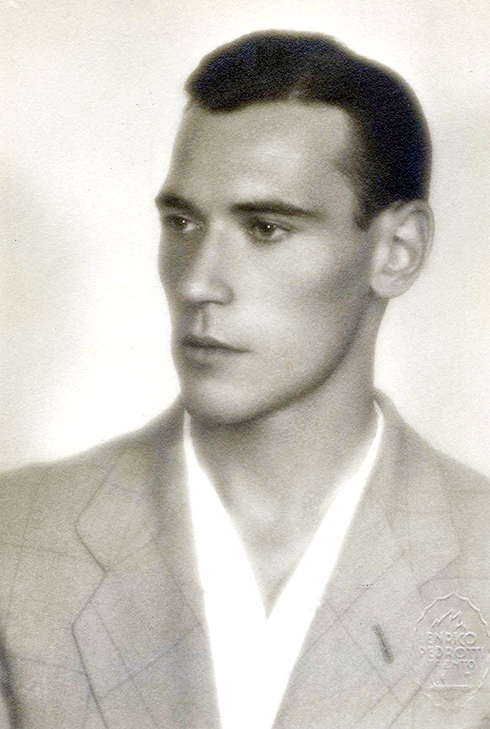
I.S.9 agent Mario Raoul Mottes

Belgian-born Mario Mottes served as a parachutist and radio operator agent for Allied I.S.9 operations. His task was to locate escaped Allied POWs in enemy-occupied Italy and guide them across the lines—a mission known as Ratline evacuation.

However, on March 10, 1944, while performing his duty, he was arrested by the Germans and executed with three escaped Allied prisoners of war.

The two photos of Mario Mottes in this post were given to my colleague Luigi Donfrancesco by Dr. Lino Beber, a retired physician and historian from Pergine Valsugana (in the province of Trento, Northern Italy), the hometown of Mario Mottes’ mother, Pia Paoli.

The photos were provided to Lino by the the daughters of Mario’s cousin Gina Paoli, daughter of a brother of Mario’s mother. Today Gina Paoli is nearly 100 years old.

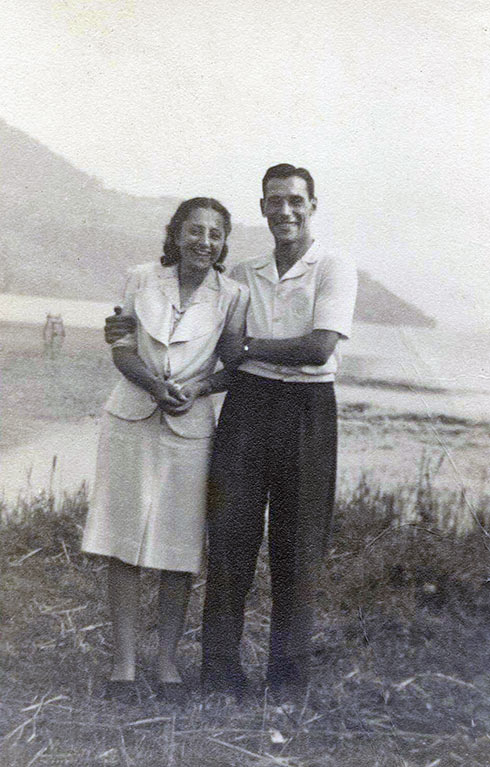
Mario Mottes with his cousin Gina Paoli at Lake Caldonazzo, near Pergine Valsugana, Italy.

For more on Mario Mottes, see “War Crime—the Ponte Dragone Executions,” “Ponte Dragone Deaths—A Second Report,” and “Honor Recommended for Mario Mottes.”

I.S.9 Captain Andrew George Robb

Captain Andrew G. Robb, Commander of No. 5 Field Section, I.S.9 or “A” Force

This resumé was prepared by Luigi Donfrancesco, nephew of Andrea Scattini, an agent of No. 5 Field Section, “A” Force.

The post is based on the following documents:

  • Captain Robb’s No. 5 Field Section Progress Reports, Final Periodic Report, and other I.S.9 documents provided by the late British researcher Brian Sims.
  • Captain Robb’s military records and vital records, which were kindly provided by Beverly Robb, wife of Murray Robb, Andrew’s nephew (son of Andrew’s elder brother, Alexander Robb).
  • Capt. Robb is mentioned at pages 81–82 of the 2004 book Scritti scelti di Uguccione Ranieri di Sorbello, by Elena Dundovich and Ruggero Ranieri (Uguccione’s son).
  • He is also mentioned in the 2007 book I Diari di Babka, by Alessandro Perini, and in the 2012 book San Vito e la Guerra, by Pietro Cupido.
  • Additionally, the “A” Force rescue operations organized by Capt. Robb (although he is not mentioned by name) are present in the 2010 book Il Memoriale di Don Carlo, l’eroe sconosciuto, by Giancarlo Giannotti.
  • Capt. Robb is in the list of British Army Officers 1939–1945 at unithistories.com.

Andrew George Robb was born 20 March 1901 in Dunedin, New Zealand. He was the second of four sons born to Alexander Robb (a tailor by profession) and Isabella Simpson.

Education:
1915–1918 – West Christchurch District High School, New Zealand. Matriculation
University – Canterbury University College, New Zealand

Employed in 1928, age 27, as Registered Surveyor (in Italian, Topografo), New Zealand, Land Survey (Rilevamento Topografico)

Continue reading

Service at Ancona War Cemetery

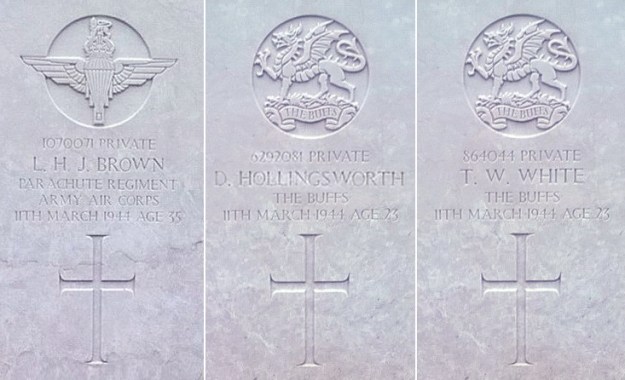
A rededication service for Private Lionel Brown, 1st Battalion Parachute Regiment, and Privates Daniel Hollingsworth and Thomas White, 1st Battalion The Buffs (Royal East Kent Regiment) took place this past week. The three, having escaped from Italian prisoner of war camps during WW2, were shot along with I.S.9 agent Mario Mottes, near the village of Montedinove, Italy.

Read an official Ministry of Defence news story about the event, “Bravery of 3 World War 2 soldiers shot for escaping from a POW camp finally recognised after nearly 75 years.”

Read also “Heros Honored” by The Sun.

On this site, read “War Crime—the Ponte Dragone Executions” and “Ponte Dragone Deaths—A Second Report” for the details on the Special Investigation Branch war crime investigation into the soldiers’ capture and execution.

Continue reading