Antonio Zagnoli, The Airmen’s Guide

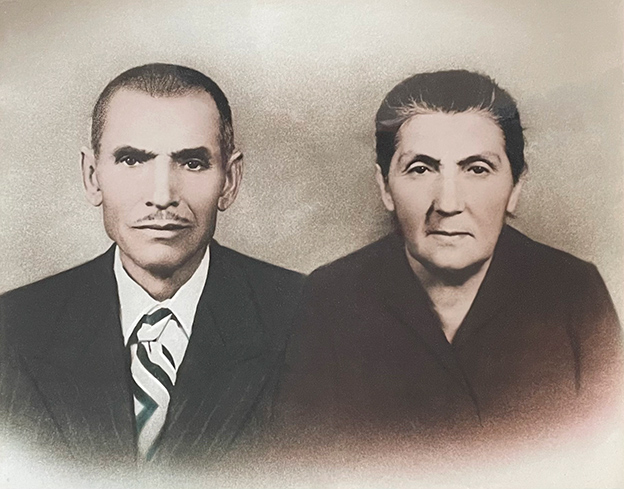
“This photo was taken at Poggio di Casola on September 26, 1941. From left, standing, are Ireneo (brother of my grandpa), my grandma Felicita, and my grandpa Sante; from left, sitting, are cousin Vittorio, my aunt Ada, my uncle Umberto, and my father Antonio” —Marco Zagnoli

Marco Zagnoli recently wrote to me from Italy about his family’s support for Allied airmen in 1943–44. 

“My father told me that he—at the age of sixteen—helped British airmen who were evaders or escaped from prison camps to pass the lines and reach the Allied troops,” Marco said.

“Also, my grandfather provided help, hiding the airmen at our family farm called Poggio di Casola, Castel di Casio village, near Porretta Terme (Bologna). 

“On the British military maps of the area—to which my father could get a look—our farm was marked as ‘a family that helps British troops,’ or something similar.” 

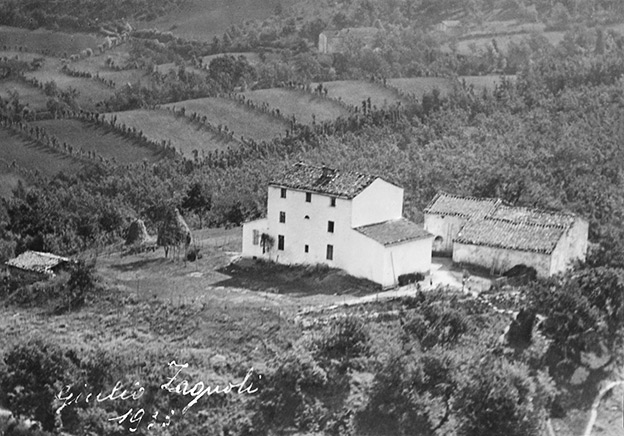
Aerial view of Poggio di Casola, 1933

The airmen, Marco explained, turned up individually at the farm over time. 

Continue reading

A Reflection on Heroism and Humility

Antonio and Domenica Cavaciuti

“There is a certificate of gratitude hanging in my grandmother’s house in London that was awarded to my great-grandfather, Antonio Cavaciuti,” Sophia Boeri wrote to me last month. 

“I recently began to enquire about the history of this certificate to my family. My grandfather passed away before I was born and so I was never able to ask him directly about the certificate. My family don’t know too much about the story behind it—all that they’ve been able to tell me is that my great-grandfather helped to protect British soldiers during World War II and that his actions were deemed to be very courageous, especially considering that he had nine young children. 

“I began to search for more information on the internet and came across your website, so was hoping that you will be able to provide me with more information about the actions of people like my great-grandfather.”

I told Sophia I would like to share their great-grandparents’ story and asked if she would send me a few photos.

Sophia wrote again a couple of weeks later. “Sorry about the delay in responding to you,” she said. “It took a while to sort through many boxes of family photos!

“I have attached a picture of my great-grandfather’s Alexander certificate, a photo of Antonio and Domenica, a clearer photo of Antonio and a photo of all their children together.

Continue reading

William McBeth “On the Run”

Photo of William McBeth's family
William McBeth with his family, circa 1965. Granddaughter Kirsty McBeth says, “He’s the gentleman on the right and my dad [Donald McBeth] is the young lad with the tie. He married my dad’s mum, who was separated and already had an older daughter, who is the other lady in this picture with her husband and her son and daughter.”

William Harkins McBeth was never a prisoner in P.G. 59.

In fact, he was captured by the Germans in Italy on 3 October 1943, one month to the day after Italy signed the armistice with the Allies. By the time William was captured, POW camps across Italy had dissolved—the captives having fled into the countryside or been transported to Germany.

William’s granddaughter Kirsty McBeth is in the process of piecing together her grandfather’s wartime story. She shared with me some of the documents she’s gathered so far. 

They’re quite interesting, and I’m eager to share his story on this site.

William was born 1 February 1915.

“My grandfather lived in Glasgow and moved through to Edinburgh when my dad was around four,” Kirsty wrote. “His family had a carter business in Glasgow which was basically transporting coal. I think my grandad was a driver.”

William had just turned 25 when he enlisted in the Army in February 1940. Early in the war he was in North Africa, serving with 1 SAS (the Special Air Service—a special forces unit of the British Army) and the SRS (Special Raiding Squadron).

An SAS researcher whom Kirsty contacted wrote to her, “Whilst a member of ‘A’ Section 3 Troop he was involved in three operations. One of these was in the Desert but I am unable to pin it down to which one. The other two were at Capo Morro di Porco and Augusta in Sicily. His final action with the SRS was in Termoli in Italy on Operation Devon where he was captured on 3 October 1943.”

Continue reading

Niel Nye—A Clergyman’s Perspective

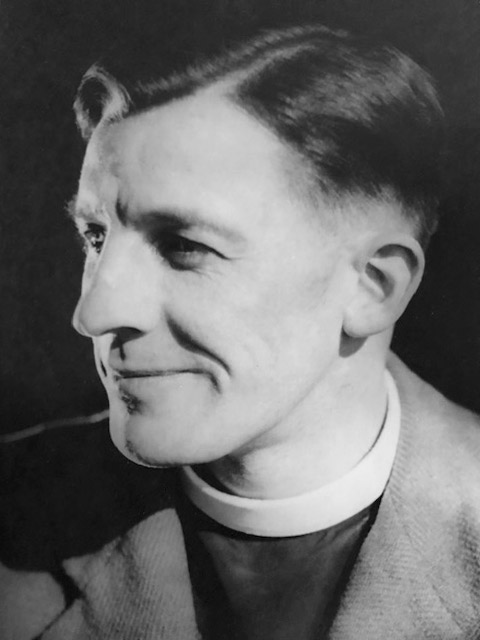
Niel Nye

Chaplain Niel Nye, Royal Air Force

Today is Easter Sunday, and I can’t think of a better day to add a post on Niel Nye, who was a chaplain in Camp 59, to this site.

On a deep, personal level, Niel felt Easter represented hope and renewal. As a Royal Air Force chaplain, it was that spirit that he sought to impart year-around to soldiers fighting in France and North Africa, and to the interned POWs of P.G. 59.

I’ve mentioned him on this site before.

A few weeks ago, I received an email from David Osborn, who wrote, “I was researching family history for a friend of mine (Christopher Nye) when I came across this page which amazingly contains a letter, handwritten by his father Niel Nye:

“Letter from P.G. 59 Chaplain ‘Niel’ Nye”

When David contacted me he had already shared the page with Chris, and he told me Chris “was absolutely delighted to read the letter, and he recognised his father’s handwriting instantly. He is extremely grateful to Ms. Stewart that she shared the letter with you—it is a priceless piece of his family history that he would otherwise never have known existed.”

David put me in touch with Chris, and Chris and I exchanged a number of emails:

“My dad was a remarkable man who had a remarkable war.” Chris wrote. “After he escaped from P.G. 59, he had an exciting four months travelling south to meet the American forces as they drove north. He had several near misses and I recall him telling me of his adventures when I was about six, sitting in a bath that became colder and colder (but I didn’t notice, as I was so wrapped up with his story!!). When he got back to the UK, his adventures continued: he was appointed chaplain to Bomber Command, then went across to Europe a few days after D-Day. He was one of the first British officers to relieve Belsen concentration camp and, after the German surrender, set up a leadership training college in Hamburg to help with the German reconstruction. When he finally returned to England, he was appointed as vicar in three different parishes (Clapham, Morden, and Maidstone), and then joined the Archbishop of Canterbury’s staff as diocesan missionary. He was finally appointed as Archdeacon of Maidstone. He retired in the 1980s and died in 2003. His obituary in the London Times covered half a page!

“I will look out his biography which is hand typed (so I can’t easily send it electronically) and will post you a paper copy, if you like. It’s not brilliantly written (to quote your docs, he was never that academic!!) but it covers the basics of an interesting life.”

I was thrilled to receive the manuscript in the mail about a week later. It’s a fascinating, candid, frequently intimate account of his experiences—spiced throughout with rich humor. From his first memories of childhood in Bromley (in Greater London, England) to a very active retirement after leaving his position as Archdeacon of Maidstone, I was captivated by the tale!

Today I’m sharing the several chapters that cover Niel’s wartime years.

Continue reading

P.G. 59 on Track to Become a National Monument

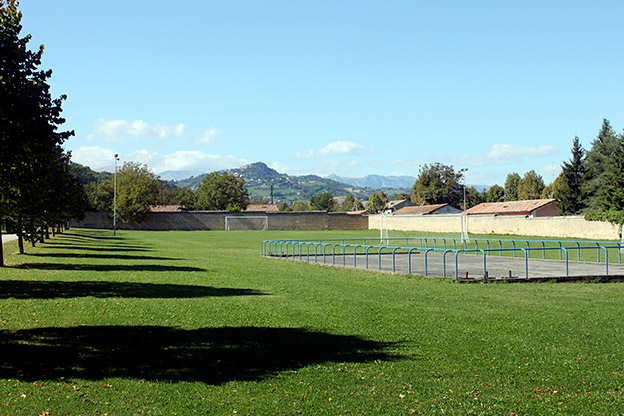
P.G. 59, during my visit to the camp in November 2010

I received exciting news yesterday from my friend Anne Bewicke-Copley, a Trustee of the Monte San Martino Trust in London. Senator Francesco Verducci, who represents the Marche Region in the Italian Senate recently put forth legislation to designate the site of former P.G. 59 POW camp in Servigliano a National Monument.

On Friday, March 5, the Senate Chamber passed the bill unanimously at its first reading. It now goes to the Chamber of Deputies for consideration. If the bill passes the chamber, as expected, it will advance to President Sergio Mattarella to be signed into law.

The following news item, written by John Simkins, was posted yesterday on the Monte San Martino Trust website:

The Italian Senate, parliament’s upper house, voted unanimously on March 4th 2021 for the former prisoner of war camp at Servigliano in the Marche to be made a national monument. The bill now passes to the Chamber of Deputies, the lower house, where it is expected to be approved and passed into law once it is signed by President Matarella.

The initiative is an important step in securing the future of PG 59 Servigliano, with its long, and in many respects, tragic history of holding prisoners. During the First World War the captives were Austrians; in the next conflict the inmates were captured Allied servicemen and Jews. It then became a refugee centre and is now known as Parco della Pace.

The bill was presented by a Marche Senator, Francesco Verducci, and supported by Liliana Segre, a Senator for Life.

Senator Verducci said: “The former prison camp of Servigliano is a symbol… part of a memory map that links countless cities throughout Europe. A map that must be traced and preserved, to hand over the memory of what has been. Memory needs places to live. A society that loses its memory remains blind, without identity and without a future.”

He added that the law was linked to the cultural and political battle to strengthen the study of history in schools. 

Supporters of the former camp have worked hard over the years to raise interest in preserving it, starting with the renovation of the former railway station, which is now the home of the Casa della Memoria. Marco Rotoni, the mayor of Servigliano, said that the Casa della Memoria’s committee, supported by the province of Fermo, intended to restore the former camp’s infirmary, for which a project had been presented to the Ministry of Cultural Heritage. It was also planned to develop memory trails. “As a municipality we have already approved the allocation of some funds and we hope that, thanks to the help of both national and local institutions, all these works will be able to see the light in a short time,” said Mr Rotoni.

The former PoW camp, through which passed thousands of prisoners and which is one of the best known in Italy, is the base of an annual Freedom Trail organised by the WW2 Escape Lines Memorial Society and co-hosted by the Monte San Martino Trust. The Trust was founded by Keith Killby, who escaped from Servigliano and found refuge at the nearby village of Monte San Martino.

Watch Senator Verducci’s presentation of the bill to the Senate on YouTube. (To view closed captioning in English or another language, select your language preference under “auto-translate” in “settings.”)

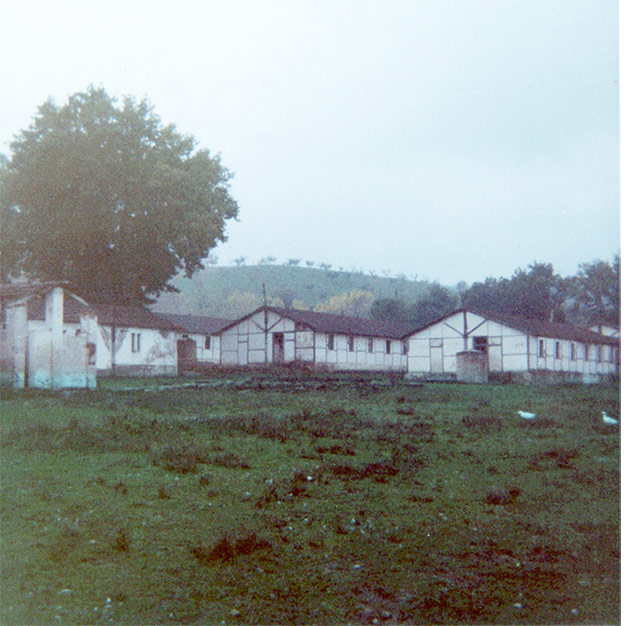
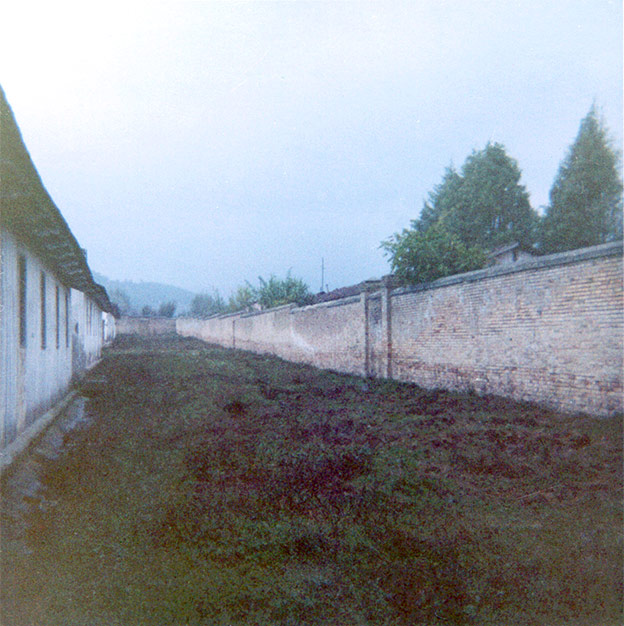
The barracks, or “huts,” of P.G. 59, photographed by Tony Vacca during his visit to the camp in 1968


Interior view of the wall photographed by Tony Vacca in 1968


To see other photos of the Camp 59 taken by Tony Vacca, see “Twenty-five Years After the Escape.”

Travis Fowler—Nearly Home

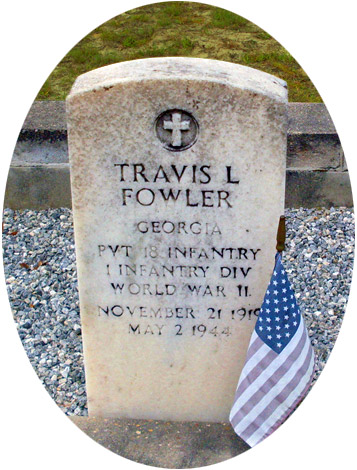
Travis Fowler’s grave marker in Worth County, Georgia

Travis Luther Fowler was born November 21, 1919, in the small town of Sylvester, Georgia.

His father, Jefferson Davis Fowler, was born the year the U.S. Civil War ended. He turned 54 in the year Travis was born. Travis’s mother, Charlotte Maude Mallard Fowler, was 17 years younger and J. D.’s second wife. Travis had 15 siblings—four sisters and 11 brothers (four of them half-siblings).

Like most boys, Travis was given a grammar school education, and then was expected to earn a living and help support his family. He worked at a local mill that produced textiles, likely woven from Georgian cotton. He married Eva Whittington Fowler.

Travis enlisted in—or was drafted into—the U.S. Army in May 1942 at the age of 22.

He was assigned to the First Battalion, 18th Infantry Regiment (“Vanguards”). Travis would have little time for deployment preparation, as his battalion departed the New York Port of Embarkation on August 1, 1942, bound for southwest England. On October 22, it left England for the Operation Torch assault on North Africa.

Continue reading

Shooting through—Stories of Campo 106 Escapees

cover of Shooting Through, by Katrina Kittel

Katrina Kittel’s book on the Campo 106 POWs’ escape stories

Shooting through: Campo 106 escaped POWs after the Italian Armistice, a remarkable book by Australian historian Katrina Kittel, was published late last year. I have been remiss in not obtaining a copy and giving it a mention here until now. It’s a first-class piece of scholarship and a thoroughly enjoyable read.

Published by Echo Books, Shooting through is Katrina’s first book. It is available from a number of online sellers internationally, including Amazon.

Katrina Kittel lives in Port Stephens, New South Wales, Australia.

Since 2011, she has researched the wider cohort of some 2,000 Australian POWs in Italy during the war, while giving a refined focus to about 50 Australians who escaped from Vercelli camps on the Piedmont region of Northern Italy.

Continue reading

Purchasing Casa Monti

an old italian brick house

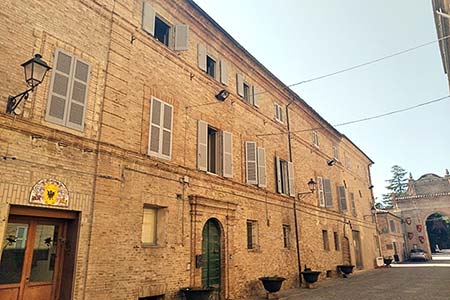
Casa Monti

Ian McCathy of Casa della Memoria, the association dedicated to preservation of the history of P.G. 59, is spearheading a crowdfunding initative for community purchase of a historic building, Casa Monti, in Servigliano:

gofundme.com/f/acquisto-casa-monti

According to gofundme.com, “the big house is used by various community groups and currently to temporarily house young people in difficulty and migrants, and which also houses the Servigliano English Library. There is no set time frame for this project but we hope to achieve the goal within 1 year from August 2020. The aim is to preserve the social use of the property where other community projects can be developed.”

“The house was the original base of Casa della Memoria before we had the museum in the old station,” Ian wrote to me, “but it’s now used by other associations.”

For families of Allied POWs who were sheltered by courageous local Italians after the P.G. 59 breakout, this an excellent opportunity to show gratitude. I encourage you to support this worthy endeavor, and I will look forward to seeing many British and American names on the donor list in months to come!

Francis “Frank” Ironside—A Hunt for the Past

a young soldier

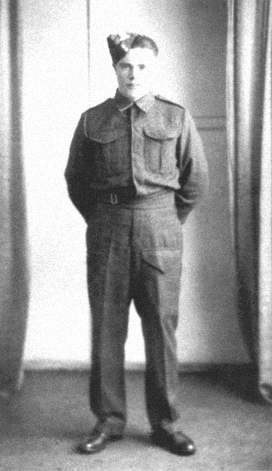
Francis “Frank” James Ironside

“I wonder if you can help me,” Mary Tretton wrote to me today. “My father died many years ago and never talked about his years in the war. We had no idea he had been a prisoner of war until just prior to our mother’s death.

“At the time you listen, but don’t ask questions—just so many now are running around in my head.

“The only clue I had was many years ago we were discussing places to go on holiday, and I suggested Tunisia. He said, ‘Why would you what to go there, the bowels of the earth.’

“I thought at the time it was a strange thing for Dad to say, but I never asked why.”

We know that Francis “Frank” James Ironside was interned in P.G. 59. He was recorded as such in the Alphabetical List compiled during the war.

Mary wrote, “As far as I know, Dad enlisted—or he might have been conscripted—in 1941 (not sure about the actual dates) and joined the Royal Artillery (RA) as a gunner in an anti-tank regiment. He was deployed into North Africa under Eisenhower as part of Operation TORCH on 10 November 1942, just two days after the invasion was launched.

“This fighting in the desert was brutal and as an anti-tank gunner he would have been in the thick of it on the forward edge of the front line. From what I now know, I’m not surprised he didn’t talk about it much!

Continue reading

A Haven in Smerillo

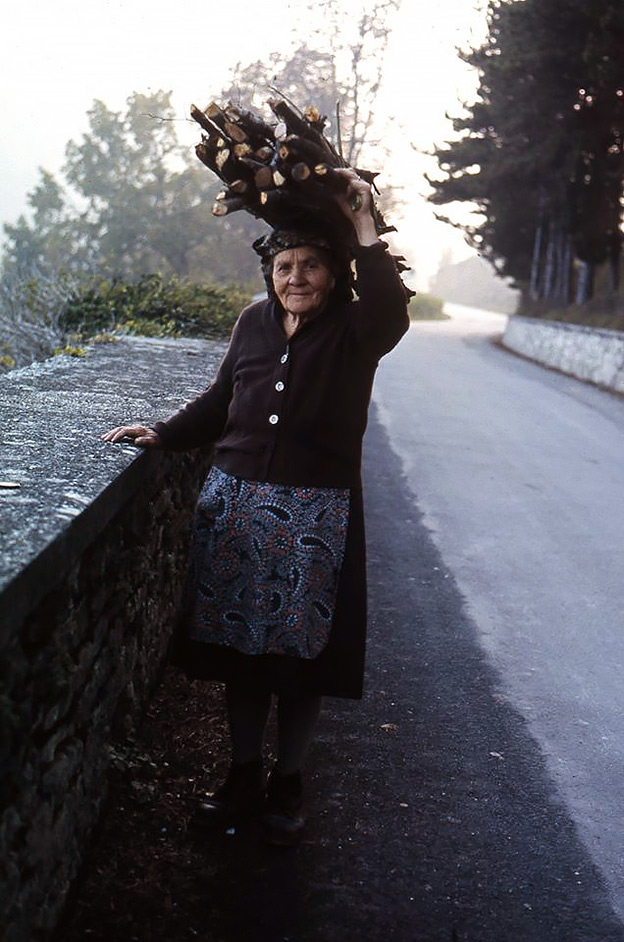
an old Italian woman carries a bundle of sticks on her head

Letizia Galiè in Del Gobbo

This story has a remarkable heroine—Letizia Galiè in Del Gobbo, who lived during the war in the Marche comune of Smerillo, roughly 10 miles from Servigliano. Days after the prison camp breakout from P.G. 59, she was approached by two ragged, hungry American soldiers.

Widowed just seven years earlier, Letizia was left alone to provide for and raise six children. Yet she did not hesitate to welcome the escapees into her home.

Marco Ercoli shared the story of his grandmother’s courage and humanity with me.

He wrote, “My grandmother, Letizia Del Gobbo, hosted in Smerillo two American prisoners escaped from Camp 59 in Servigliano. She remembered just their names: Michele, whose his parents were Italian emigrants, and Beo.

“They arrived in Smerillo on September 1943 and remained there until June 1944, when the U.S. Army moved into the Marche region.

“The family Del Gobbo in 1943 was made up of my grandmother Letizia, widowed in 1936, and three sons—Antonio, Giacomo, and Giuseppe—and three daughters—Maria, Chiarina, and Palma (my mother). Antonio had lost a leg in 1940, when he was 17, and they were very poor.

“Yet they had the strength to host—at great risk—the two Americans.

“Only Antonio, 96 years old, lives still in Smerillo. The others have all died.

“Two years ago, Ian McCarthy [of La Casa della Memoria] gave him a filmed interview.” Also, Pasquale Ricci, an Italian with an interest in the escape stories, has written about the Del Gobbo family in his book 9 Settembre 1943: Lo Sbando e La Fuga.

“I am writing a short story about the experience,” Marco said. “When I finish it, I will send you an English version. And I’ll send you photos of Antonio (called Ntontò) and my grandmother Letizia (“nonna Litì”).

Continue reading