Category Archives: Servigliano Calling

Robert Dickinson—The Ongoing Journey

Steve Dickinson (left) and his sister Jane visit in Italy with Saverio Rodi, son of Ginetta Bauducco. The Bauducco family sheltered their uncle Robert for 13 months during the war.

Last year I described in a post titled “Robert Dickinson—A Banner Year for Discovery” how Steve Dickinson was gratified to receive fresh information about the circumstances of his uncle Robert’s death. Robert died fighting with the Italian partisans in March 1945.

However, Steve still longed to meet descendants of the Italians who were protective of Robert in his final months of his life.

In 2009—not long after I met Steve—he told me that he had tried to find descendants of Ginetta “Gina” Bauducco, a woman whose family he believed had sheltered Robert in her home on Via Armando Diaz in Gassino, Italy.

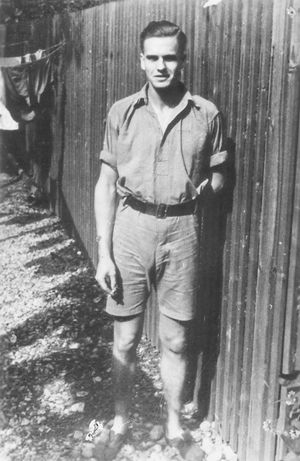
Steve created flyers with information about Robert and a picture. “Spent some time in the village where Robert was hidden and left some of the fliers in various places,” Steve wrote to me. “Several shops, including the pharmacy, said they would put them in their windows. Also, left many in post boxes on Via Armando Diaz.”

Steve’s email address was on the flyer; disappointingly, he received no responses. In 2023 he once more attempted a search, this time with the assistance of a local journalist and a piece in the local newspaper; again there were no responses.

The last camp where Robert was interned was PG 112/4 Turin, where 126 English soldiers were tasked with construction of the Cimena Canal.

Shortly after the Italian armistice was signed Robert and his friend Ronald Dix escaped the camp. The next day they encountered the Bauducco family, who took them into their home.

Continue reading
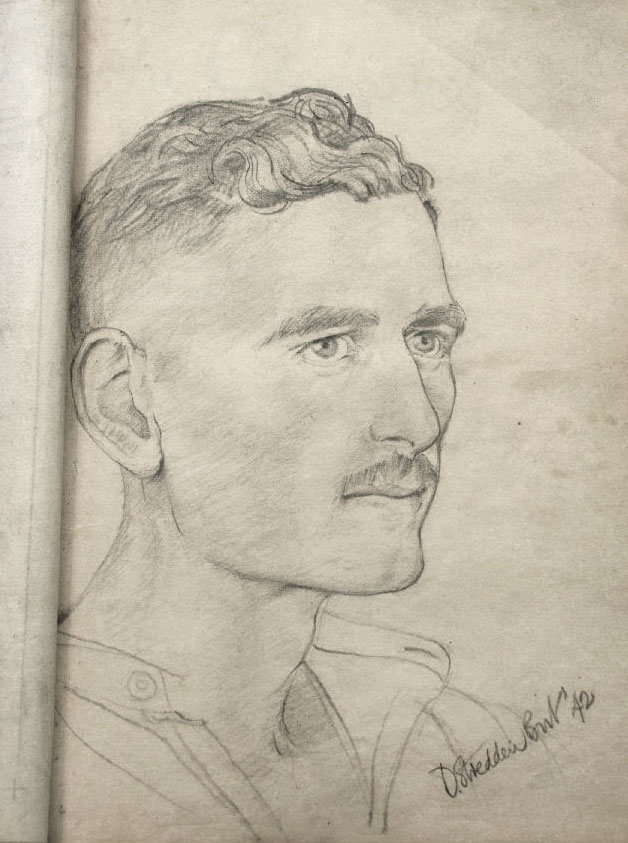
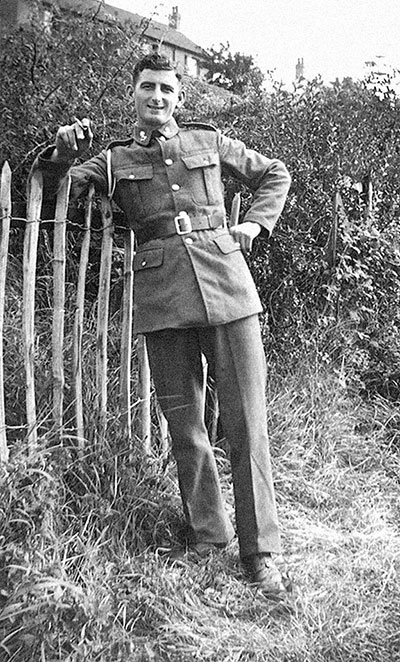
The Artistic Sergeant D. Stredder Bist 

Portrait of Robert Dickinson by D. Stredder Bist, 1942

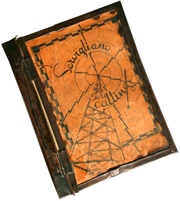
Robert Dickinson’s prison camp diary, Servigliano Calling, is filled not only with details about Robert’s daily life as a prisoner (a daily activity log, letters and cards sent and received, parcels received, lists of contents of Red Cross parcels, and more). It contains items of artistic merit—34 poems by several PG 59 camp poets, with titles in beautiful calligraphy and hand-lettering—often accompanied by clever illustrations. 

The most impressive illustrations are the front cover, the title page, and a full-page portrait of Robert signed by Sergeant D. Stredder Bist.

Continue reading

Robert Dickinson—A Banner Year for Discovery

Robert Dickinson

Although we are only six months into 2023, Steve Dickinson will no doubt look back on this year as a banner year for discovery of information about his uncle, POW Robert Dickinson.

Robert Dickinson (Lincoln, UK) joined Lincoln Territorial Battery 237, Royal Artillery, as a gunner in 1938. He first saw action in France, where in 1940 he was involved in the evacuation from the beaches of Dunkirk. He then served in North Africa, where he was taken prisoner in 1941.

Robert was interned in PG 59 Servigliano (18 January 1942–24 January 1943), PG 53 Macerata, and finally PG 112/IV in the Piedmont region of northern Italy, from which he escaped in 1943.

For 13 months, Robert was sheltered by the Bauducco family of Gassino Torinese. In October 1944 he joined the local partisan resistance and fought against the fascists and German forces. He was killed while fighting with the partisans on 3 March 1945. 

Robert is buried in Milan Commonwealth War Cemetery.

After Robert’s death, the diary he kept, Servigliano Calling, was sent to his family in Lincoln. It reached the family in November 1946, some 18 months after Robert’s death.

The authorities provided the family with general information concerning Robert’s death, but for years Steve has yearned to know more about his uncle’s final months and greater detail about his death. 

At the end of the war, the deaths of many POWs killed while on the run were investigated as war crimes. Steve wondered—had Robert’s death been investigated? 

We didn’t know the answer. Until this year, that is.

Continue reading

Packages Sent from Home

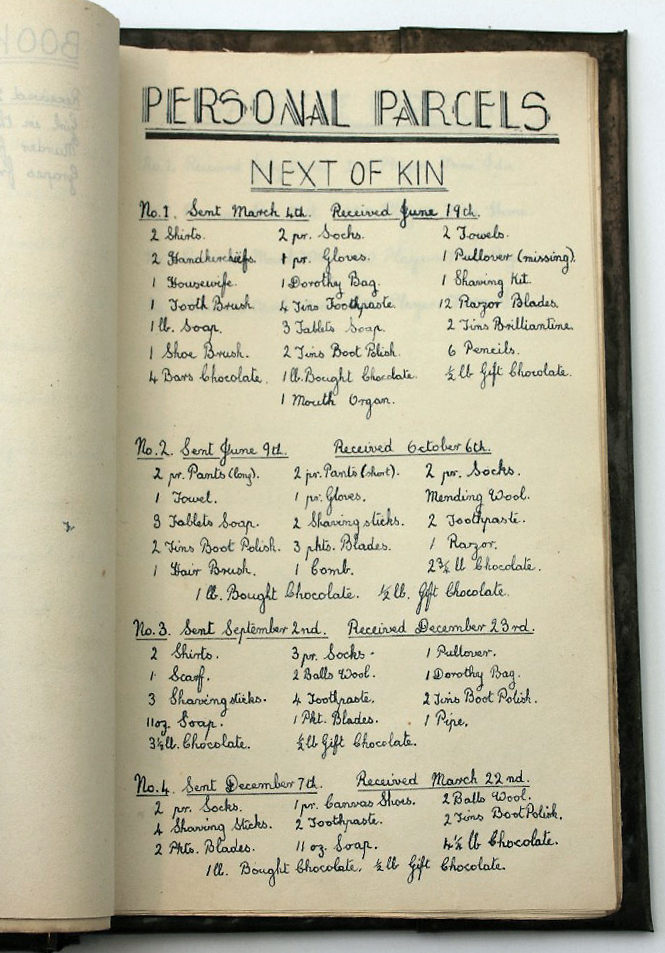
A page in Robert Dickinson’s journal,”Servigliano Calling,” is dedicated to “next-of-kin” parcels received.

Relatives of Allied prisoners were allowed to send one package four times a year to their loved ones. How this process was conducted in Canada was described in an Ottawa Citizen article about the services of the Canadian Red Cross Enquiry Bureau on April 26, 1944:

“There are 6,365 [Canadian] prisoners and internees on record whose next-of-kin are issued quarterly labels for personal parcels by the Department of National War Services….

“As soon as a man is officially declared a prisoner of war, another pamphlet is sent [by the Red Cross Enquiry Bureau] advising the next-of-kin what to do about parcels and enclosing the latest postal regulations.

“The bureau also receives reports from the supplementing committee of the Red Cross by which it is enabled to keep in touch with the next-of-kin who have difficulty in making up their quarterly parcels. One of the duties of the Red Cross is to see that the parcels are up to their full weight and it is through these reports that the liaison officers of the Red Cross branches are able to offer help to those in need of it.”

Continue reading

Red Cross Parcels

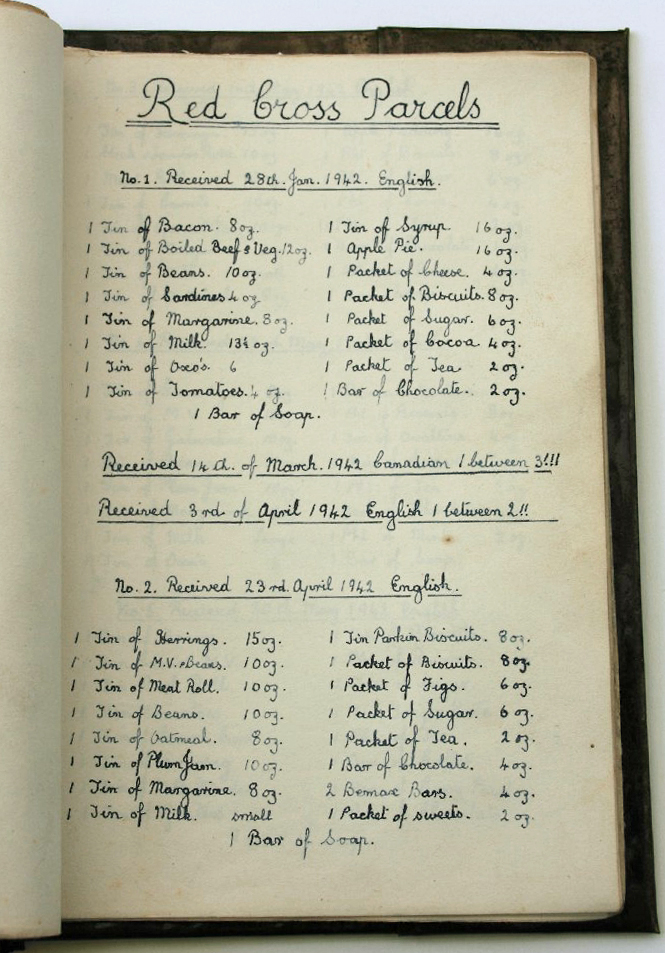
Red Cross Parcels distributed in Axis camps during the war were essential to the Allied POWs’ survival.

Robert Dickinson describes the eagerly awaited parcels in his diary; it’s clear that interruptions in parcel distribution were times of anguish.

Italian historian Giuseppe Millozzi, in his dissertation, Allied Prisoners of War in the Region of the Marche and Prison Camp at Servigliano, notes the following:

“English, Canadian and also New Zealand Red Cross sent to POWs various parcels some that contained clothes, tobacco and other necessities but the most important ones were food parcels that helped POWs to survive with the meagre Italian rations. Parcels coming from Canada and New Zealand were the richest as in those countries there was no food rationing such as in England that was under the constant threat of German bombing.

“Food parcels that had reached the camp were not enough for everybody and therefore they were divided among POWs. During the distribution of them, the Italian authorities usually punched food tins to prevent any the POWs from storing them for use in an eventual escape. POWs use tins of food, tobacco etc. as exchange goods; furthermore they recycled all the empty tins as the metal was very useful to construct a great variety of utensils.”

Continue reading

Cigarette Parcels

Robert Dickinson recorded parcels of cigarettes received in his “Servigliano Calling” journal.

His girlfriend Ida was the primary supplier of cigarettes. Others came from his family and from his regiment in Lincoln, England.

Player’s brand tobacco was manufactured by John Player’s tobacco company in Nottingham, England. Higgs Bros. was a tobacconist shop in Lincoln.

Comments below in italic are from Robert’s diary.

CIGARETTE PARCELS

No. 1. Received July 23rd. 200 Players From Ida.

Jul 23rd [1942] First big parcel, just right have got no cigs. 200 Players from Higgs, no senders name.

Continue reading

Robert Dickinson—Books and Readers

BOOK PARCEL

Received 21st. August 1943.

Girl in the Dark.
Murder for Christmas
Grapes from Thorns

The following passages from Robert Dickinson’s diary in “Servigliano Calling” convey the importance of books to the prisoners. The nighttime reading aloud of books in Robert’s hut was welcome escapism—even worth risk of punishment!

1942

Jul 9th

Denis and I bought a Penguin book “Crump Folk going Home” costing 20 Lira. A good investment, have now access to practically all the books in the camp. Reading aloud at night because of the bugs not letting one sleep; starting at 10pm till midnight.

Continue reading

Robert Dickinson—Calculating Nutrition

Two charts:

Daily Ration Scale W.E.F. 22nd. December 1941. (In grammes per head daily 50 grammes = 1¾ oz.}

Daily Ration Scale W.E.F. 13th. March 1942.

This page with two charts from Robert Dickinson’s journal, “Servigliano Calling,” shows Robert’s awareness of basic nutritional needs and his meticulous effort to ensure those needs were met.

The food categories in the first chart (December 22, 1941) are:

Meat, rice or macaroni, oil or fat, tomato, grating cheese, table cheese, vegetable, sugar, coffee subs., biscuit, bread, and wine.

The food categories in the second chart (March 13, 1942) are slightly different. Vegetables listed are in dried form, and the chart lacks biscuit and wine categories.

On March 12, 1942, 
Robert wrote in his diary, “News of drastic cut in rations.” And on the following day he recorded, “Rations cut by more than half!!” The second chart reflects that severe cut.

It’s alarming to see the drop in rations for several categories from one chart to the next. The second chart, for instance, lists a reduction of meat from servings on five days a week to only two, and the portions on those two days are smaller. Rice or macaroni servings and bread are substantially reduced in the second chart. Oil or fat are a little reduced, but quantities of tomatoes, cheese, vegetables, sugar, and coffee are similar in the two charts.

Do the charts reflect what Robert actually consumed in a given week in the camp, or the balance he hoped for, given the scarcity of food in the Camp 59? The reference to “grammes per head” suggestions that he had his “chums” in mind as well as himself.

Denis Crooks—Prisoner Poet

Denis Crooks, photo taken in Camp 59.

In February, I received a note from Maggie Clarke in England.

Her father, she explained, was Denis Crooks, one of the servicemen whose poetry was included in Robert Dickinson’s “Servigliano Calling” prison camp journal.

Read Denis’ poems “Campo 59,” “To Mother and Dad,” and “England” in posts on this site.

Maggie wrote, “I have just downloaded and read the ‘Servigliano Calling’ camp poems of Robert Dickinson and had to write to let you know that Denis Crooks, who wrote three of them, was my father. I was so excited to read these poems, as I never knew that he wrote poetry—he certainly never wrote any after the war—and even my mother was not aware he did this.

“We have all my Dad’s POW letters written home and Bob is mentioned in so many of them. They were so close and I know he was devastated when they were split up. I’m sure they kept each other going in those bad times.

Continue reading

Robert Dickinson’s “Campo 59 Cookery”

During this time of year, as we devote time in our kitchens to preparation of holiday meals and mouthwatering pastries and desserts, consider for a moment how our imprisoned soldiers craved their favorite foods from home—probably more during this season than at any other time of year.

It is any surprise that the prisoners attempted to recreate some of these dishes, using their daily camp rations and items from the precious Red Cross parcels?

Three pages of Robert Dickinson’s journal, “Servigliano Calling,” are devoted to recipes, ranging from a compote and spreads to pies and fig pudding.

The situation called for some invention—fruit pie crust made of a paste of grated bread mixed with margarine for example.

Cooking was done handily on the camp cook stoves built by fellow prisoners from scraps of tin and shoelaces.

Although Robert titled this section of his journal “Campo 59 Cookery,” the last recipe, “Campo 53 Rarebit,” is evidence that the culinary experiments continued after his transfer to Camp 53 Sforzacosta in January 1943.

One of the poems in Robert’s journal, “Thoughts,” by C. G. Hooper-Rogers, contains a list of sorely missed foods from home. Of his yearnings, Hooper-Rogers writes:

“All I’ve got to do is think, / Of all I used to eat and drink, / And the phantom foods I used to like, / Haunt me all the blinking night.”

Red Cross Compòte

½ loaf
¼ spoonful of sugar
1 spoonful of milk powder
2 spoonfuls of cocoa
(Custard or jelly powder can be added)

Break up the bread into coffeé mug and just cover with water. Soak well until soft. Add other items separately; stirring in well. When finished allow to set (if possible!!) Sugar may be added as desired.

Chocolate Spread

1 spoonful cocoa
1 spoonful milk powder
½ spoonful sugar

Mix the milk powder and the cocoa in the coffeé mug and add water, stirring well into a stiff paste add sugar.

Coffeé Spread (Method as for Chocolate Spread.)

1 spoonful coffeé
1 spoonful sugar
3 spoonfuls milk powder

Continue reading