Category Archives: Prisoners—Camp 59

Robert Newton Story in Kindle Edition

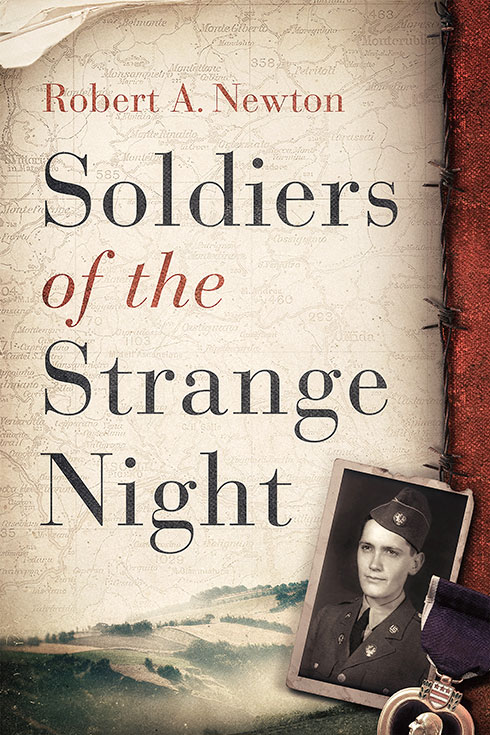
Robert A. Newton’s biography of his uncle, Corporal Robert Alvey Newton, Soldiers of the Strange Night, is now available in a Kindle edition through Amazon.

Here is the Amazon description of the book:

“During the night of September 14, 1943, an estimated 3,000 Allied prisoners of war escaped from Camp 59, Servigliano, Italy, under the mistaken impression that friendly forces were only days away. In reality, the Allied armies did not reach that region of Italy for nine harrowing months. With the German army and Fascists feverishly sweeping the countryside for the escapees, they were fed and sheltered by courageous Italian farmers who risked their own lives and property to rescue desperate strangers. The author’s own uncle and namesake was among those who escaped from Camp 59 and evaded recapture until March 9, 1944, when he was betrayed by a turncoat to an elite German commando unit, caught and immediately executed.

“Drawing on interviews, letters, and accounts written by the survivors, as well as war crimes files, Soldiers of the Strange Night vividly re-creates not only one American soldier’s journey into war, imprisonment, evasion and murder, but also the aftermath of the escape as seen through the eyes of his fellow warriors and the valiant Italian family that sustained him during the final days of his life. Soldiers of the Strange Night is a tribute to these remarkably heroic and resilient men who did their duty while facing impossible adversity. It is also a testament to the gracious humanity of the Italian people who dared to protect them, even under penalty of death.”

To learn more about Corporal Newton, read “The Story of Robert Alvey Newton,” “Cesare Viozzi on Sheltering Robert A. Newton,” “Robert A. Newton—Further Details,” and “Soldiers of the Strange Night.”

Sayler Safe After Escape

sayler-newspaper_r72

Possibly from The Wishek [North Dakota] Star
Circa April 1944

“Somewhere in Italy for five months, between October, 1943, and March, 1944, a North Dakota man, Sgt. Arthur T. Sayler of Wishek had been fighting his way back to Allied forces after being a prisoner in Italian camp 59 since his capture at Tunisia March 10, 1943.

“His parents, Mr. and Mrs. F. J. Sayler of Wishek, had received no word since getting a letter written July 28, 1943, until word came from the war department April 8, informing them their son had reported back for duty March 25.

“No authentic details of his escape are known here.

“Sgt. Sayler entered the army April 10, 1941. He received basic training at Camp Claiborne, La. [Louisiana], and before going overseas in January, 1942, was stationed at Fort Dix, N.J. [New Jersey]. Northern Ireland was his first station overseas. From there he was sent to North Africa, and participated in the battle for Tunisia at which time he was captured. He is assigned with the infantry.”

See also “See also “Arthur T. Sayler—Capture and Escape.”

Continue reading

Arthur T. Sayler—Capture and Escape

capt-art-sayler_r72

Arthur T. Sayler

“My father was an American who escaped from Camp 59 when the Italians surrendered,” Susie Wickman wrote to me from her home in Colorado last November.

“He lived in a cave with help from the Italian people, until he was approached by an Italian man who offered to take him and his partner back behind Allied lines. I am trying to find information about this man who helped my dad and “Buck” Vanous. [See “Elwyn “Buck” Vanous—P.G. 59 Escapee.”]
 
“I recall my dad said this man approached them and told them his story.

“He had been living in America, when he was overheard to say on the phone, ‘I’ve got the package’ during the time of the Lindbergh kidnapping. He didn’t have anything to do with that, but he was deported. He told my dad that he loved America and was helping the Allies all he could so he could get back to America.

“He asked my dad to sign something like a petition at the time, but my dad was suspicious and did not. I don’t know if he was a member of the Italian resistance, or what.

“I would like to thank this man, or his family, as well as to accurately capture the story. If anyone has any knowledge of him, would they let me know?

“I have my father’s POW disability statement where he mentions Camp 59 by name.

“We know the name of the family in Italy that helped him—the Catalano family. The Catalanos were from Le Piane, Abbateggio [Pescara]. They had twin boys who eventually emigrated to America, and my dad was friends with them his whole life.

“I am still in touch with one of them, Romolo Catalano.”

Arthur Sayler’s Story

 
The following account of Arthur’s experience is derived from the disability application Arthur filed after the war.

ARTHUR T. SAYLER
Peoria, Arizona
Army Serial Number 37025925

On April 11, 1941, at age 23, Arthur Sayler of Wishek, North Dakota, was inducted into the U.S. Army at Ft. Snelling, Minnesota. He was assigned to Infantry Company A, 135th Infantry First Battalion, 34th Infantry Division.

From there, he was sent to Camp Claiborne, Louisiana, where the Louisiana Maneuvers of the Red and Blue Armies were conducted.

Continue reading

Trooper Victor Styles—P.G. 52 Prisoner

victor-kensett-styles_r72

Trooper Victor Kensett Styles

I received a note recently from Vic Styles, a nephew of Victor Kensett Styles. Trooper Victor Styles, Royal Armoured Corps (RAC), was captured in North Africa and interned at P.G. 52 Pian de Coreglia (Chiavari).

“Like a lot of servicemen, he did not talk about his activities in Italy—we only got snippets of information,” Vic wrote.

“He was offered a commission, and later he resigned and went into teaching.

“He did not trust any politicians or whizz kid bosses. He was a very good manager in the flats where he lived in West Hampstead London NW6. He coached the tenants to buy their flats through the legal jargon. He was extremely clever in administration and with his hands.

“In the 1950’s my father fell out with him about a car deal, and they broke contact with each other. So I got info—but not much—second hand.

“Victor complained that when working with the S.O.E. [Special Operations Executive] he was never paid because he officially had been in a POW camp.

“He married twice and was divorced. He had no children.”

Victor was recommended for a British Empire Medal (BEM) for his acts, but he never got it because his file was kept secret for 85 years under the Official Secrets Act.

Victor was honored with an Italian Star in 2007, and Vic feels he should also be recognized with an Italian Garibaldi Medal for his work with the Italian partisans.

“In 2001, I applied to open his file,” Vic wrote. “They agreed, and that’s what you see on this report.”

Continue reading

Trooper Harold Knibbs

harold-knibbs_r72

Trooper Harold George Knibbs

I heard earlier this fall from Don Knibbs, who lives in the village of Sheet, which is in Hampshire, in the south of England. He wrote:

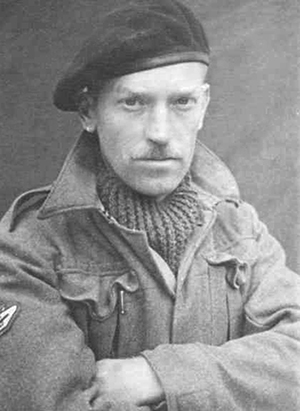
“I came across the Camp 59 Survivors web site today. What a great shame my dad isn’t still here to have seen it. He was Trooper Harold George Knibbs of the Royal Armoured Corps (RAC).

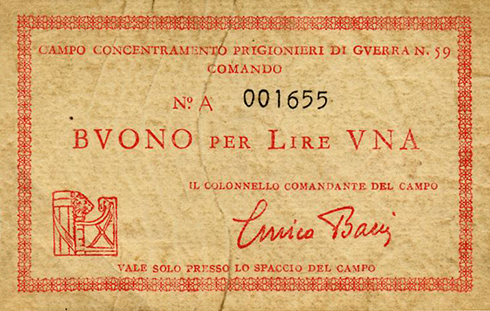
“He was captured in June 1941 in the desert, close to Tobruk. He was transported to Italy where he spent time at Campo Concentramento Prigionieri di Guerra N.73, and Campo Concentramento PG.59.

“I’m afraid I don’t know the dates for when he was at each of the camps. I know from his records that he was still in Italy in 1943, but be was transferred to Stalag IVB at some time before Christmas 1944. I’m guessing that will have been after the Italians capitulated in September 1943.

pg59-currency_r72

“He had very few mementoes of the times, but amongst his many treasures was a currency note from Camp 59 (above).

Continue reading

The Alphabetical List—British Soldiers N–Z

alphabetical-list-sm-r72

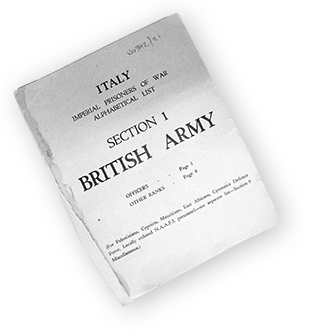
In 2013, researcher Brian Sims gave me access to his photographs of the complete contents of a booklet entitled Italy: Imperial Prisoners of War Alphabetical List, Section 1, British Army, which is archived at the British National Archives.

The Alphabetical List contains the names of thousands of British prisoners of war interned in Italian camps, apparently compiled in 1942 or the spring of 1943.

This post, which contains Alphabetical List soldiers N–Z who were documented as P.G. 59 internees, is the completion of the list, which I have been posting in installments on this site.

See also “The Alphabetical List—British Soldiers A–B,” “The Alphabetical List—British Soldiers C–F,” “The Alphabetical List—British Soldiers G–J,” and “The Alphabetical List—British Soldiers K–M.”

A key to acronyms and abbreviations follows the list.

Page 91
Nalty, T. – Cpl. – 56457 – R.A.S.C. – R.O. No. 29
Natt, A. E. – Pte. – 5509810 – Hamp. – R.O. No. 23
Neale, L. W. – Tpr. – 7879821 – R.A.C. – R.O. No. 3
Nelson, R. D. – Pte. – S/153793 – R.A.S.C. – R.O. No. 29
Nelson, A. E. – Gnr. – 1070139 – R.A. – R.O. No. 5

Page 92
Newman, C. E. – Pte. – 6285518 – Buffs – R.O. No. 23
Newman, C. W. – L/Sjt. – 6968938 – R. Bde. – R.O. No. 24
Nicholls, J. W. – Bdr. – 6100128 – R.A. – R.O. No. 5
Nichols, W. H. – L/Sgt. – 6842964 – K.R.R.C. – R.O. No. 24
Noble, A. P. – Gnr. – 1430659 – R.A. – R.O. No. 43

Continue reading

William Kornrumph—Hut 4, Section 11

kornrumph-medal_r72

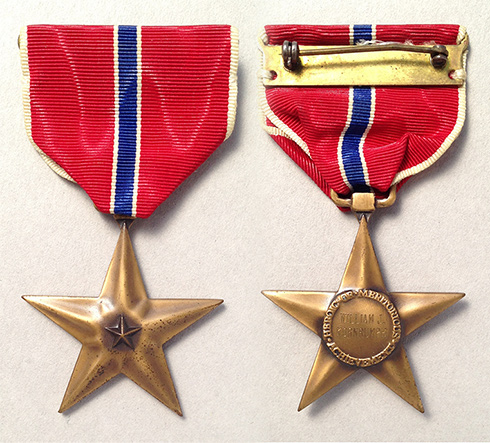
I received an email recently from Adam Rolloff. He sent me photographs of a Bronze Star Medal awarded to William Kornrumph, as well as the American serviceman’s separation papers.

He wrote, “I enjoyed reviewing your site while researching William J. Kornrumph. The attached discharge papers should answer your questions about his escape and recapture.

“Unfortunately his military service file was destroyed in a fire at the records center in 1973 and I’ve been unable to find any additional information on his military service.”

I asked Adam is he is related to William Kornrumph.

“I’m not related to Kornrumph,” he answered. “I collect U.S. military medals and I’ve had his Bronze Star Medal in my collection for about 25 years. Unfortunately I’ve been unable to locate the citation with the specifics of what he did to earn the award. Based on the brief information in his discharge papers, he must have had some amazing stories about his service.

“Feel free to post details from the paperwork and how I contacted you. The discharge papers came from Kornrumph’s VA claim file. I was able to get a copy under the Freedom of Information Act.”

Continue reading

Tom Kelly—Escapee from P.G. 59

tom-kelly_r72
Scotsman Tom Kelly

I heard this week from Linda Veness, daughter of R. J. “Jimmy” McMahon. Her father’s story is covered in two posts on this site, “R. J. McMahon, Part 1—Battle and Captivity” and “R. J. McMahon, Part 2—Escape and Beyond.”

Jimmy McMahon said in describing his escape from P.G. 59, “I suggested to my mates, one Scot and five other Aussies, that instead of digging our way out we should try going over the top. We nutted this plan out and thought there would be enough time while the guards, patrolling the wall, were having their halfway talk and smoke, giving us about five minutes.”

Linda wrote to me that the Scot was Tom “Jock” Kelly. According to Linda, four other Australians who made this break were Tom Alman (from Kalgoorlie) Jack Allen (Kalgoorlie), Les Worthington (Wiluna) and J. Feehan (Geraldton). The men went over the wall on a ladder constructed with nails smuggled into the camp by a visiting priest.

It seems most likely this escape occurred in early September 1943.

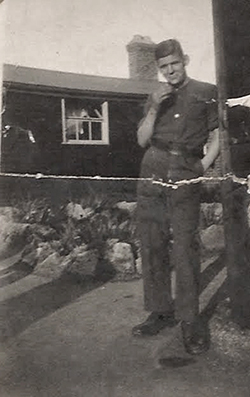
This week Linda sent me a photo of Tom that she found. She wrote, “It looks to me as though it has been taken at ‘home.’” Whether it was taken before or after the war is unclear.

On the reverse side of this photo is written: “Trooper T Kelly / 7904262 / Camp 59 (?) 8th 3300 / section 48 hut 14 / Italia.”

Tom Kelly is among the men recorded in the “Alphabetical List” (“The Alphabetical List—British Soldiers K–M“). His service number in the booklet matches the number on the back of the photo. He is identified as a trooper in the Royal Armoured Corps.

Americans Who Died as POWs in Italy

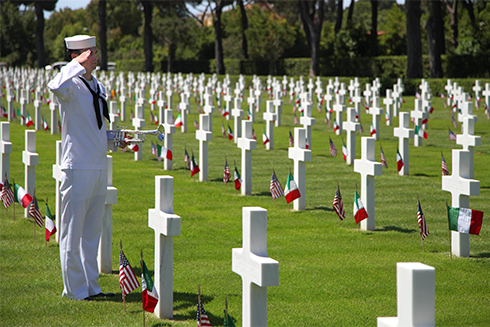
sicily–rome-american-cemetery

U.S. Navy Musician 2nd Class Lucas Swanson salutes after playing taps at the Sicily–Rome American Cemetery and Memorial in Nettuno, Italy, on Memorial Day 2013. Each year U.S. and Italian service members participate in a Memorial Day ceremony at the cemetery, which honors the 7,861 service members buried there. Photo—Christopher B. Stoltz, U.S. Navy (Wikimedia Commons)

It is Memorial Day weekend in the United States—a time set aside each year to remember men and women who died while serving in the country’s armed forces. This is an appropriate time to review records of American prisoners of war who did not return from the Second World War.

Records of American World War II Prisoners of War on the United States National Archives website cover a total of 143,374 individual prisoners in all theatres of war.

Within this listing, 9,310 records indicate a prisoner “Died as Prisoner of War.”

Many individuals are reported to have died in an unspecified “dressing station” (first aid station near a combat area established for treating the wounded) or an unspecified “lazarett” (military hospital). For some a camp is listed. Occasionally, the “camp” category is blank (no designation of dressing station, lazarett, or camp).

Continue reading

Eric Rockliff Sanderson

sanderson-card-1_r72

sanderson-card-2_r72

Front and back of a Christmas postcard Eric Sanderson sent to his nieces in Doncaster, Yorkshire (England) from P.G. 59 on November 11, 1942

Yesterday I received a note from David Sanderson, who lives in Esher, Surrey (England).

David wrote, “I recently visited Campo 59 with the Escape Lines Memorial Society (ELMS) on their Tenna Valley Trail for 2016.

“My dad, Eric Rockliff Sanderson, was at Campo 59 during WW2.

“Dad was a tank driver with the Fourth Hussars, and was captured in Greece on 28th October 1941. Like many others, he had been left behind in Greece in April 1941 during the evacuation to Crete. Dad escaped into the Taygetos Mountains (for six months), until finally being captured by the Italians in October. He was transferred via Bari to Campo 59, where he was imprisoned from—I think—November 1941 until July 1943.

“In July 43 he was moved to Bolzano in northern Italy. When the Italians surrendered in September 1943, he was captured by the Germans and taken to Germany. In Germany he was in Stalag IV B at Lamsdorf for around six weeks, and then sent to Stalag IV F (near Chemnitz) where he remained until the end of the war.”

Eric’s details are as follows:

Army Number – 320875
Rank – Trooper
Enlisted on June 20, 1938 in the Cavalry of the Line (4th Hussars)
Medals received – Africa Star, 1939–45 Star, and War Medal 1939–45

The postcard pictured above reads:

“Breezy greetings send this ship
On a pleasant Christmas trip,
Bringing you kind thoughts sincere
With its cargo of good cheer,
And of lucky wishes true.
Joy and health and peace to you.
Love Eric”

I directed David to a post on this site with a holiday postcard featuring a full-rigged ship drawn Robert Dickinson (see “The Christmas Ship.”) Robert’s postcard was also sent in November 1942.

David wrote, “It does seem likely that the same person drew/penned the two cards. Certainly my dad’s handwriting was not so neat, so his card would I’m pretty sure have been drawn and written for him. Perhaps by Bob or maybe a third party?”

I noticed that the art is initialed—a further suggestion his dad was the artist.

“You may be right, he replied. “I still think it likely that someone other than my dad drew it. However, I’ll keep an open mind.”

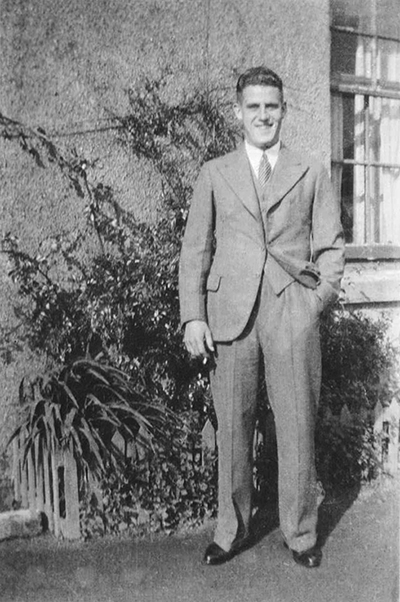
eric-sanderson_r72

Eric Rockliff Sanderson