Category Archives: Rescue Efforts

I.S.9 Italian Agents, Part 5

This is the fifth part in a series of posts concerning Italians who served as agents for I.S.9 (Intelligence School 9 of the Central Mediterranean Force).

I.S.9′s chief mission was support and rescue of escaped POWs and evaders (E&Es) stranded in enemy territory. I.S.9 was a division of M.I.9 (British Directorate of Military Intelligence Section 9), a department of the War Office during WW II.

I am grateful to researcher Brian Sims for allowing me access to his collection of British National Archives I.S.9 files.

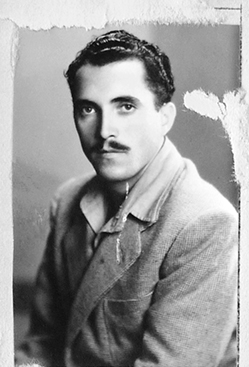
terrizzano-ezio_r72

Ezio Terrizzano

Born November 2, 1913 at San Bartolomeo del Cervo, Imperia Province. Ezio was a lieutenant in the Italian army (artillery) in Libya until April 1942, and thereafter he served in Italy until the armistice. He spoke French and English fairly well. (He could make himself understood).

Ezio was attached for duty with I.S.9 by the Italian High Command. He was employed by Field Section No. 1 in the capacity of liaison discipline at the Bari headquarters.

He ceased to be employed on May 22, 1945, as his services were no longer required due to conclusion of hostilities. He proceeded to Milan on May 23 for 21 day’s leave, after which he was to report to the Italian authorities.

Continue reading

Memorial to Rome Escape Line’s Sam Derry

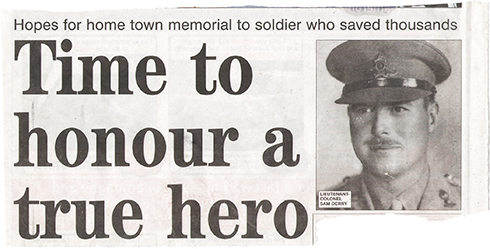
derry-article-1

Recently my friend Brian Sims sent me an article that was published last year in the Newark Advertiser, which serves the UK’s Newark-on-Trent area.

The article describes a local interest in the establishment of a lasting memorial to Newark-born Lieutenant-Colonel Sam Derry, who, with Irish priest Hugh O’Flaherty, ran the escaped-POW rescue effort known as the Rome Escape Line out of the Vatican.

The Rome Escape Line rescue efforts were run independently of the I.S.9 rescue efforts, which were mainly conducted along the Adriatic coastline of Italy and east of the Apeninnine Mountains.

The following paragraph from the official I.S.9 history (see “I.S.9 History—Operations in Italy, Part 3“) in the British National Archives, confirms the minimal contact that existed between these two organizations:

“By far the most interesting outcome of our entry into ROME was gaining contact with the Escape Organization which had existed during the German occupation under the direction of Major S.I. DERRY (now Lt-Col. S.I. DERRY, DSO, MC, GS01, G-2 (P/W), AFHQ). This particular organization was easily the largest non-I.S.9 unit engaged in the care and maintenance and possible escape of E & Es. Although we were well aware of the existence of this organization, and had made successful attempts to gain contact during the German occupation, it was unfortunate that we were unable to encourage a closer connection in the early days. We sent an Italian officer courier into ROME and he returned with a reasonably accurate description of the situation, and had personally contacted Father O’FLAHERTY of the Vatican. We sent him back almost immediately, in an attempt to connect ourselves more closely with Major DERRY. Unfortunately, our courier was unable to obtain an interview with Major DERRY and was very naturally treated with suspicion. It was not until the final entry into the city and our contact with Major DERRY that we both realised the pity in that real contact was not established between I.S.9 and the Rome Escape Organization during the German occupation.”

Although the Newark Advertiser article mentions various possibilities for the memorial, Brian more recently told me the actual memorial will be a large painted portrait of Sam Derry, to be hung in the Newark Town Hall.

A dedication ceremony is being planned for this fall.

Continue reading

I.S.9 Italian Agents, Part 4

This is the fourth part in a series of posts concerning Italians who served as agents for I.S.9 (Intelligence School 9 of the Central Mediterranean Force).

I.S.9′s chief mission was support and rescue of escaped POWs and evaders (E&Es) stranded in enemy territory. I.S.9 was a division of M.I.9 (British Directorate of Military Intelligence Section 9), a department of the War Office during WW II.

I am grateful to researcher Brian Sims for providing access to his collection of I.S.9 files from the British National Archives for this series.

stasolla-antonio_r72

Antonio Stasolla

Born January 28, 1920 at Santeramo (Bari Province).

Antonio was a bricklayer at Castellaneta. He was called up to serve in the Army on March 12, 1940. He served in the infantry and joined the parachutists.

He held a parachutist’s Tessera di Riconoscimento (identity card).

He served in Italy, Croatia (for two months), and Sicily. At Armistice, he was in Calabria with the Nembo Division of the Italian Army. He volunteered for A Force service, and joined N Section at Palese in the capacity of para-guide on December 11, 1943.

He was issued a false Carta d’Identita for Foggia in the name Antonio Stasi, muratore.

He ceased to be employed on May 15, 1945 because of lack of work due to conclusion of hostilities. He was paid off by Field Headquarters and sent to Bari on May 16, and then to proceed to Taranto for four weeks leave. Thereafter he was to report to the Italian authorities.

Continue reading

I.S.9 Italian Agents, Part 3

This is the third part in a series of posts concerning Italians who served as agents for I.S.9 (Intelligence School 9 of the Central Mediterranean Force).

I.S.9′s chief mission was support and rescue of escaped POWs and evaders (E&Es) stranded in enemy territory. I.S.9 was a division of M.I.9 (British Directorate of Military Intelligence Section 9), a department of the War Office during WW II.

Thanks to researcher Brian Sims for access to his archives of I.S.9 files from the British National Archives.

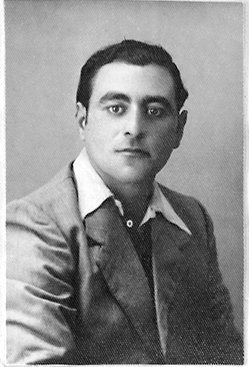
petrucci-ernesto_r72

Ernesto Petrucci

Born on February 27, 1915 in San Marcello.

Ernesto was a woodcutter at Abetone. He was called to the Italian Army in 1938, but left the army in 1939 because of a knee injury. He joined “Gino Bozzi” Brigade (a unit, apparently operating in the Apennines of Pistoia, of the “Garibaldi” partisan brigades)—Ospedale—in May 1944.

Ernesto had intimate knowledge of the region from Modena to Pistoia. He spoke French. He held a true identity card for Abetone.

He was employed by Captain B. G. McGibbon-Lewis, No. 5 Field Section, as an agent/guide on January 10, 1945. His name during employment was Didon. No false identification was issued to him.

He ceased to be employed on April 27, 1945 because his services were no longer required due to the Allied advance. After being paid off, he returned to his home.

Continue reading

I.S.9 Italian Agents, Part 2

This is the second part in a series of posts concerning Italians who served as agents for I.S.9 (Intelligence School 9 of the Central Mediterranean Force).

I.S.9’s chief mission was support and rescue of escaped POWs and evaders (E&Es) stranded in enemy territory in Italy and elsewhere in Europe. I.S.9 was a division of M.I.9 (British Directorate of Military Intelligence Section 9), a department of the War Office during WW II.

Thanks to researcher Brian Sims for access to his archives of I.S.9 files from the British National Archives.

marcus-Giovanbattista_r72

Giovanbattista Marcus

Born in Azzano Decimo (Udine province) on March 12, 1920.

Giovanbattista was raised in Azzano, where he worked on his uncle’s farm. He was called up to serve in 1940 in the 17th sector of the Guardia Frontiera (border guard). He transferred to the Italian Army parachutists in 1941, but did not serve outside Italy. He was in Calabria with Nembo division of the Paracadutisti at the time of the Armistice.

Giovanbattista volunteered for special service from the Italian Army in December 1943.

He knew the whole area of Veneto fairly well and Udine area very well. He served in the province of Vercelli for about a year.

His employment with N Section, Advance Headquarters of A Force began on December 7, 1943. He served as an agent/guide who whose name during employment was Battista.

He was issued the following false document: Carta d’Identita – Comune de Spilimbergo, Marcus G. Battista, agricoltore

His employment with I.S.9 ceased on October 31, 1944, and was returned to his regiment in Bari on November 2.

Continue reading

I.S.9 Italian Agents, Part 1

This is the first of what will be a series of posts concerning Italians who served as agents for I.S.9 (Intelligence School 9 of the Central Mediterranean Force).

The chief task of I.S.9 was support and rescue of escaped POWs and evaders (E&Es) stranded in enemy territory in Italy and elsewhere in Europe. I.S.9 was a division of M.I.9 (British Directorate of Military Intelligence Section 9), a department of the War Office during WW II.

I am grateful to researcher Brian Sims for allowing me access to his documentation of I.S.9 files from the British National Archives.

liverani-emidio_r72

Emidio Liverani

Born in Faenza on October 14, 1920.

Before the war, Emidio worked with his father in agriculture. In 1941 he was called up for service in the Italian Army and served in the Italian-Yugoslav frontier. In September 1943 he returned home, and in November he joined the partisans in Romagna.

In October 1944 Emidio joined I.S.9 No. 5 Field Section. The name he used while working for I.S.9 was Antonio Fadolfi.

He was employed by Captain B. G. McGibbon-Lewis in the capacity of guide from October 9 to December 22, 1944. At that time he was paid off and given a pass to return home.

Continue reading

I.S.9 History—A Final Installment

This is a final post in a series drawn from a History of I.S.9 (CMF) in the British National Archives.

I am indebted to researcher Brian Sims for access to the report.

For earlier postings on I.S.9 history, see “I.S.9 History—Organization,” “I.S.9 History—Tasks,”I.S.9 History—Methods,” “I.S.9 History—Communications,,” “I.S.9 History—Agent Choice and Training,” “I.S.9 History—Air Operations,” “I.S.9 History—Sea Borne Operations,” “I.S.9 History—Operations in Italy, Part 1,” and “I.S.9 History—Operations in Italy, Part 2,I.S.9 History—Operations in Italy, Part 3,” “I.S.9 History—Operations in Italy, Part 4,” “I.S.9 History—Operations in Italy, Part 5,” and “I.S.9 History—Operations in Italy, Part 6.”

After the I.S.9 history’s lengthy chapters on operations in Italy, it offers chapters on operations in Yugoslavia, Greece, Austria, Albania, the Balkans (Bulgaria and Roumania, and Central Europe (Hungary and Slovokia).

The history also includes chapters on preventative training, I.S.9 newsletters, and a short section entitled “THE RESULTS AND THE COST.”

Concerning “the cost,” the report states:

“We make no attempt to assess the cost in terms of money. To do so we should require to know the answer to ‘What is the monetary value of human life and the cost of human suffering?’.

Continue reading

I.S.9 History—Operations in Italy, Part 6

This post is twelfth in a series drawn from a History of I.S.9 (CMF) in the British National Archives. Access to this report is courtesy of researcher Brian Sims.

For earlier postings on I.S.9 history, see “I.S.9 History—Organization,” “I.S.9 History—Tasks,”I.S.9 History—Methods,” “I.S.9 History—Communications,,” “I.S.9 History—Agent Choice and Training,” “I.S.9 History—Air Operations,” “I.S.9 History—Sea Borne Operations,” “I.S.9 History—Operations in Italy, Part 1,” and “I.S.9 History—Operations in Italy, Part 2,I.S.9 History—Operations in Italy, Part 3,” “I.S.9 History—Operations in Italy, Part 4,” and “I.S.9 History—Operations in Italy, Part 5.”

Here is a transcript of Part 6 of the I.S.9 history’s report on operations in Italy:

Part Six—Conclusion.

Before we leave Operations ITALY, it would be as well, perhaps to write somewhat briefly on one or two of our rather longer range operations and activities.

“Committee of National Liberation” (C.L.N.A.I.) – MILAN [Comitato di Liberazione Nazionale Alta Italia].

Late in 1943, reports began to reach us of fairly large numbers of ex-P/Ws crossing into SWITZERLAND from NORTHERN ITALY. It was thought that the Committee of National Liberation [Comitato di Liberazione Nazionale], whose headquarters were in MILAN, were giving help to those ex-P/Ws.

With a view to further encouraging such help and with a view, also, to encouraging the flow of ex-P/Ws to SWITZERLAND by another means, an Italian officer (BALDO) volunteered to be infiltrated into NORTH ITALY, together with a W/T operator, with the intention of making his headquarters at MILAN.

Continue reading

I.S.9 History—Operations in Italy, Part 5

This post is eleventh in a series drawn from a History of I.S.9 (CMF) in the British National Archives. Access to this report is courtesy of researcher Brian Sims.

For earlier postings on I.S.9 history, see “I.S.9 History—Organization,” “I.S.9 History—Tasks,”I.S.9 History—Methods,” “I.S.9 History—Communications,,” “I.S.9 History—Agent Choice and Training,” “I.S.9 History—Air Operations,” “I.S.9 History—Sea Borne Operations,” “I.S.9 History—Operations in Italy, Part 1,” and “I.S.9 History—Operations in Italy, Part 2,I.S.9 History—Operations in Italy, Part 3,” and “I.S.9 History—Operations in Italy, Part 4.”

Here is a transcript of Part 5 of the I.S.9 history’s report on operations in Italy:

Part Five—The Final Phase.

April 1st to the final capitulation of the German forces in Italy, 2 May 45.

At the beginning of April 1945, it was obvious that full preparations had been made to conduct an all-out attack finally to defeat the German forces in ITALY. The opening of the attack saw the 8th Army advance up to and through the ARGENTA gap and on to the River PO. 5th Army, after initial stiff resistance, swept through the APPENINES and onwards to VERONA. It was clear that the campaign had developed suddenly and more rapidly than had been anticipated and the enemy was already floundering in chaos. Throughout the NORTH, partizan bands had risen and were offering an additional threat to the German lines of communications, which already had been reduced to the minimum by the Allied Air Forces. It was anticipated that the enemy might attempt to make a stand on the ADIGE Line, but this was quickly turned and the way laid open to the BRENNER PASS and AUSTRIA and to VENICE, UDINE and TRIESTE. At this stage the American 92nd division pushed out columns into the NORTH WEST corner of ITALY and sealed off any escape routes the German 75th Army Corps had contemplated using, and by the end of April it was clear that the enemy would be reduced to complete submission within a matter of days. The final capitulation was signed on 2nd May 45, the enemy having been utterly defeated. Once the 8th Army was through the ARGENTA gap, and 5th Army had captured BOLOGNA, the Germans had been unable to offer any organized resistance.

Continue reading

I.S.9 History—Operations in Italy, Part 4

This post is eleventh in a series drawn from a History of I.S.9 (CMF) in the British National Archives.

The chief task of I.S.9 was the support and rescue of escaped POWs and evaders (E&Es) stranded in enemy territory in Italy and elsewhere in Europe. I.S.9 was a division of M.I.9 (British Directorate of Military Intelligence Section 9), a department of the War Office during WW II.

Access to this report is courtesy of researcher Brian Sims.

See also “I.S.9 History—Organization,” “I.S.9 History—Tasks,”I.S.9 History—Methods,” “I.S.9 History—Communications,,” “I.S.9 History—Agent Choice and Training,” “I.S.9 History—Air Operations,” “I.S.9 History—Sea Borne Operations,” “I.S.9 History—Operations in Italy, Part 1,” and “I.S.9 History—Operations in Italy, Part 2, and “I.S.9 History—Operations in Italy, Part 3.”

Activities of Field Sections 1, 2, and 5, as well at the Boating Section, are described in this part of the report, and accounts of several named missions are given.

Of particular interest is an account of a Section 5 Lysander aircraft being downed by friendly fire while on a mission, and of the daring rescue of a wounded pilot who was stranded near the frontline by a small craft which landed on a makeshift dry riverbed runway.

The report also touches on I.S.9 (CMF) involvement in field activities in southern France.

The report contains a reference to the “several E & Es, including private soldiers, [who] were so highly thought of by the Italian patriots for their bravery, leadership and devotion to duty, that they were put in command of patriot battalions.” Canadian Pilot Officer John Leon Turner, Royal Canadian Air Force, who was chosen for captaincy of a band of partisans, is an example on this site.

Here is a transcript of Part 4 of the I.S.9 history’s report on operations in Italy:

Part Four—the Italian Winter Campaign,
from 1 Oct 44 until 31 Apr 45

1. General Military Situation.

2. Field Section Activities.

3. Special Operations (Land).

4. I.S.9 activities in the invasion of SOUTHERN FRANCE.

5. Operation “FERRET”.

1. GENERAL MILITARY SITUATION.

From 1st Oct 1944 and onwards through the Winter, and indeed even until the final battles of the Italian campaign, most of the activity in ITALY took place on the ADRIATIC coast, to which the 8th Army had been switched back in July and August 1944. It is doubtful if the Allies could ever have broken the German’s Winter line at CASSINO without the element of surprise achieved by the secret transfer of practically the whole of 8th Army from the ADRIATIC coast to the LIRI Valley in April 1944, so, too, the Allies might never have broken the GOTHIC LINE if Field Marshal ALEXANDER had not transferred the 8th Army back to the ADRIATIC coast in August. Due to the secrecy of this last move, which was carried out under cover of all ways and means of deception, KESSELRING discovered the Allied strength on the ADRIATIC coast too late, and the 8th Army pierced the EAST end of the German line. KESSELRING was forced to weaken his centre to prevent a disastrous break-through on the EAST coast.

Continue reading