Category Archives: Marino Palmoni

A VanSlooten-Palmoni Family Reunion

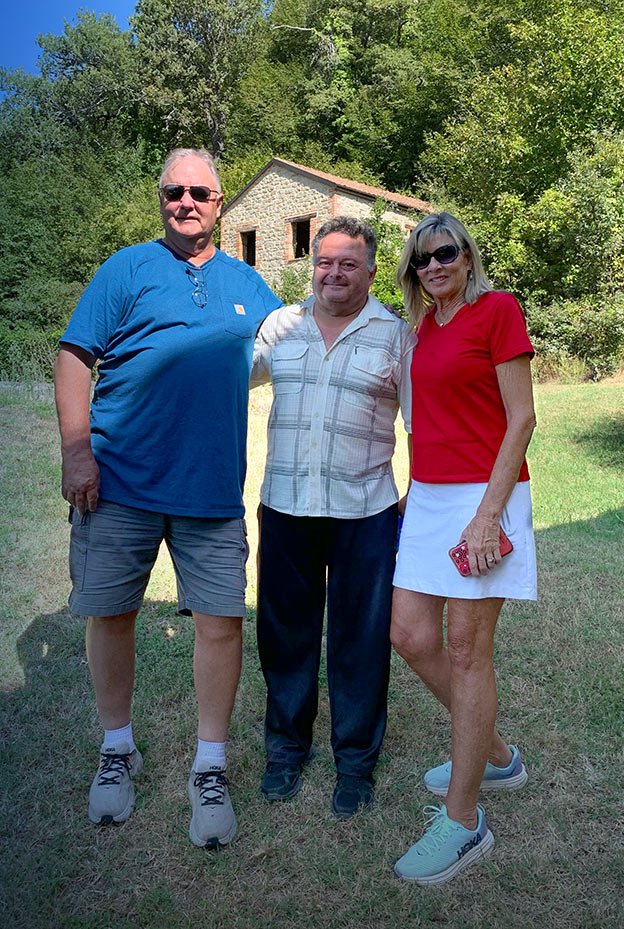
Louis VanSlooten’s son Tom VanSlooten and daughter Karen Miersma embrace Antonello Palmoni

Last September, during the “Paths to Freedom” (Sentieri di Libertà) celebration to honor the 80th anniversary of the Italian Armistice and the breakout of Allied POWs from Italian camps, several attendees had the thrilling experience of meeting descendants of the Italian families who protected their father or grandfather. 

This post is about the meeting of two of escaped POW Louis VanSlooten’s children, Tom VanSlooten and Karen Miersma, and Antonello Palmoni.

Antonello’s grandmother Iginia and grandfather Luigi Palmoni hid and fed Louis and fellow PG 59 escapee Luther Shields. 

Antonello’s father, Marino Palmoni, was a 10-year-old boy when the desperate soldiers emerged from the woods near his family’s home to ask for food.

Read “Martino Palmoni on the Sheltering of the POWs” and “Louis VanSlooten’s Story.”

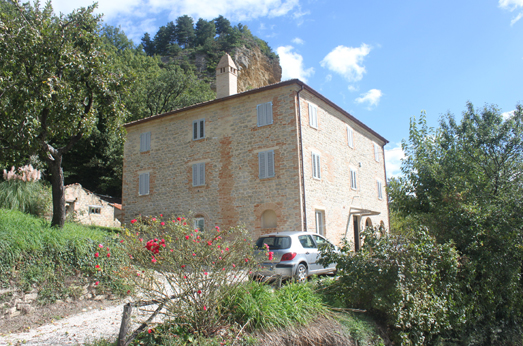
The old Palmoni home is nestled against a bluff, below the comune of Montefalcone Appennino

Tom VanSlooten was accompanied on this Italian adventure by his wife Carmen, and Karen by her husband Tom Miersma.

Continue reading
The Departure of Heroes

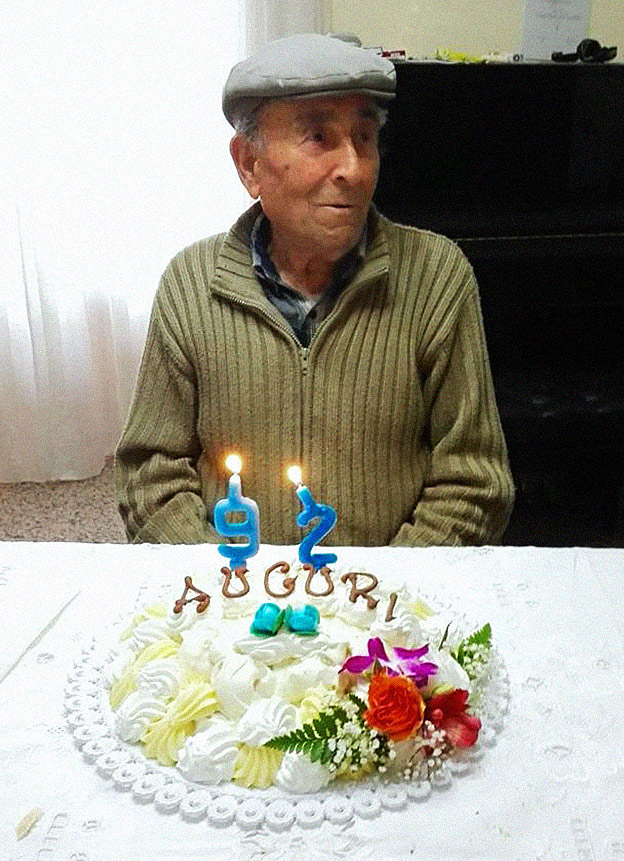
Antonio Del Gobbo on his ninety-second birthday
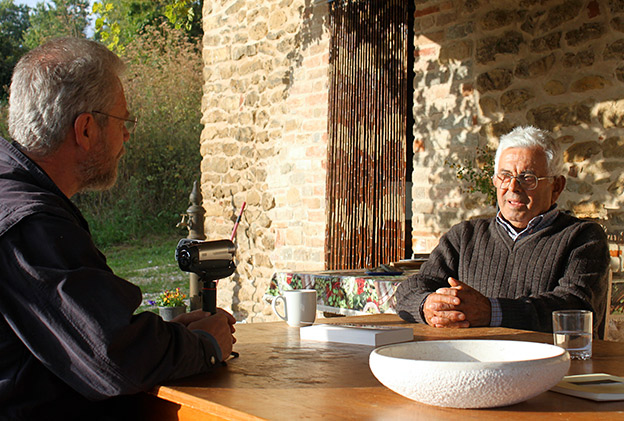
Marino Palmoni is interviewed by Italian historian Filippo Ieranò (left) and Ian McCarthy (not shown), 2010

My father, American Sgt. Armie Hill, was a prisoner of war in P.G. 59 Servigliano during the Second World War.

He escaped from the camp in September 1943, shortly after Italy signed the armistice with the Allies. Although the Italian government had capitulated, much of Italy was still held by the Germans. Escapees from prison camps across central and northern Italy found themselves on the run in enemy-occupied territory—and were at the mercy of local Italians for protection.

The Italians themselves were divided between fascists, who cooperated with the Germans, and partisans, who fought for liberation of their country. Rural laborers and farmers, the contadini, were faced with an ethical dilemma when ragged POWs turned up at their doorsteps asking for food, shelter, or directions. 

Continue reading

A Visit to the Palmoni Home

On a sunny morning late last September, Marino Palmoni and his son Antonello took a group of us to see the area of Montefalcone Appennino where, during World War II, the Palmoni family sheltered escaped prisoners of war.

Along for this tour were: Anne Bewicke-Copley and David Runciman (who own a home in Montefalcone), Aat van Rijn (from the Netherlands, now a resident of Montefalcone), Steve Dickinson (visiting from England), and Mark Randolph and I (visiting from the United States).

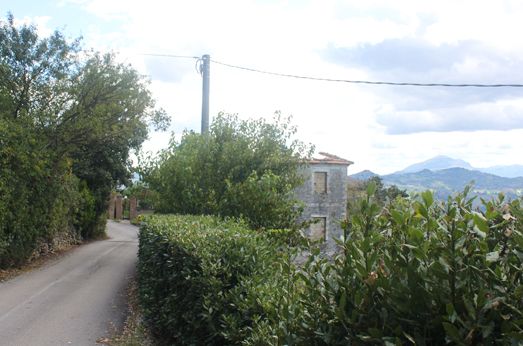
The road to the Palmoni home—Casa Palmoni—in Montefalcone Appennino, Italy.

Casa Palmoni.

Casa Palmoni and the Marziali Property

This is the house where the Palmoni family lived for over 100 years. There were over 20 people living in this house during the war: Mario’s grandparents—Iginia and Luigi Palmoni—Luigi’s four brothers and their wives, and all their children.

They were contadini—sharecroppers working on the property of the rich Marziali family. The Palmonis didn’t own the house.

Marino remembers—as a boy—taking food to the prisoners who were hiding in the woods above his home. His family looked after four of the prisoners who stayed with them in the house—two English soldiers and two Americans (Louis VanSlooten and Luther Shields).

Continue reading

Celebrating Family Ties

A Dickinson family outing to the beach. At front are Robert, youngest brother Len on the lap of his mother, and his father. In back are brothers James and William.

On this occasion—the Thanksgiving weekend, when American families gather to feast, remember the past, and meditate on their blessings—I’ll pause for a moment to reflect on the universality of family ties.

Here are three families—British, American, and Italian—who have connections to prisoners from Camp 59. The stories of Robert Dickinson, Marino Palmoni, and Armie Hill are well-covered in a number of posts on this site.

In celebration of this holiday, here is an international family album.
Continue reading

A Season for Visits

John Davison, his family, and new Italian friends explore the grounds of the old Cararola farm, where Norman Davison was at first assigned to work and where he later found shelter.

Steve Dickinson and Dennis Hill were among visitors to Camp 59, where Steve’s uncle Robert Dickinson and Dennis’ father Armie Hill were imprisoned. At center was the hole in the wall—since mortared shut—through which many prisoners escaped from the camp.

For three individuals who have an intimate family connection to the prisoner-of-war camp at Servigliano, this fall was a unique time for discovery.

John Davison this year made contact with descendants of Giovanni Bellazzi, the northern Italian farmer who sheltered his father, escaped prisoner G. Norman Davison. Giovanni and his friends helped to arrange for Norman’s safe passage to Switzerland.

Norman had been a prisoner at Camp 59 before he was transferred to camps farther north, where he was required to work on farms.

In early September, John and his family visited the town of Vigevano and experienced a thrilling welcome. (See posts In Their Fathers’ Footsteps, Part 1 and Part 2).

Then, at the end of September, Steve Dickinson and I were among visitors to Camp 59 in Servigliano, where Steve’s uncle Robert Dickinson and my father Armie Hill were interned.

Continue reading

Marino Palmoni on the Sheltering of the POWs

I nonni Iginia e Luigi_g150

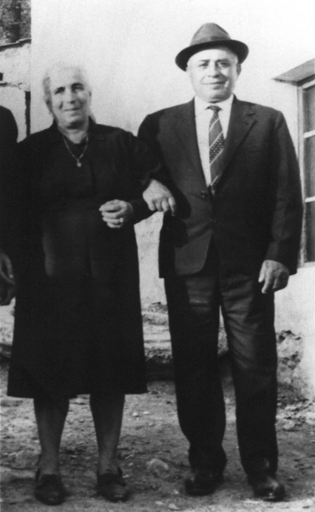
Marino’s parents, Iginia and Luigi Palmoni (Marino genitori, Iginia e Luigi Palmoni)

This recollection of the experiences of Marino Palmoni during the long winter of 1943–44 was provided by his son Antonello Palmoni. Antonello interviewed his father for this story in May 2009.

marino_r100

Marino Palmoni

The story is presented here in Italian and translated into English.

First, the English translation (Tradotto in inglese):

In September 1943, my grandfather Luigi, my father Marino (10 years old), and my uncle Gino (5 years old) were plowing the field near the woods beneath the cliff, when out of the woods came a man. Although he did not speak Italian, we understood from his gestures that he was hungry.

Grandfather asked my father to return home and bring something to eat, so Marino did and returned with bread and cheese. Our family was poor and large; there were more of us at home.

Continue reading