Author Archives: Dennis Hill

On the Sheltering of Tom Ager

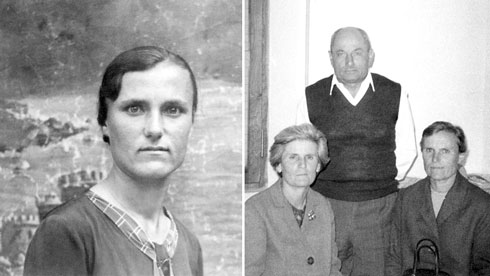
maglioni-ager_r72

Above left: the formerly unidentified Italian, now revealed to be Romano Maglioni, who lived in Premilcuore, Italy

Above right: Tom Ager, after war and imprisonment

See “Thomas Ager—Escapee from Italian Camp 82” for the story of Tom Ager’s escape from captivity.

When Gill and I were working together on her father’s story last February and she sent me the photo of Romano Maglioni, she wrote, “There is a bit of a mystery about this last photo. It was amongst the letters, and has a name and address on the back. As far as I can read it: Maglioni (and I cannot read the other name, something like Oronuoso) No 1, Via Roma H10 Premilcuore Forli Italia. I wonder if it was someone who helped him when he was on the run.”

Soon after that, I discovered online the name of a woman named Annarita Maglioni at an address on Via Roma in Premilcuore. “Maybe she is a relative,” I wrote to Gill, “Perhaps you should write to her (in Italian) and send a copy of the photo and scrap of paper with the address.”

Continue reading

Lost U.S. Military Records

tobyroth-let_r72

Official letter concerning Armie Hill’s destroyed military records

An inquirer to this site wrote to me last fall that in his search for military records concerning his father, he had come up short. He explained, “I do have a copy of the SF-180, but since the fire in 1973 his official army records may never be known.”

In 1991, my own father, Armie Hill, learned of that fire when, in response to my family’s urging, he wrote to Congressional representative Toby Roth about possible eligibility for a medal he had not received but might be entitled to—the Silver Star.

When I interviewed my dad about his war experiences in 1976, he had told me that after leaving Camp 59, he and fellow escapee Ben Farley were among the first to reach the Allied line—having traveled some 300 miles from Servigliano through the mountains of central Italy to Termoli in just 31 days.

Continue reading

B-24 Bomber Crash Commemorated

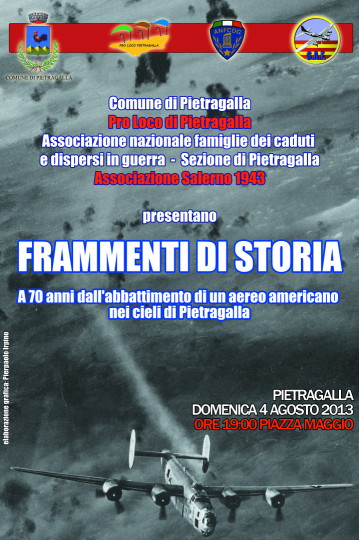
pietragalla ridotto

Frammenti di Storia poster—courtesy Matteo Pierro, Salerno 1943 Air Finders

Tomorrow in the commune of Pietragalla, Italy, community members will gather for a memorial service in honor of the crew of the American B-24 bomber known as the Fyrtle Myrtle.

The plane crashed 70 years ago this summer—on July 16, 1943.

A group of Italian avian archaeologists of the Salerno 1943 Air Finders group in Italy recovered the wreckage of the Fyrtle Myrtle last year.

The full story of the Fyrtle Myrtle is told on the “B-24 Bomber Fyrtle Myrtle Discovered” post.

Three men survived the crash. Staff Sergeant Edward T. Dzierzynski is listed in the WW II POW database of the U.S. National Archives as having been interned in Camp 59. Although the camp that Staff Sergeant Cyrus F. Johnson Jr. was in is not specified in the database, he likely was held in Camp 59 as well and escaped with Edward Dzierzynski (official records indicate the two men returned to the Allied forces on the same day).

The third survivor, Staff Sergeant Robert E. Dulac, who was badly injured in the crash, was taken to a hospital in Potenza, Italy.

Cyrus F. Johnson is survived by his sons Ron and John Johnson. Lloyd Eldon Kile, who died in the crash, is survived by a nephew, Dennis Heter. I am unaware of any relatives of the other crew members.

Continue reading

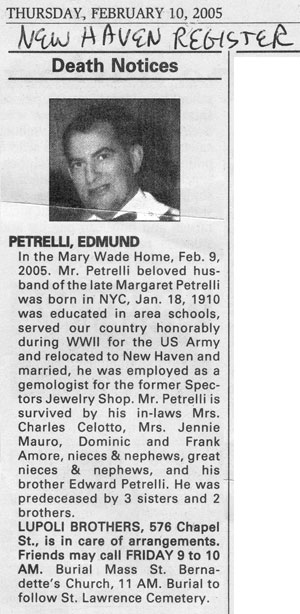
Escapee Edmund Petrelli—An Obituary

Petrelli_r72

Several years ago, Mario Vacca attempted to discover what happened to the four men with whom his father, Felice “Phil” Vacca, escaped from Camp 59.

He sent one inquiry to New Haven, Connecticut.

Mario explained, “A kind doctor from New Haven, Dr. E. Anthony Petrelli sent me a letter with Edmund’s obituary and it had a photo. It was only by coincidence that he had just received my letter and saw the obituary.”

New Haven Register
Thursday, Febuary 10, 2005

Death Notices

Petrelli, Edmund

In the Mary Wade Home, Feb. 9, 2005. Mr. Petrelli beloved husband of the late Margaret Petrelli was born in NYC, Jan. 18, 1910 was educated in area schools, served our country honorably during WWII for the US Army and relocated to New Haven and married, he was employed as a gemologist for the former Spectors Jewelry Shop. Mr. Petrelli is survived by his in-laws Mrs. Charles Celotto, Mrs. Jennie Mauro, Dominic and Frank Amore, nieces & nephews, great nieces & nephews and his brother Edward Petrelli. He was predeceased by 3 sisters and 2 brothers.

Continue reading

Post-war Letters from the Virgili Family

lelena_virgili-siblings_c72

Above left, Adele Virgili—also known as Lelena, or Lena
Above right, Virgili siblings Luigia (also called Gigetta) Sergio, and Adele (Lelena)

After his return from captivity in Italy, Felice “Phil” Vacca exchanged letters with several members of the Virgili family—the Italians who protected him after his escape from Camp 59. (See Felice “Phil” Vacca, Part 2—Camp 59 and Escape.)

These letters continued at least into the 1950s and 1960s.

In the first of two letters below, Virgili family matriarch Maria asks Phil about Giuseppe Montesi and Antonio Petrelli. Phil’s son Mario and I assume that Maria is in fact inquiring about Joe (whom the Italian family would have called Giuseppe) Mandese and Edmond Petrelli. Peter Calvagno, Edmond Petrelli, Joe Mandese, and Tony Spicola were the four prisoners with whom Phil escaped from Camp 59.

Continue reading

J. Keith Killby’s Memoir in Print

keith_killby_r72

J. Keith Killby, in his London flat, holds a copy of his memoir on the day the books arrived from the printer

The initial plan for publication of In Combat, Unarmed: The Memoir of a World War II Soldier and Prisoner of War goes back several years, when Keith’s nephew, Malcolm Angus, approached him about recording his story.

Malcolm lives in New South Wales, Australia. In the epilogue of the memoir, he writes of the challenging process of writing the book when he and Keith were separated by great distance:

“It is June 2011, two weeks before Keith’s ninety-fifth birthday.

“I am writing this epilogue under my uncle’s close direction in his London flat, where we have been hard at work revising and editing his memoir. I started work on his story some years ago, attempting to do so by Royal Mail from my home in Australia. This proved rather difficult, and so I decided to complete the memoir by his side. Knowing that I was planning the visit, he telephoned me and said, ‘You better hurry up!'”

Continue reading

Vacca Brothers—Tracing Their Father’s Trail

church_01_r72

Felice “Phil” Vacca attended services at this church with the Virgilis, even while the area was controlled by the Germans.

The church was the landmark that Tony used to find the Virgili family in 1968. He knew that it was just down the hill and across the river from the Virgili home, where his father had found shelter after his escape from Camp 59.

Continue reading

Felice “Phil” Vacca, Part 3—War’s End

This post is the third and final installment of the story of Camp 59 survivor Felice “Phil Vacca, which began with “Part 1—Off to War,” and “Part 2—Camp 59 and Escape.”

“We landed at Boston, Massachusetts, on August 2, 1944. From there we were shipped to Camp Upton, Long Island, New York. At that time we were given a thirty-day vacation. After 30 days, on August 31, 1944, I reported to Camp Butner, North Carolina, for duty.”

There was a rule in force at that time that forbade Ex-POWs from returning to the same theater of action once repatriated. The military had the choice of sending Phil to the Pacific theater or keeping him in the U.S. He became a guard at the White House.

wh_guard_r72

Phil standing guard in front of the Treasury Building, September 1945

“At that time I was picked out by Captain Minns, from the 250th Military Police (SP),” Phil explained, “[and we were] stationed at 17th and E behind the State Department in Washington, D.C. We had four machine guns—two that were located on the grounds in front of the White House near the Washington Monument, and one each on the East and West Wings.

Continue reading

Italians—Resist by Every Means!

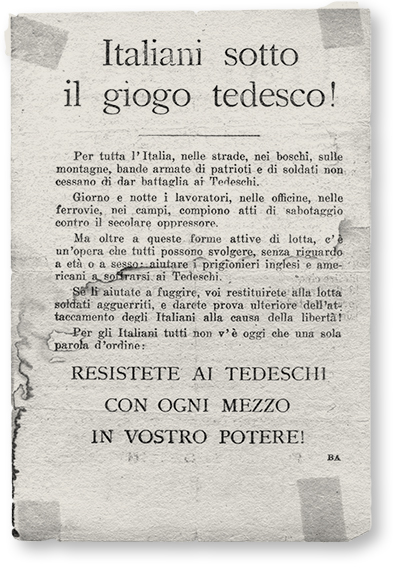
Mario Vacca shared the following leaflet with me.

His father, Felice “Phil” Vacca, an escapee from Camp 59, later described distribution of the leaflets over the Italian countryside:

“…American planes dropped [these] leaflets by the thousands in the area, offering 5,000 lire to any Italian who would help hide and care for the escapees. There were so many leaflets it looked as though it had snowed.”

Shown below are the leaflet’s front and back sides and translation into English.

leaflet_1_r72

ITALIANS UNDER THE GERMAN YOKE!

Throughout Italy’s roads, forests, and mountains partisan soldiers are in battle against the Germans.

Day and night from their shops, the railways, and fields, they continue to sabotage the oppressors.

Beyond their active struggle is work that everyone—regardless of age or gender—can do: help the English and American prisoners escape from the Germans.

Continue reading

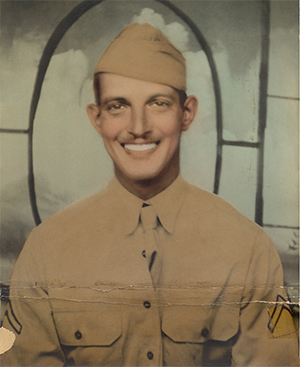
Felice “Phil” Vacca, Part 1—Off to War

vacca_dress_unif_r72

Private First Class Felice Vacca

I first heard about Felice “Phil” Vacca when his son Mario wrote to me last January:

“My father, Felice Vacca, escaped from PG 59 along with Peter Calvagno, Edmond Petrelli, Joe Mandese and Tony Spicola. I have visited the camp twice. I do have some history if you are interested.”

When I wrote back that of course I was very interested, Mario then sent me a long, detailed account of Phil’s experiences.

Mario had clearly invested a great deal of thought and effort into recording his father’s story. The format he chose was that of a scholarly research paper, complete with extensive footnotes, cross references to historical accounts of the war in North Africa (where Phil was captured), and links to web resources.

What I am posting here, with Mario’s permission, has been taken from that larger paper. Although I’ve removed the notes and references to external sources, the posts contain Phil’s full account of his experiences as well as additional details provided by Mario’s brother Jim.

Mario’s brother Tony was a resource for the paper, too. It was Tony who, when stationed in Italy during the 1960s, found the Virgili family—Phil’s protectors after his escape from Camp 59.

Continue reading