
Every once in a while, a story turns up that seems almost too remarkable to have remained hidden for decades in an archive. The escape story of Staff Sergeant Robert W. Nicholls is one of those striking accounts. Shot down over Italy on his twenty-sixth birthday, captured and taken to PG 59 Servigliano, Nicholls escaped from the camp after the Italian Armistice and spent the next month making his way across the Italian countryside toward the Allied lines.
Military historian Cristiano D’Adamo discovered Nicholls’ story during his research and created The Birthday Mission, his account of the experience based primarily on Nicholls’ own testimony, given to an Allied intelligence officer after he crossed the lines in October 1943.
I’m grateful to Cristiano for choosing to tell this story through Camp 59 Survivors. Stories like this are why I continue to believe there is so much more to discover—and share—about the experiences of the men who passed through PG 59. Cristiano’s research has allowed yet another of these stories to be heard.
The Birthday Mission
By Cristiano D’Adamo
The morning of July 17, 1943, began the way most mornings began in the desert war: with heat, engine noise, and the particular quietness of men who had done the math on their own survival.
Staff Sergeant Robert W. Nicholls was twenty-six years old that day—born in Mina, Nevada, on this exact date in 1917—though it is unlikely anyone marked the occasion on the flight line at Benghazi.
Twenty-seven B-24 Liberators were being readied for a long haul north, across the Mediterranean, to Naples. It was the kind of mission that looked clean on a map. Robert’s ship had a name that carried its own contrary humor: Lady Fifinilla. The crew flew under 1st Lt. Curtis S. Griffin, with 2nd Lt. Joseph H. Potter Jr. riding as co-pilot, and a complement of men who had trained together, argued together, and now trusted each other with the absolute intimacy that only danger creates.
The aircraft experienced electrical power problems, and the thermal flying suits therefore did not work. The bombing run went well. Observers would note “good results.” The formation turned for home.
Then the flak found them. Lady Fifinilla shuddered, fell out of formation, and began to lose altitude. Almost immediately, German Me 109s arrived, swarming the wounded bomber, probing for the kill with the patience of wolves that know the wounded animal cannot run. According to Italian aviation historian Giancarlo Garello, the aircraft was shot down by Sergeant Gino Pizzati flying a Macchi C.204.
Somewhere in those frantic minutes, the interphone went dead. The last thing Robert Nicholls heard through his headset was his skipper’s voice giving the order to abandon ship. He jumped. His parachute opened. Below him, the landscape of Irpinia spread out in the summer haze. He landed near Avellino and was almost immediately apprehended by Carabinieri. It was an orderly capture, conducted within the bounds that civilized nations had agreed upon for such things, followed by a series of interrogations that pressed him but did not force him.
He would later learn that Griffin and Potter had not made it. Neither had Gordon Greattinger, a fellow gunner who had sat near him in the belly of the plane. The rest of the crew had survived to be taken prisoner, scattered by the same jump order that had saved Robert’s life.
He was taken to Prisoner of War Camp 59—P.G. 59, at Servigliano. The camp held roughly 1,200 men: mostly Americans, but enlisted soldiers from every Allied nation.
Then, on September 9, 1943, word moved through the camp at the speed of whispered electricity. Italy had signed an armistice.
For five days, the prisoners lived in a strange limbo of conflicting orders—stay, go, wait, run—as the Italian military and the German occupation sorted out, violently and rapidly, who was actually in charge of the peninsula.
By September 14, the men of P.G. 59 had made their own determination. The perimeter wall was breached. Hundreds of men poured out into the Italian countryside. A few shots were fired by the sentries. Then a voice came over the camp loudspeaker—firm, unambiguous—and ordered the guards to cease fire immediately. They did.
Whatever else might be said about that moment, someone in authority—probably Col. Enrico Bacci—had decided that the men walking out of that gate would not be shot in the back.
Robert Nicholls walked into a free Italian night.
He moved with a loose group of fellow escapees, following a country road that ran alongside a narrow-gauge railway line—the branch that ran from Porto San Giorgio up into the Sibillini hills toward Amandola. They walked through the September darkness, gently illuminated by the moon, staying off the main roads and listening for the sound of motors.
When they reached Amandola, the small mountain town at the end of the line, they were hungry enough to make the dangerous decision to enter town. They found a bakery. The shopkeeper stared at them—a group of foreign soldiers in ragged clothes at the door in the early morning—with an expression that held both fear and recognition.
He gave them what they needed. Each man took a loaf of bread. They thanked him and moved back toward the hills as quickly as they could.
Outside town, they encountered a small group of Italian civilians. One man among them had spent years working in Boston and carried a rough, warm American English inside him like a hidden treasure. He offered them civilian clothes—a generous gesture that could have meant serious trouble for everyone involved.
Robert and his companions, thinking clearly about the laws of war and their own status, politely and wisely declined. They remained soldiers, identifiable as prisoners of war, protected in theory by the same conventions that had governed their interrogation.
On what must have been September 15, they made a decision that seemed almost absurdly bold in retrospect: they boarded a public bus toward Ascoli Piceno. Word came from a local that the town was occupied by Germans, so they got off just short of the outskirts and continued on foot, abandoning paved roads for mountain trails and navigating by the stars when the terrain confused them.
For days they moved through the Apennines in autumn, cold at altitude, spectacular and indifferent to their predicament.
By September 19 or 20, roughly five days after the escape, they reached a small village west of Teramo, in Abruzzo. Here the locals looked at them differently. Perhaps the news had traveled. Perhaps the Germans were far enough away.
They were given civilian clothes. They were given a shave. They were allowed to rest.
Three days later, an Italian officer appeared.
He was part of a force of some two hundred Italians, supplemented by two Yugoslav officers and a handful of British soldiers, camped three miles away. Their position was well-stocked: uniforms, rifles, hand grenades, even field artillery.
The officer extended an invitation.
Join us. Fight here.
The Americans sat with the offer overnight. By morning, they had decided to decline and continue south, toward the Allied lines.
On September 24, they moved on. The following day, the German Army came and dissolved the Bosco Martese partisan band.
Two British soldiers in civilian clothes joined them somewhere in the hills—men navigating the same long southward journey. They reached Teramo by civilian truck and found, to their relief, no German garrison in the city.
At this point, the group, which had grown to six, quietly split in two. Each pair calculated its own odds.
Robert Nicholls crossed the front lines on October 16. He spent two days with a British unit, pitching in where he could, before being moved to North Africa and then back to England.
On October 31, 1943—Halloween, though it seems unlikely anyone noted the irony—Robert W. Nicholls sat down with an Allied intelligence officer and gave his deposition.
The events were a few weeks old at most. His memory was sharp, his account precise, his tone, one imagines, the steady flatness of a man who had survived a great deal and was only now beginning to understand it.
He had been shot down on his birthday. He had walked out of a prison camp. He had crossed a country at war using starlight and plain bread and the generosity of strangers who had every reason to turn him away.
He had made it home.
He was one of the lucky ones; thousands of prisoners of war were left in areas under German control.
Sources: The principal source for Nicholls’ account is his wartime deposition held by the U.S. National Archives and Records Administration (NARA): Nicholls, Robert W. (SSGT.) — EE-145. Additional information about the aircraft and its loss comes from the research of Italian aviation historian Giancarlo Garello.
About the Author
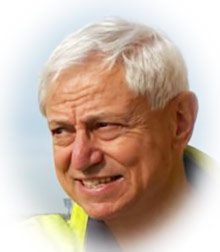
Cristiano D’Adamo is an Italian-American military historian and researcher who lives in Ascoli Piceno. A proud American citizen, Cristiano has spent many years researching Italian military history, with particular focus on the Italian Navy during World War II and the campaigns and events surrounding Italy’s involvement in the war.
Cristiano was born in Italy and became an American citizen before later regaining his Italian citizenship when Italian law changed to allow dual citizenship. His wife, Laura, acquired her Italian citizenship through him. As Cristiano puts it, they are “the real Italian-Americans.”
He is the author of a biography of General Bersagliere Arturo Benigni and a study of the Tunisian Campaign of 1942–1943, and is currently working on books about the Battle of the Oueslatia Valley in Tunisia and the German occupation of Ascoli Piceno and Teramo in September–October 1943.

