
This post is seventh in a series drawn from a History of I.S.9 (CMF) in the British National Archives. Research courtesy of Brian Sims.
See also “I.S.9 History—Organization,” “I.S.9 History—Tasks,”I.S.9 History—Methods,” “I.S.9 History—Communications,,” “I.S.9 History—Agent Choice and Training,” and “I.S.9 History—Air Operations.”
Below is a transcript of the section of the history detailing rescue efforts and drop of stores and supplies into enemy occupied territory:
Sea Borne Operations
Subject to enemy defences and weather, sea borne operations for landing personnel are not normally very difficult.
The one great stumbling block to pinpoint landings and certainly to evacuation by sea, is pinpoint navigation. Normally vessels must operate during the non moon period and to arrive at a given time at a given pinpoint on a long stretch of coast without distinctive landmarks, is extremely difficult.
Native pilots of course are invaluable, but even these find it difficult to navigate on a dark night to one given pinpoint on a long straight stretch of coastline. Given the use of naval craft fitted with the latest radar, the problem is less difficult, but where schooners, fishing boats, etc., are used, pinpoint navigation is difficult. One answer, under these conditions, is the use of a homing beacon tuned to a radio compass fitted to the vessel to be used. This homing beacon means, of course, an extra piece of equipment with necessary batteries and aerial which must be carried by the shore party.
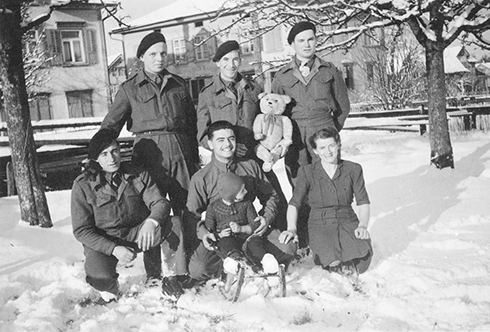
 Camp 59 Survivors