Category Archives: James Feehan

Jimmy Feehan—Soldier and Father

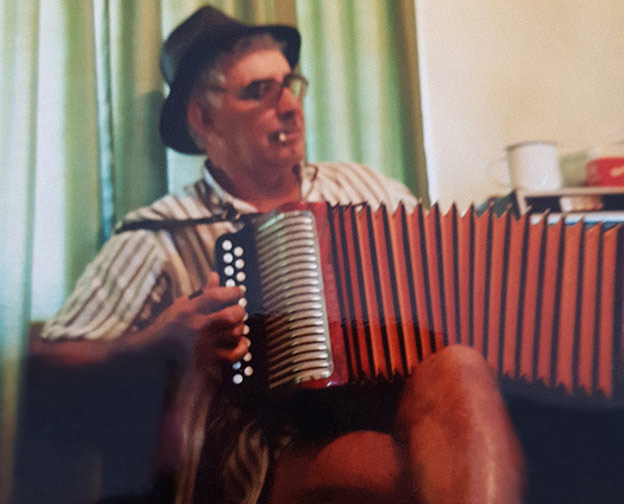
Jimmy Feehan in the early 1980s, at ease with his accordion—image courtesy of Pamela Robinson

If you type “Feehan” in the search box on this website you’ll see that references to Australian infantryman James “Jimmy” Feehan have occurred in a number of posts. For years has Jimmy struck me as a particular interesting fellow, so I’m devoting this post exclusively to him.

Jimmy enlisted on 18 June 1941 and served in the 2/32 Infantry Battalion of the Australian 9th Division, which saw action in North Africa in 1942. Jimmy’s military record notes he was reported missing in action 17 July and officially confirmed a POW on 22 October 1942.

The Australian War Memorial website has this description of the conflict at El Alamein where Jimmy was captured:

The war in North Africa had become critical for the British forces. In July 1942 Germans and Italians had reached El Alamein in Egypt, about seventy miles from Alexandra. The 9th Division was consequently rushed to the El Alamein area and held the northern sector for almost four months as the British Eighth Army was reinforced for an offensive under a new commander. 

The division’s orders for the first attack were issued on 7 July. Moving inland from the coast, the 2/32nd and 2/43rd Battalions (comprising the 24th Brigade) would attack along the ridgeline from Trig 22 and approach Ruin Ridge. The 2/32nd would lead the attack, advancing from Trig 22 to the Qattara Track. The 2/43rd would then proceed towards Ruin Ridge. 

The attack began on 17 July at 2.30 am. The 2/32nd captured the Trig 22 and linked with the 2/43rd but the Germans resisted fiercely and counter-attacked with tanks. The 2/32nd suffered heavily: nearly half its number were either killed or wounded and nearly 200 became prisoners of war. The fighting continued for several days.
Continue reading

Jimmy Feehan—Enlistment

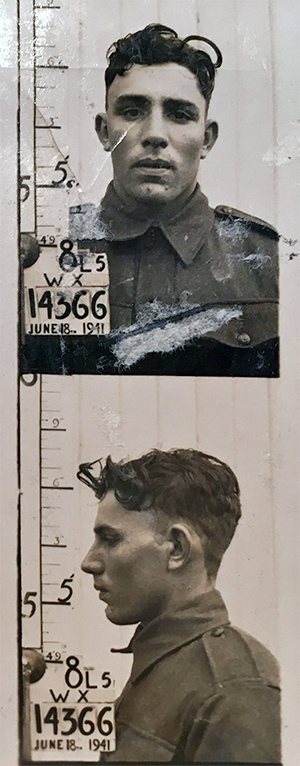
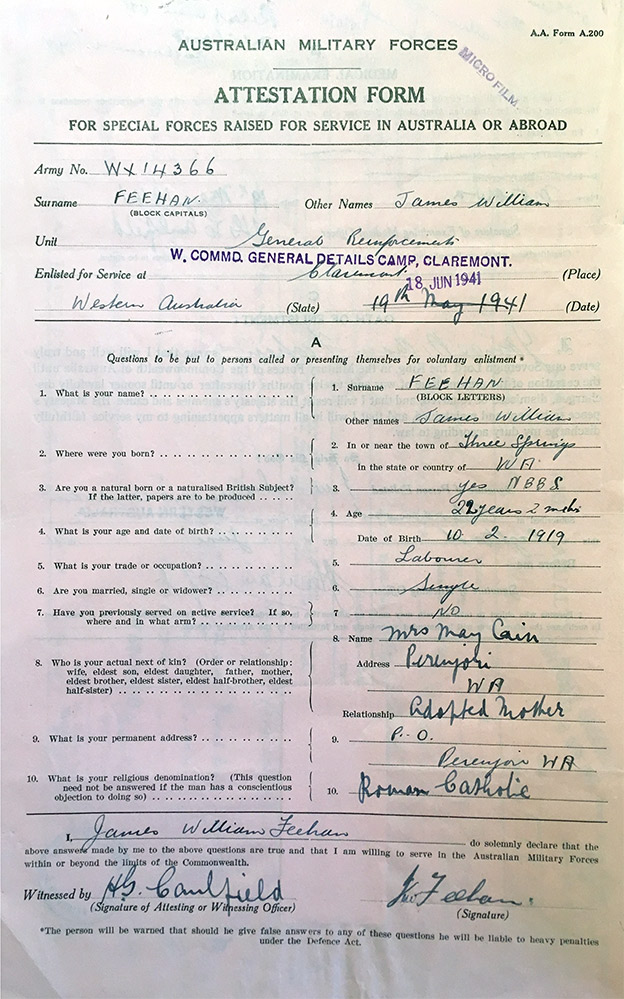
Jimmy Feehan enlisted in the Australian Special Forces on June 18, 1941, at the age of 22.

Front and side photos of him taken on that day are in his service records at the National Archives of Australia.

Katrina Kittel kindly shared copies of these records with me.

James William Feehan WX14364 was born in Three Springs, Western Australia, on February 10, 1919. His trade is listed as laborer and he was single when he enlisted.

Next of kin listed was Mrs. May Cain of Perenjori, Western Australia—his adopted mother.

Jimmy was one of nine Australians to escape from P.G. 59 in September 1943. The others were: John “Jack” Albert Allen, Thomas David Alman, Arthur George Bell (sometimes known as A. G. Jux), Lawrence Mortimer “Lawrie” Butler, Vaughan Lawrence Carter, Robert Edward Albert Edwards, Ronald James “Jimmy” McMahon, and Leslie Worthington.

See also “Jimmy Feehan and Thomas Penman,” “>Tom Alman—Back Home in Western Australia,” and “Tom Kelly—Escapee from P.G. 59.”

Also, use “Categories” on the home page to search for other “ANZAC Prisoners” posts.

Tom Alman—Back Home in Western Australia

Ray Worthington (son of P.G. 59 escapee Les Worthington) and Linda Veness (daughter of escapee Jim McMahon) discovered and shared this 1944 news article with me this week.

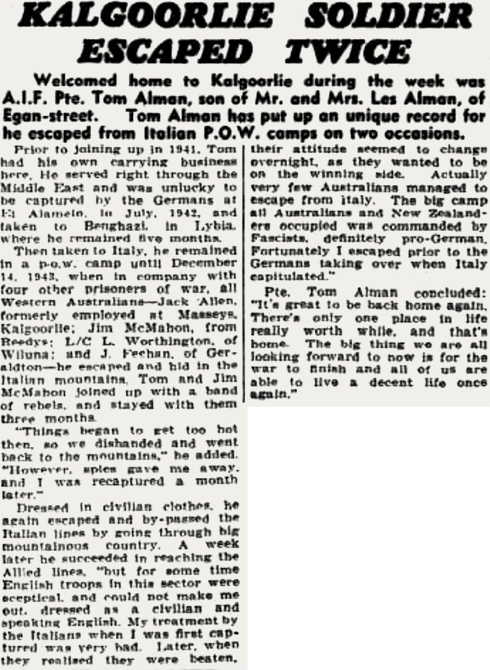
Kalgoorlie Soldier Escaped Twice

Sunday Times (Perth, Western Australia)
Sunday, 24 September 1944

Welcomed home to Kalgoorlie during the week was A.I.F. Pte. Tom Alman, son of Mr. and Mrs. Les Alman, of Egan-street. Tom Alman has put up an unique record for he escaped from Italian P.O.W. camps on two occasions.

Prior to joining up in 1941, Tom had his own carrying business here. He served right though the Middle East and was unlucky to be captured by the Germans at El Alamein, in July, 1942, and taken to Benghazi, Lybia [sic] where he remained five months.

Then taken to Italy, he remained in a p.o.w. camp until December 14, 1943, when in company with four other prisoners of war, all Western Australians—Jack Allen, formerly employed at Masseys, Kalgoorlie; Jim McMahon, from Reedys; L/C L. [Leslie] Worthington, of Wiluna; and J. [Jimmy] Feehan, of Geraldton—he escaped and hid in the Italian mountains. Tom and Jim McMahon joined up with a band of rebels, and stayed with them three months.

Continue reading

Jimmy Feehan and Thomas Penman

australians-r72

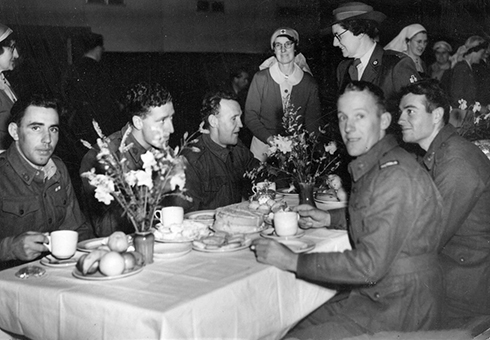
Escaped P.O.W.s arrive at Royal Park, Victoria, Australia, 1944. From left: Private J. W. Feehan from W.A. (Western Australia), Sergeant E. J. Brough from Victoria, Lance Corporal L. Worthington from W.A., Mrs. T. G. McClounan from the Red Cross, Private H. A. Lockie from Queensland, and Private J. A. Allen from W.A. (Argus Newspaper Collection of Photographs, State Library of Victoria)

Helen McGregor directed me to the above photo, which she found among the digitalized images of the State Library of Victoria. She had been searching for information on Jimmy Feehan, a friend whom her father, Scottish soldier Thomas Penman, spent time with after the men escaped from Camp 59.

I was pleased to see other P.G. 59 escapees in this photo: Leslie Worthington (see “Les Worthington—an Australian’s Adventure” and “A Timeline of Les Worthington’s Service“, and John Albert Allen (see “Conversations with Vaughan Laurence Carter and “Simmons’ Address Book—the Lone Australian.”

Les Worthington’s son, Ray Worthington, wrote to tell me he has been able to narrow the date of the photo: “I can tie the date of it down fairly closely from my record of Dad’s service which shows:

10/9/1944 – Disembarked at Melbourne (report of 25/9/1944)
14/9/1944 – Entrained at Victoria. Vic L of C Area (report of 25/9/1944).

“So it was between the 10th and 14th of September 1944.

“And Dad then arrived back in Perth on the 17th of September, so the first time 7 years old me had seen him in nearly 4 years!”

American readers should note the day precedes the month in the above dates. For example, 10/9/1944 is September 10, 1944.

Thomas Penman’s Service Record

The following dates and locations for Thomas Penman are from a British military record for Thomas that Helen McGregor shared with me.

This information is in the left column of the form:

Deemed to have been enlisted March 19, 1940.

DSR. – September 8, 1940

Posted I.T.C. [Infantry Training Centre] Royal Scots – Private – March 19, 1940

Posted June 28, 1942 – Pte [Private]

Missing – Pte – June 28, 1942

Prisoner of War (Italian)
Escaped (Now in Allied Hands, S/Italy)

In another area, “Service at Home and Abroad” indicates:

Home – March 19, 1940 to June 25, 1940
Egypt – June 26, 1940 to December 15, 1940
Sudan – December 16, 1940 to July 9, 1941
Egypt – July 10, 1941 to June 27, 1942
ITALY (P.W.) [prisoner of war] – June 28, 1942 to August 10, 1944
NS. Y/167/44 HOME – August 11, 1944 to September 26, 1946

I assume the span of June 28, 1942 to August 10, 1944 is inclusive of Thomas’ time “on the run” after escape from Camp 59—and his involvement with the Yugoslavian partisans that Helen mentions in “Scottish Escapee Thomas Penman.”

The last entry apparently covers the period from his return to the UK in August 1944 through his lengthy recovery at Camp 197 (“The Mount”) in Chepstow, Monmouthshire, Wales.

Scottish Escapee Thomas Penman

penman-1946_r72

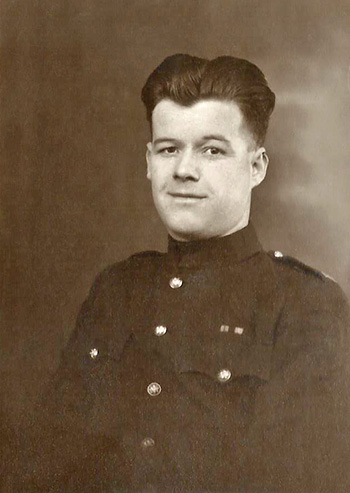
A hale and hearty Thomas Penman in 1946, after medical treatment for malnourishment in Chepstow, Wales— a “fattening up” gradually on small amounts of food, chocolate, and milk

I received a note from Helen McGregor, who lives just outside Glasgow, Scotland, last month.

She wrote, “My father was one who escaped from the camp at Servigliano and lived with an Italian family for at least one year.

“He is dead now, but I know he was mentioned in dispatches and given a hero’s welcome home. His name was Thomas Penman and he was from Glasgow, Scotland.”

Thomas Penman, Highland Light Infantry, was captured in North Africa between El Alamein and Tobruk and shipped to Italy. He escaped capture twice.

The following accounts are among those Helen’s father shared with her older siblings over different periods of time. Although the details are sketchy, the stories are nonetheless compelling.

Continue reading