Category Archives: Don Giuseppe Ciabattoni

A Guest in Two Rectories

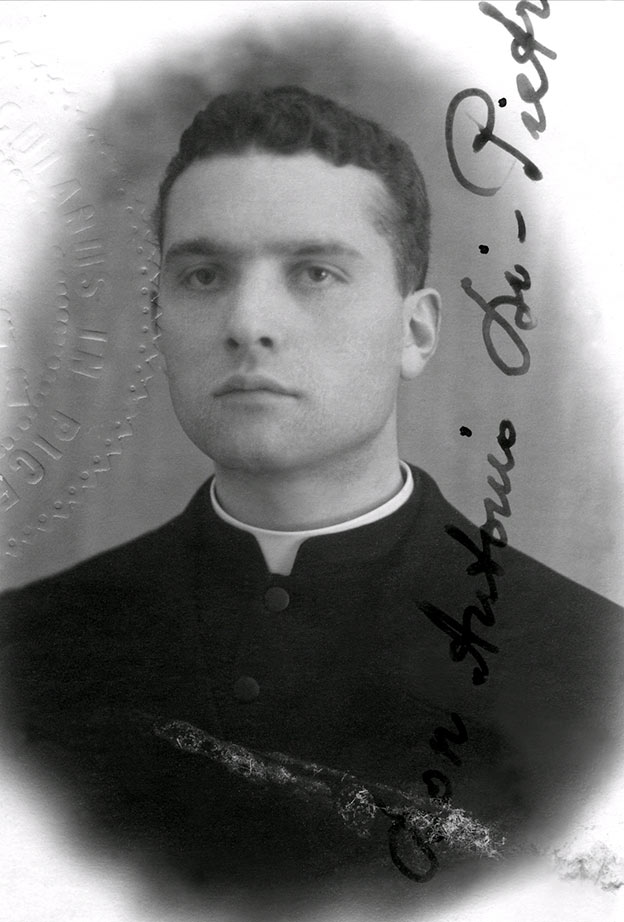
Don Antonio Di Pietro

By way of my friends Gian Paolo Ferretti and Antonio Ferretti I’ve learned of a British officer who was sheltered in the comune of Roccafluvione in late 1943.

The officer, Major Patrick Clayton, was the guest of two Catholic priests: Don Antonio Di Pietro, who served the parish in Osoli, and Don Giuseppe “Don Peppe” Ciabattoni, who served the parish in Marsia, both within the comune of Roccafluvione.

The road distance from the Roccafluvione villages (frazioni) of Osoli and Marsia is 6.8 kilometers (about 4 miles)—Google Maps

Antonio Ferretti had previously shared segments of Don Peppe’s chronicon diary, in which the priest briefly mentions Patrick Clayton. (See “Don Giuseppe Ciabattoni—A Hero of Faith.”)

Now Antonio has accessed the chronicon of Don Antonio Di Pietro, which is housed in the Archivio Diocesano.

Paolo notes that Osoli has two churches—one dedicated to San Martino and the other to San Giovanni. Both are outside of the village, and San Martino was chosen as the church of the parish because it is nearer to Osoli.

Today Osoli is under the parish of Marsia.

Continue reading
“In Peter’s House”—the Imprisonment of Don Giuseppe Ciabattoni

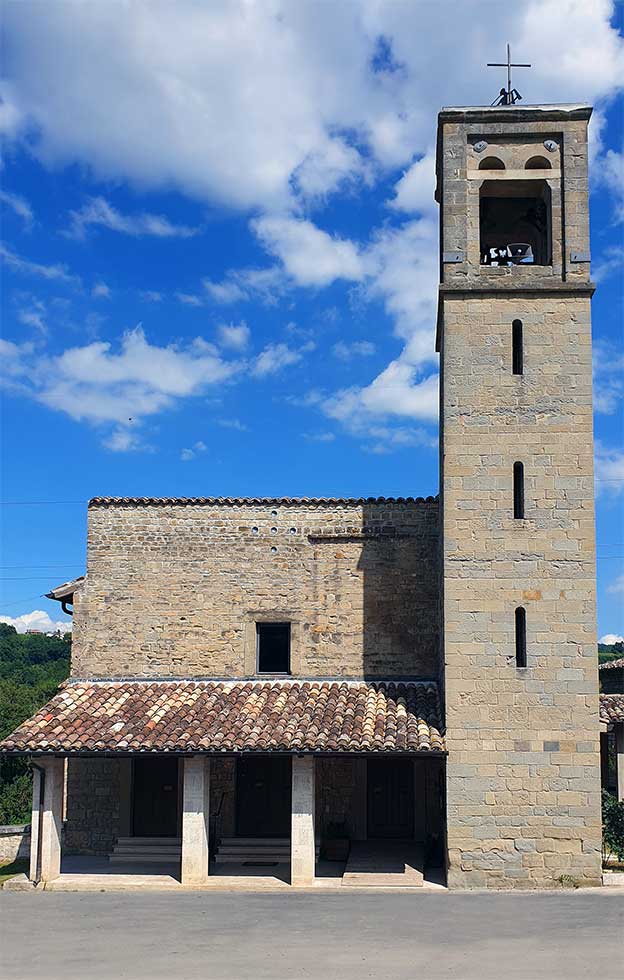
The Church of Santo Stefano Protomartire in Marsia, Roccafluvione. Image—Wikimedia Commons

An entry for 17–21 May 1938 from the “chronicon” of Don Giuseppe Ciabattoni offers insight into the turbulent political climate in Italy that presaged World War II. (The priest’s chronicon was a journal where activities of the parish were recorded.)

Then, in the latter two entries in this post, Don Peppe—as he was affectionately called by his parishioners—contrasts the oppression of war with the joy and spirit of thanksgiving felt by the parishioners after liberation from the Nazis.

Don Peppe used the phrase “in casa di Pietro” “(in Peter’s house”) in sharing the story of his own arrest and imprisonment by the fascists. This allusion is to the Biblical imprisonment and beating of Saint Peter.

I’ve recently posted another excerpt from Don Peppe’s chronicon on Camp 59 Survivors, an entry covering the period of Nazi-fascist oppression from 8 September 1943 to liberation on 17 June 1944. Read “Don Giuseppe Ciabattoni—A Hero of Faith.” That excerpt includes the Marsia parish’s escaped POW rescue work. 

Chronicon excerpts are here translated into English; however, I’ve also included the original Italian transcription (in italics).

Once again I wish to thank Gian Paolo Ferretti for his ongoing support and for guiding me through the translation of the chronicon.

Continue reading

Don Giuseppe Ciabattoni—A Hero of Faith

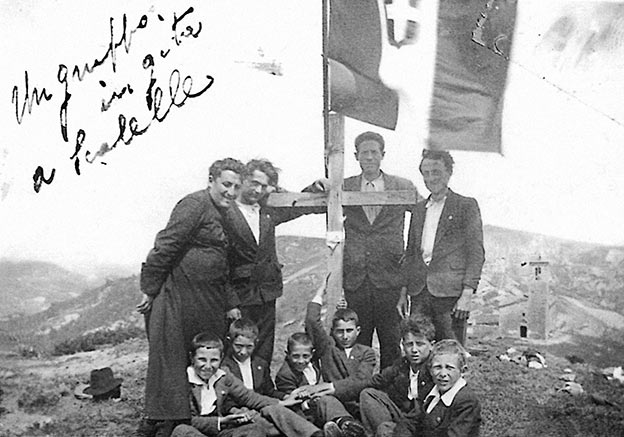
Don Giuseppe Ciabattoni (left), on a 1936 visit to the ninth-century church of Santa Maria di Scalelle; most likely he is accompanied by aspirants of the Catholic Action Youth

I am profoundly grateful to several individuals who have made possible access to the information for this post.

First, a hearty thanks to my friend Gian Paolo Ferretti of Ascoli Piceno, Italy. Paolo contacted me last November about his great grandfather Antonio Ferretti who, on his property in Falciano, sheltered several American POWs who had escaped from PG 59. 

In emails with Paolo, I shared a few details about my father’s time on the run after his escape from PG 59. I explained that Angela Bianchini had protected my father (Armie Hill) and his friend Ben Farley in Roccafluvione. 

In 2010, I had visited Roccafluvione hoping to learn more about Angela, and I wrote about that visit afterward (see “In Search of Armie’s Italian Angels”). It was during the trip to Roccafluvione that I learned the name of Don Giuseppe Ciabattoni.

Paolo surprised me with news that he had arranged a meeting with Guido Ianni, deputy mayor of Roccafluvione, to discuss our quest. The deputy mayor was eager to help us learn more about Angela and Don Giuseppe Ciabattoni, and during Paolo’s meeting with him he was introduced to Antonio Ferretti, a young man working on a research project in the comune archives. 

Antonio immediately began to hunt for information.

Continue reading