
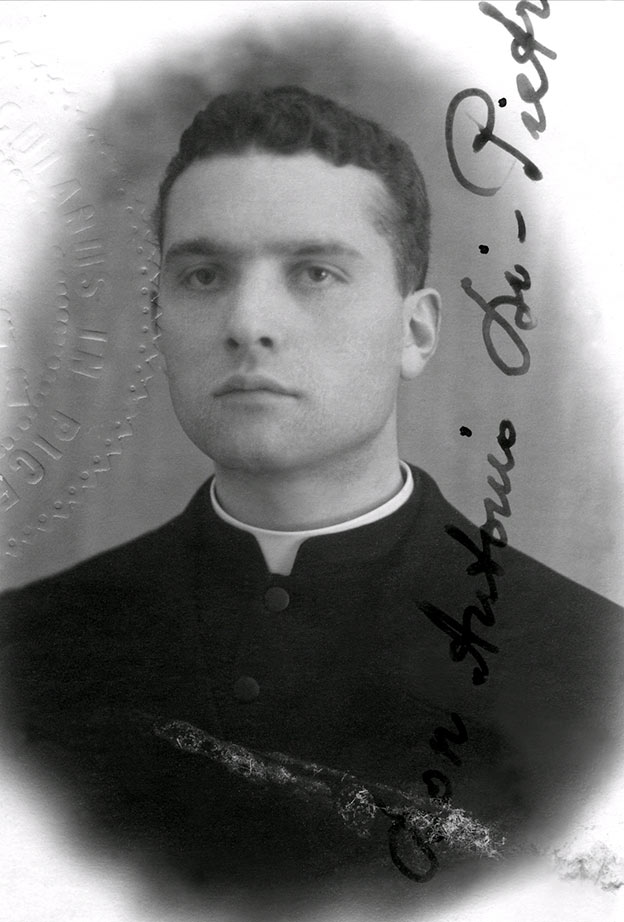
By way of my friends Gian Paolo Ferretti and Antonio Ferretti I’ve learned of a British officer who was sheltered in the comune of Roccafluvione in late 1943.
The officer, Major Patrick Clayton, was the guest of two Catholic priests: Don Antonio Di Pietro, who served the parish in Osoli, and Don Giuseppe “Don Peppe” Ciabattoni, who served the parish in Marsia, both within the comune of Roccafluvione.

Antonio Ferretti had previously shared segments of Don Peppe’s chronicon diary, in which the priest briefly mentions Patrick Clayton. (See “Don Giuseppe Ciabattoni—A Hero of Faith.”)
Now Antonio has accessed the chronicon of Don Antonio Di Pietro, which is housed in the Archivio Diocesano.
Paolo notes that Osoli has two churches—one dedicated to San Martino and the other to San Giovanni. Both are outside of the village, and San Martino was chosen as the church of the parish because it is nearer to Osoli.
Today Osoli is under the parish of Marsia.
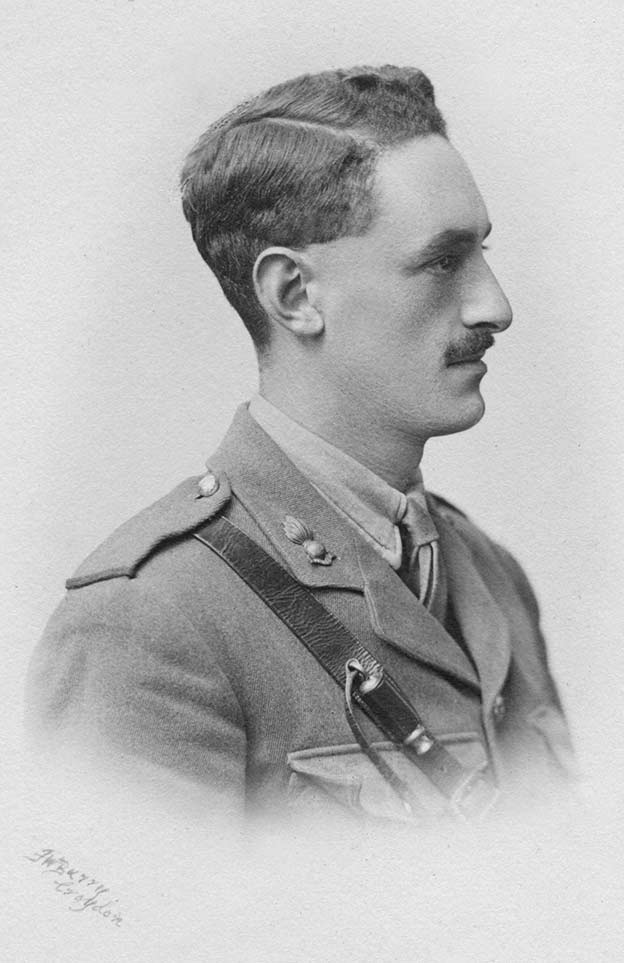
Major Patrick Clayton
Patrick Clayton was a colorful, larger-than-life character.
I’ve gleaned a few facts about him from the websites of the UK National Archives and the Imperial War Museums, as well as Wikipedia:
Patrick Andrew Clayton was born in Croydon, London, on 16 April 1896.
During the First World War, he served as an officer with the Royal Field Artillery of the British Army. He then spent much of the 1920s and ’30s with the Egyptian Survey department mapping extensive areas of previously uncharted desert.
When the Second World War broke out Patrick was a government surveyor in Tanganyika (now part of present-day Tanzania). In July 1940, Ralph Bagnold, founder of the British Army’s Long Range Patrol Unit (LRPU), which became the Long Range Desert Group (LRDG), had Patrick returned to Egypt because of his detailed knowledge of the Western Desert. He was commissioned into the Intelligence Corps as a captain and served in the LRDG.
Patrick was leading the LRDG “T” Patrol in a planned attack on Kufra when the patrol was engaged near Gebel Sherif by the Italian Auto-Saharan Company on 31 January 1941. During the action he was wounded and his car damaged. He and his men were taken prisoner on 1 February 1941.
He was imprisoned at PG 78 Sulmona and PG 29 Veano.
After the signing of the Italian Armistice, the prison guards deserted PG 29 and the commandant advised prisoners to quit the camp. On 9 September 1943 Patrick headed south, hoping to reach the Allied lines. He was apprehended by the Germans on 22 December 1943. At one point he eluded his captors, but was recaptured on 8 January 1944 and entrained for Germany-occupied Czechoslovakia. En route he took part in another escape attempt; only two officers got away.
Patrick was interned in Oflag VIIIF Mahrisch Trubau for the remainder of the war.
As a prisoner, he employed his talents through drawing escape maps and creating fake documents for escaping POWs. In letters from camp he used code to send intelligence information to England.
In the Alphabetical List of POWs of the British Army, P. A. Clayton, 147264, is identified as a captain in the Intelligence Corps, whereas Patrick’s German POW record card in the UK National Archives identifies him as being a major. Both Don Antonio and Don Peppe refer to him as an English major.
So I wonder—was Patrick promoted from a captain to a major during his time of internment? If so, how was that promotion communicated to him?

After the war and readjustment to civilian life, Patrick returned to the Middle East to deal with the land and properties and problems between the Arabs. He left Egypt abruptly in 1952 when riots broke out.
He died on 17 March 1962 at the age 65.
Patrick was the inspiration for the character Peter Maddox in the 1992 novel The English Patient by Michael Ondaatje and the 1996 film of the same name directed by Anthony Minghella.
Patrick Clayton—A Special Guest in Roccafluvione
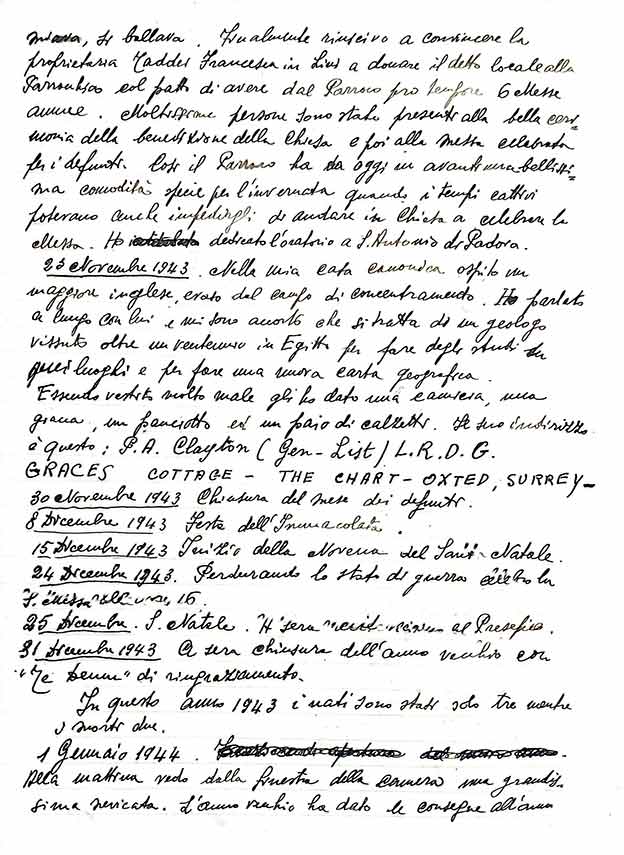
Don Antonio’s chronicon entry for 23 November 1943 describes Patrick Clayton’s stay at the rectory in Osoli, Roccafluvione:
November 23, 1943. In my rectory I am hosting an English major [an English officer] who escaped from a concentration camp. I spoke to him at length and realized that he is a geologist who lived in Egypt for over twenty years to study those places and to make a new geographical map. Since he was very poorly dressed, I gave him a shirt, a jacket, a waistcoat and a pair of socks. His address is this:
P. A. Clayton (Gen – List) L.R.D.G. [Long Range Desert Group]
GRACES COTTAGE – THE CHART – OXTED, SURREY
In his chronicon reflection on WWII, Don Peppe explains, “Among the prisoners in the parish priest’s house, the English geologist Maggre Klaiton Patrice [Major Patrick Clayton] was sheltered for 15 days.”
Farther along in his narrative Don Peppe describes a night raid on the rectory by Republican fascists; then he writes, “And Klaiton? Warned that same night by a messenger sent by the parish priest’s family, he was saved, together with 17 other prisoners, closer to the capital. He then moved with the priest to Spinetoli.”
By road, the distance from the rectory in Marsia to Spinetoli is about 37 kilometers (23 miles). It would appear by the dates in the two chronicons, and by Patrick’s sudden flight from the area with Don Peppe, that his stay with Don Antonio preceded his stay with Don Peppe.
Finally, in a June 1944 chronicon entry Don Antonio describes the retreat of the German forces:
June 14, 1944. German troops pass through Osoli. They took my bicycle, a camera, a pair of trousers, a sweet pizza that had been given to me for my name day [that is, on the previous day, as June 13 is the feast day of Saint Anthony of Padua], a shoulder pad and other things. Other parishioners are also robbed. From Sbraccia Serafino they took away a donkey, from Galiè Andrea a porchetta, from Giovanni Cherubini, tobacconist, about eleven thousand lire, lard, linens and various gold objects. The Germans are retreating.
 Camp 59 Survivors
Please correct:
23 novembre 1943. Nella mia canonica ospito un (laureato in inglese) maggiore inglese fuggito dal campo di concentramento.
Regards,
Luigi Donfrancesco Luigi Donfrancesco luigi.donfrancesco@gmail.com