
Le Ville sul Tufo
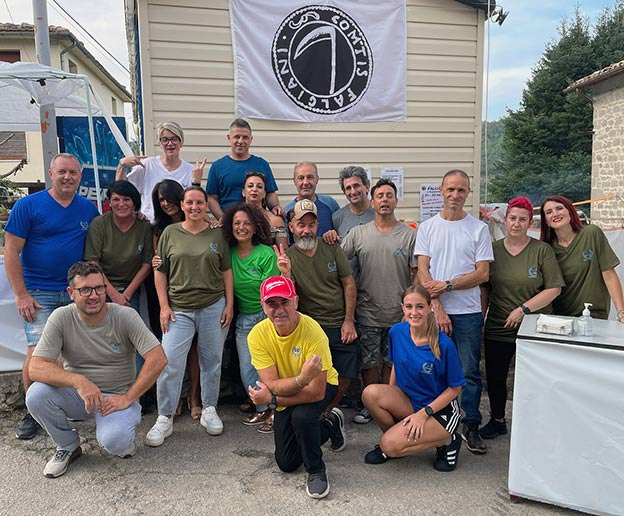
A group of community volunteers based in Falciano, who call themselves Le Ville sul Tufo, is dedicated to preserving local landmarks and sharing the history of their area with visitors.
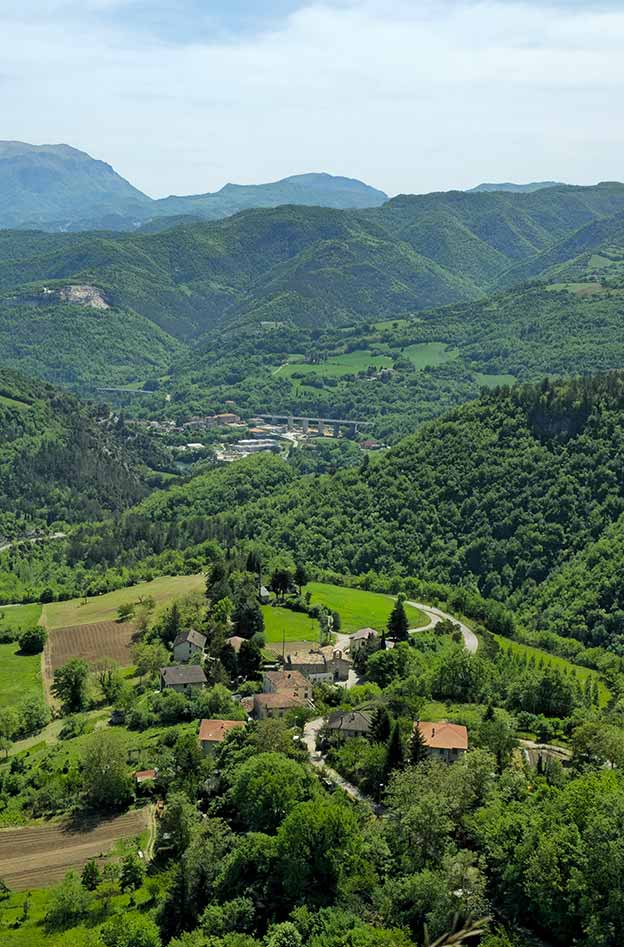
The association is comprised of residents of Falciano—the Falcianesi—along with former residents and descendants of Falcianesi, and their spouses/companions. Today only 15 people live in the small cluster of homes known as new Falciano. Old Falciano, shattered by an earthquake, has been entirely abandoned.
A core group of Le Ville sul Tufo gathers periodically for work sessions that include tidying historical sites, repair work, and path clearing. Group member Gian Paolo Ferretti says, “When we organize walks, conferences, or parties, other members and friends also participate.”
“The name Le Ville sul Tufo,” Paolo explains, “refers to a group of seven small villages that in the past were called ville, for example Villa Falgiano [a former spelling of Falciano]; ‘sul tufo’ references the rock from which the villages are built, which is commonly called tufo—even if it is not actually tufo [a type of pyroclastic, or volcanic, rock], but another kind of rock—arenaria [sandstone].
“We don’t have the means and the strength to repair buildings, but we reopen old paths and organize cultural events.”
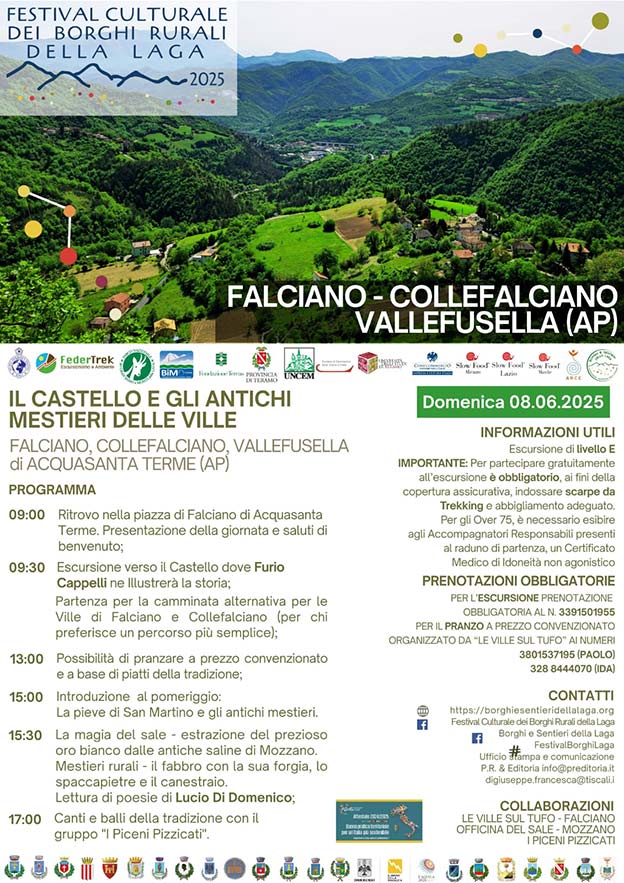
One of these events will be held this Sunday, June 8—the Festival Culturale dei Borghi Rurali della Laga, or Cultural Festival of the Rural Villages of Laga.
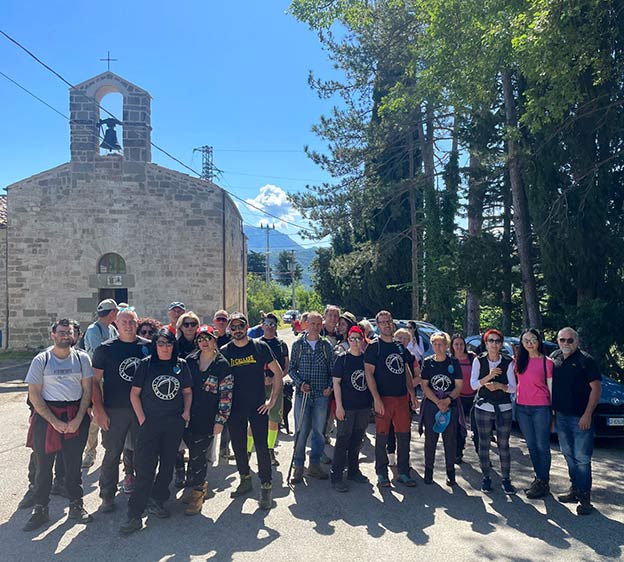
Activities will include an hike to the foundation of a medieval castle once situated on a cliff above Falciano; walks through the villas of Falciano and Collefalciano, a talk about “the magic of salt—extraction of this precious white gold from the ancient salt mines of Mozzano”; demonstrations of rural professions, including those of the blacksmith with his forge, the stone-breaker, and the basket maker; a reading of poems by Lucio Di Domenico; and traditional songs and dances performed by the group I Piceni Pizzicati.
This year attention will also be given to a more recent chapter of the village’s history—the protection of escaped Allied prisoners of war in 1943–44 by the compassionate Falcianesi.
The event in Falciano is one of a series of area events to keep interest in the mountain villages alive.

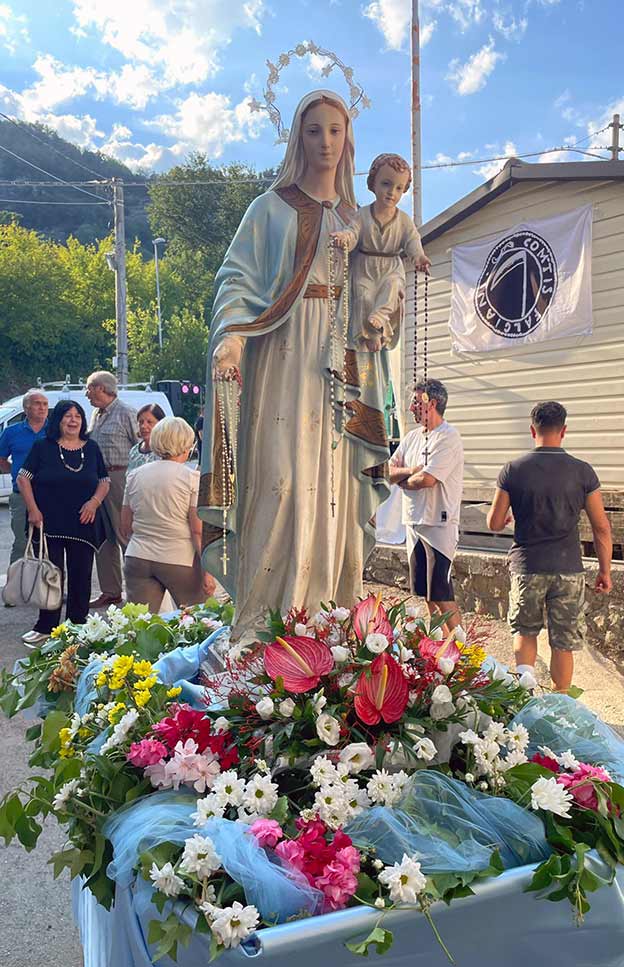
Community Rituals
Ritual activities inspired by the parish church of San Martino are another way the Falcianesi celebrate community.
The patron saints of Falciano are the Madonna del Rosario (Our Lady of the Rosary) and San Martino. In Italy, processions featuring the carrying through the streets of the figures of saints are an important part of religious celebrations, particularly on a saint’s feast day or during Holy Week.
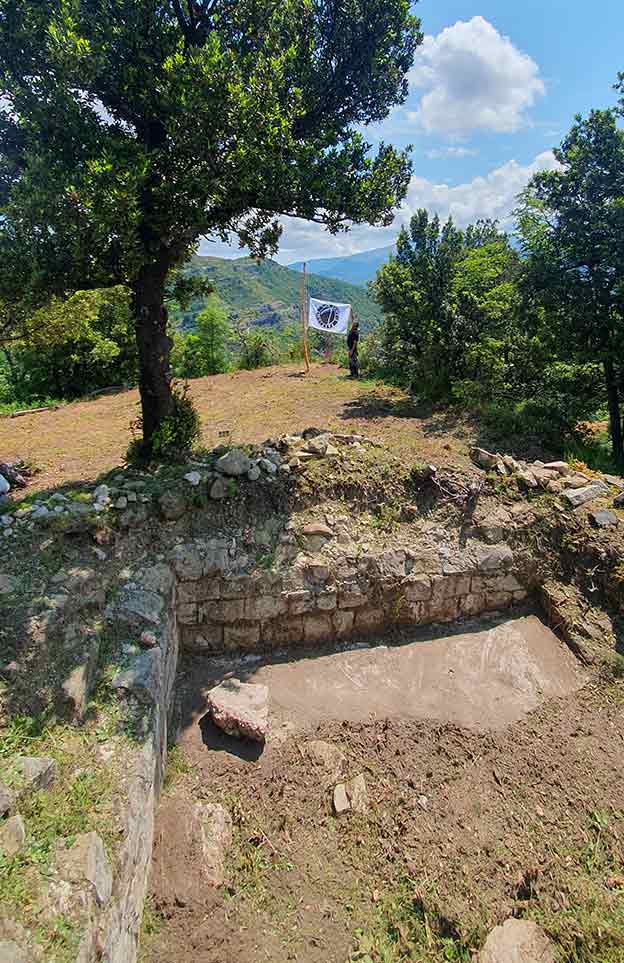
Ruins of the Falciano Castle
Le Ville sul Tufo president Giuseppe Gagliardi has researched and written about the history of the medieval castle that once perched high over Falciano. In a paper on this topic, written in Italian, he explains: “Falciano is a hamlet of the municipality of Acquasanta Terme in the province of Ascoli Piceno. In the Middle Ages the place names for this area varied: Falcianum, Fazzano, Fazano.”
The first document attesting to the existence of a castle in Falciano—a parchment referencing military action—is dated 14 April 1285.
“The castle was built atop a cliff overlooking the ancient villas of Colle, Falciano, and Vallefusella, with its parish church dedicated to San Martino of Tours,” Giuseppe writes.
“The site can be reached by a somewhat demanding climb and is rarely visited. The area, which had been covered by scrub, has been cleared of the brush by the association Le Ville sul Tufo without carrying out any type of excavation. The surviving structures consist of a wall overhanging the cliff and a small room constructed of squared stones bound with mortar.


 Camp 59 Survivors