

I have written about the sheltering in Falciano of escaped prisoners of war from Camp 59 in 1943–44, but I have not had the pleasure of seeing the village in person.
When Gian Paolo Ferretti—great-grandson of Antonio Ferretti, who helped to protect the escapees—invited my friend Anne Copley to Falciano for a tour, I was excited for her, but wishing I could join them.
So I was delighted when, a few days later, Anne sent me notes on her visit and a slideshow of some 20 images she took while there.
“Paolo pointed out that in the ’40s there was no road to the village, just footpaths and mule tracks,” Anne explained. ”It would have been pretty safe as a hiding place, as it would have taken the Germans an hour to reach Falciano from Aquasante Terme. The two spies in the village would have only been able to deliver information that would have been out-of-date by the time they got down into the valley.
“At its height there were over 100 people living up in Falciano. All the now heavily-wooded land would then have been cultivated—everywhere terraced for growing crops. The locals mostly owned their land, rather than working it as sharecroppers. It’s a very different landscape to where I live in Montefalcone—very steep hills and nowhere available as actual fields.
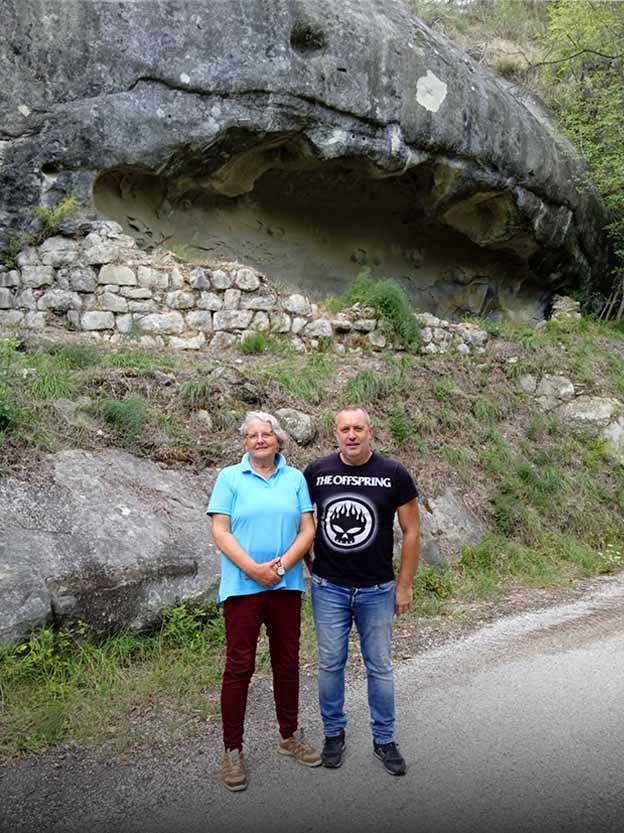
“There are lots of little waterfalls and fonte, where a stone trough was carved out to capture the water. And there are amazing rock formations making grottos where produce was stored and animals kept—and where the escapers were sheltered, with villagers bringing them food on a rota system. Each overhanging rock was fashioned (carved by hand) so that a lip prevented the rain running down inside and ruining the stuff stored there. Since they were taxed according to the number of animals they had, a few were hidden away in these grottoes!
“Paolo and a few friends have done amazing work clearing paths and putting up signs. He’s very committed to the area and its history. He proudly showed me a fonte created by his great-grandfather—he dug it out from under several metres of soil. It now contains a few goldfish in the clear spring water!
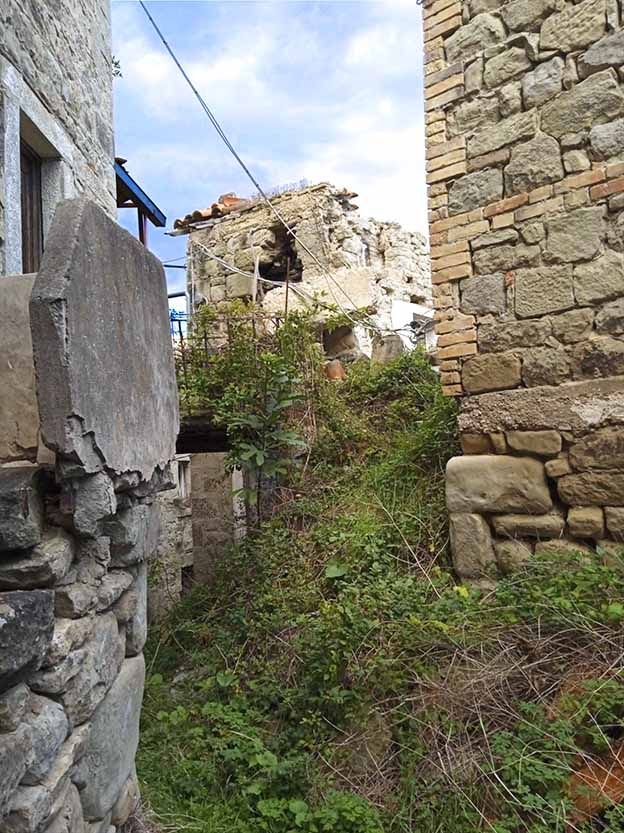
“Whilst in the village we pushed through an overgrown path to a part that looked over the vertiginous drop down into the valley. Paolo said it was the first time in forty years he’d been there. I asked if it made him sad—he said no, but he clearly wants the stories to be remembered.”
Sadly, Falciano was abandoned after severe earthquake damage left the buildings uninhabitable and beyond repair.

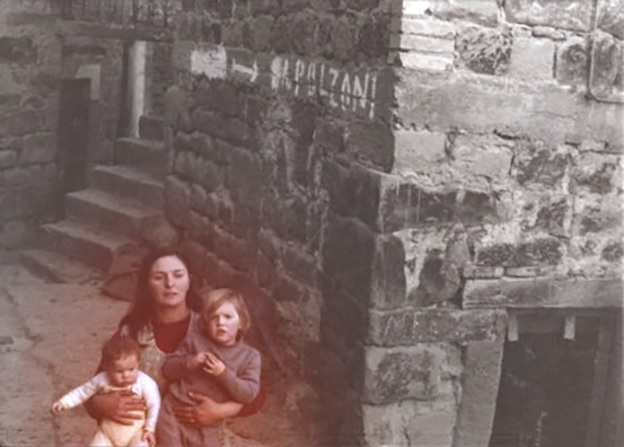
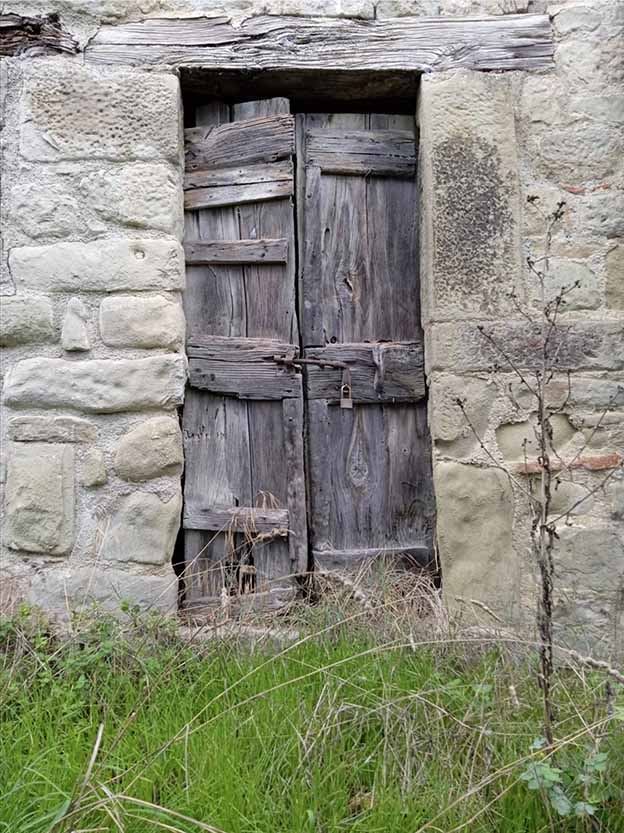
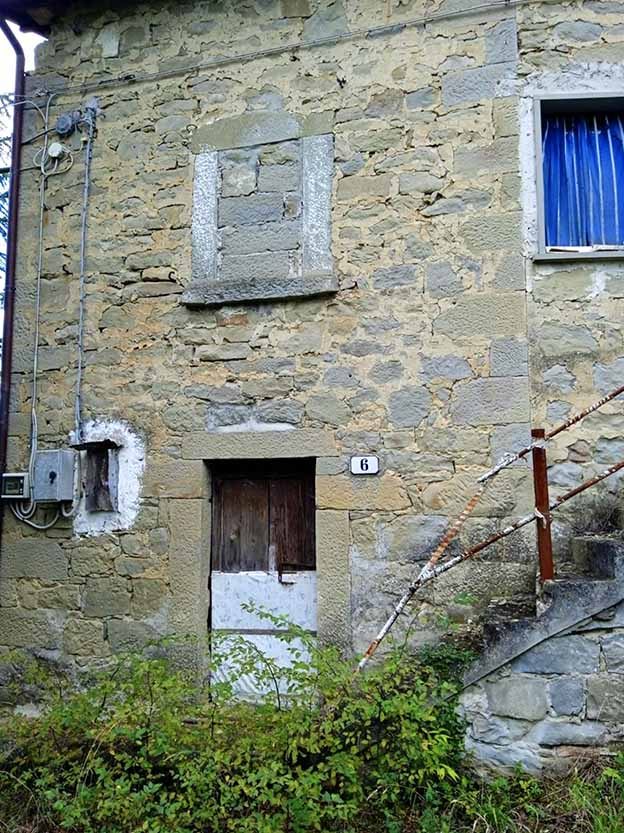
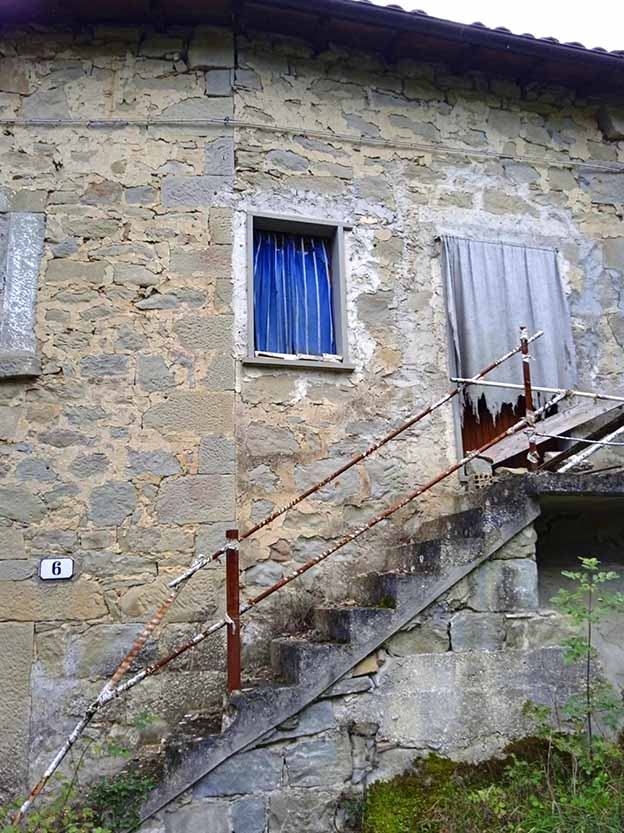
Antonio Ferretti’s Home


Looking at Anne’s beautiful photos of abandoned Falciano, I’m reminded of a reflection shared by architect and writer Christopher Alexander in his now-classic 1979 treatise on architecture, The Timeless Way of Building.
Christopher noted that there’s an age-old process by which people of every society have taken order for their lives from the world in which they live:
“There is one timeless way of building.
“It is thousands of years old, and the same today as it has always been.
“The great traditional buildings of the past, the villages and tents and temples in which man feels at home, have always been made by people who were very close to the center of this way … this way will lead anyone who looks for it to buildings which are themselves as ancient in their form as the trees and hills, and as our faces are.
“It’s a process through which the order of a building or a town grows out directly from the inner nature of a people, and the animals, and plants, and matter which are in it.”
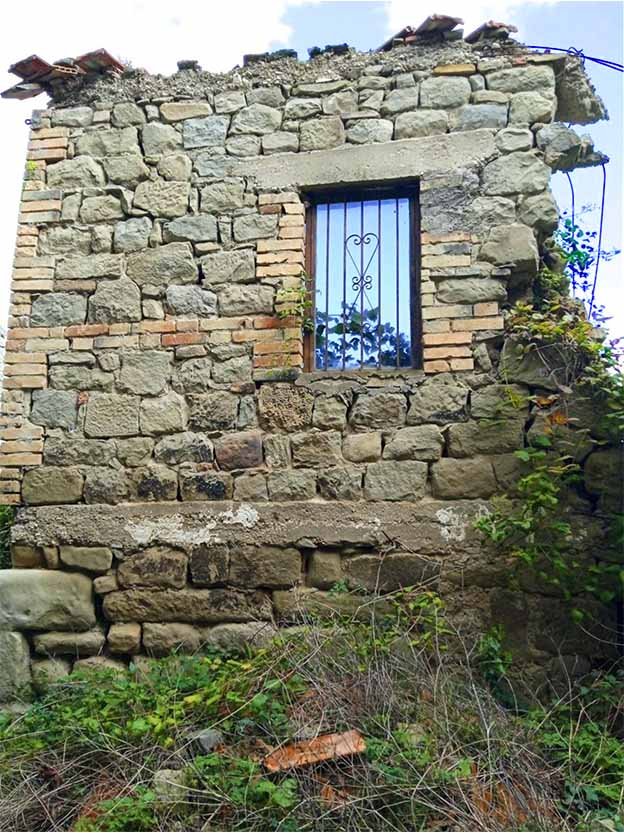
In Falciano we see that winding streets and layout of buildings conform to contours of the rugged landscape, and blocks for building were quarried from local stone. As Anne notes, mountain springs provided the village with abundant fresh water, and—with thoughtful alterations—caves were employed as storehouses and natural stables for livestock. Farmers terraced the land in order to plant grain and vegetables.
In short, every aspect of the inhabitants’ lives—including their architecture—was in harmony with the world around them.
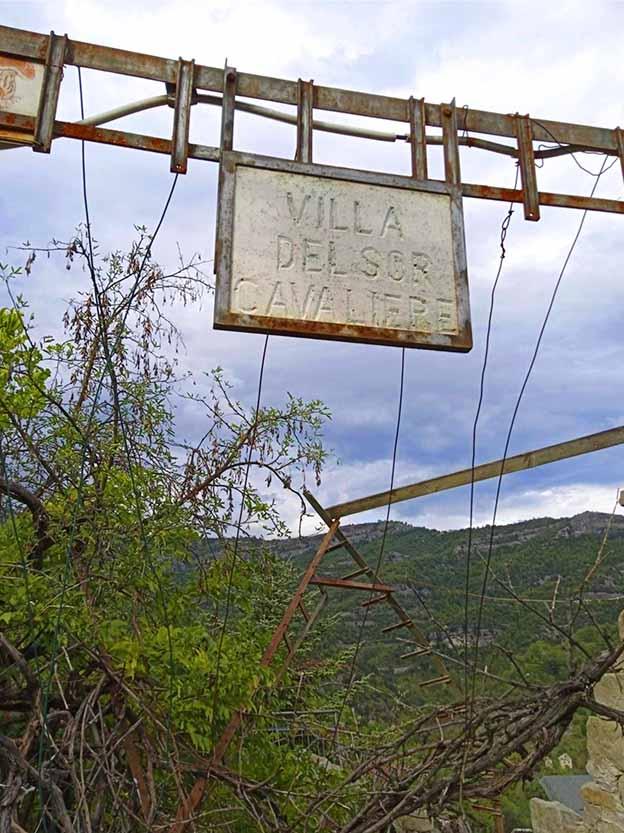
The Falciano Village-scape





Chiesa di San Martino and “New Falciano”
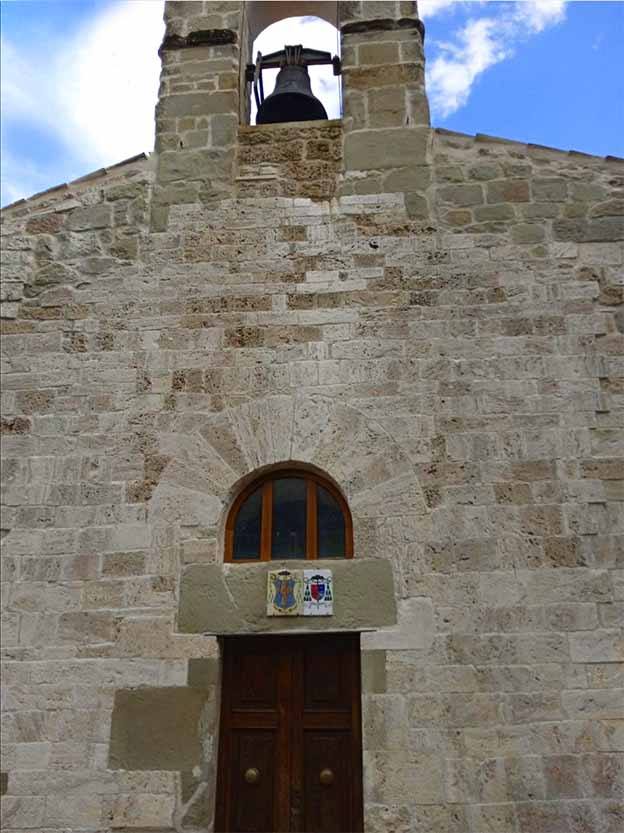
Anne writes, “The church, dedicated to Saint Martin, is 16th century, probably built on the site of an earlier one. It’s a bit lower than the actual village, which we reached by a tiny road.”
Newer homes are now clustered around the church in what Paolo calls “new Falciano,” not far from the ruins of Falciano.
Paolo explains, ”Before the earthquake of 2016, in old Falciano there lived only three persons. Today no one lives there.
“Now there are 15 residents, but they are all of new Falciano. Before 2016 there were also my parents and other two families.”


Read also ”Keith Argraves and Friends—‘Prisoners and Fugitives,’” “Antonio Ferretti—A Welcome in Falciano,” and “Captain Saturnino Brandimarte—From Erstwhile Enemy to Ardent Protector.”
 Camp 59 Survivors