
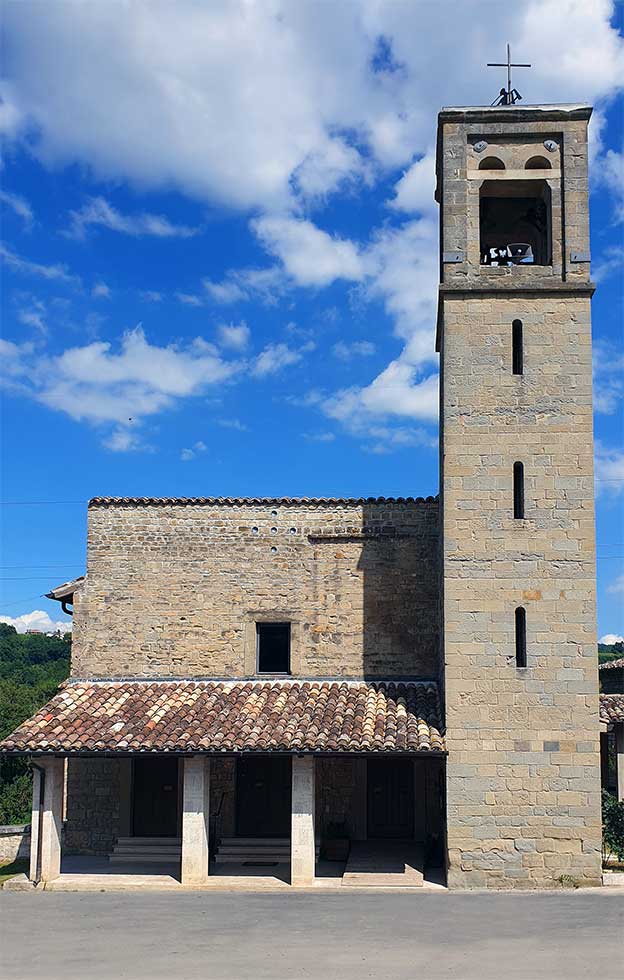
An entry for 17–21 May 1938 from the “chronicon” of Don Giuseppe Ciabattoni offers insight into the turbulent political climate in Italy that presaged World War II. (The priest’s chronicon was a journal where activities of the parish were recorded.)
Then, in the latter two entries in this post, Don Peppe—as he was affectionately called by his parishioners—contrasts the oppression of war with the joy and spirit of thanksgiving felt by the parishioners after liberation from the Nazis.
Don Peppe used the phrase “in casa di Pietro” “(in Peter’s house”) in sharing the story of his own arrest and imprisonment by the fascists. This allusion is to the Biblical imprisonment and beating of Saint Peter.
I’ve recently posted another excerpt from Don Peppe’s chronicon on Camp 59 Survivors, an entry covering the period of Nazi-fascist oppression from 8 September 1943 to liberation on 17 June 1944. Read “Don Giuseppe Ciabattoni—A Hero of Faith.” That excerpt includes the Marsia parish’s escaped POW rescue work.
Chronicon excerpts are here translated into English; however, I’ve also included the original Italian transcription (in italics).
Once again I wish to thank Gian Paolo Ferretti for his ongoing support and for guiding me through the translation of the chronicon.
I’m grateful to Don Francesco Mangani, the current priest of the parish of Santo Stefano Protomartire in Marsia, Roccafluvione, for allowing me to share these entries from Don Peppe’s chronicon.
And, I am especially grateful to Antonio Ferretti for his generous work on my behalf in the parish archives. I know that Antonio and Don Francesco share my deep satisfaction in our bringing these words of Don Peppe to light for a new generation.
From the CHRONICON of the PREPOSITURE of S. STEFANO PROTOMARTIRE. MARSIA of ROCCAFLUVIONE (Ascoli Piceno)
Written by the parish priest Don Giuseppe Ciabattoni
An Atmosphere of Unrest
In Domo Petri1 from 17 May to 21 May 1938. Entry time 10:30 p.m. Escape at 7:30 p.m. Caution forces me to remain silent—silent for as long as the Lord desires. I therefore leave this page blank in the confident hope of being able to return later to close a painful chapter in my life. Painful, I say, due to the way I was treated and the humiliation I suffered. A remote—yet almost ever close—cause is my Parish Catholic Action, the successes I have had with young men and women. In the parish there are around 250 members—in all groups. [These groups were brotherhoods of prayer, Paolo explains, one of which was the “sainted souls of purgatory.” Typically there were separate groups for men and for women.] The people follow me—they willingly listen to the word of God and put it into practice. Each wish of the Parish Priest was immediately fulfilled. Very close cause. Hitler’s coming to Rome.2 [Paolo explains that Don Peppe was put in prison for different causes; the remote cause being his Parish Catholic Action and the very close cause being the attitude of Pope Pius XI towards the Führer during his visit to Italy.] A speech of Pope Pius on the fourth Sunday after Pascam on the enemies of Christ in his time. A comparison [of Christ’s time] to ours? [Paolo supposes the word Pascam is an archaic term for Easter, which is Pasqua in Italian.] At the police station first—in Fort Malatesta in the evening. I was approaching the tenth anniversary of the first Mass. [The “first Mass,” Paolo explains, is a reference to the first Mass celebrated after Don Peppe assumed the position as priest of the parish.] Deeply dismayed people—prayer that united them to me. Sudden return on the evening of the 21st. [While was imprisoned, Don Peppe was replaced by Don Achille Lupi. This passage refers to the return of Don Peppe to the church upon his release.] In the church it seemed that everyone knew. An extraordinary crowd of men and women!! And yet the same Secretary to the Bishop Don Achille Lupi had come to replace me on the next day, which was Sunday!! The demonstration of all these good people upon my spontaneous and sudden return moved me to the point of tears. They held me, kissed my hands (and the men also my face). The memory of this return is indelibly written in the heart. Et de hoc, hodie, satis…3
1 “In Peter’s house.” This phrase is used to mean “in prison,” alluding to the imprisonment of Saint Peter.
2 On 3–9 May 1938, Adolf Hitler was welcomed with great pomp by the fascist government in a state visit to Italy, with stops in Rome, Naples, and Florence. It was expected that the Rome stop would include a private audience with the Pontiff and a visit to the sacred buildings owned by the Vatican. Contrary to expectations, Pope Pius XI prohibited religious houses from being decorated and declined to acknowledge the passage of the Führer, expressly asking that during his visit to the city, his transit not be routed through Via della Conciliazione (the primary avenue leading to St. Peter’s Square) or the vicinity of St. Peter’s. His resistance was motivated by the religious persecution that was taking place in Germany under the Nazi regime.
3 “And that’s enough for today.” This expression is used when one wants to put an end to a discussion.

Aere Turbinante
In Domo Petri1 dal 17 Maggio al 21 Maggio 1938. Ora d’ingresso 22.30. Di evasione ore 19.30. La prudenza mi obbliga a tacere – tacere fino a quando il Signore vorrà. Lascio perciò in bianco questa pagina, nella speranza fiduciosa di poter tornare a chiudere una parentesi dolorosa della mia vita. Dolorosa dico per il modo in cui fui trattato e per l’umiliazione subita. Causa remota ma quasi e sempre prossima la mia Azione Cattolica Parrle, i successi avuti coi giovani ed anche colle giovani – uomini e donne. In parrocchia i tesserati si aggirano a circa 250 – in tutti i gruppi. Il popolo mi segue – ascolta ben volentieri la parola di Dio e la mette in pratica. Un desiderio del parroco subito appagato. Causa prossimissima. La venuta di Hitler a Roma. Discorso del Papa Pio XI ripetuto in qualche sua frase.2 Vangelo della Domenica IV Post Pascam. I nemici di Cristo – ai suoi tempi. Ai nostri? Raffronto… In Questura dapprima – nel Forte Malatesta a sera. Mi avvicinavo al decennio della I.a Messa. Popolo profondamente costernato – preghiera che a me lo univa. Ritorno improvviso alla sera del 21. In Chiesa sembrava che si sapesse. Folla di uomini e donne straordinaria!! Eppure era venuto per sostituirmi lo stesso segretario del Vescovo Don Achille Lupi per il giorno dopo che era domenica!! La dimostrazione al mio ritorno spontanea ed improvvisa, di tutta questa buona gente, commossa fino alle lagrime, nello stringermi, baciarmi le mani, (gli uomini anche la faccia) resterà incancellabile nella memoria e nel cuore. Et de hoc, hodie, satis…3
1 ‹‹In casa di Pietro››: locuzione utilizzata per significare “in prigione”, con allusione alla prigionia di san Pietro.
2 Nel maggio del 1938, dal 3 al 9, Adolf Hitler, accolto in pompa magna dal governo fascista, aveva compiuto una visita di Stato in Italia, facendo tappa a Roma, Napoli e Firenze. Ci si aspettava che la tappa romana comprendesse anche un’udienza privata con il Pontefice, e la visita ai maggiori edifici sacri della Cattolicità. Contrariamente alle aspettative, però, Papa Pio XI assunse, verso il cancelliere tedesco, una posizione di totale contrasto, negandogli in maniera categorica sia l’udienza che l’accesso agli edifici sacri di proprietà del Vaticano. Proibì, inoltre, che le case religiose venissero addobbate e imbandierate per salutare il passaggio del Führer e chiese espressamente che nel corso della sua visita alla città, non se ne programmasse il transito da via della Conciliazione o dai dintorni di San Pietro. Tale rigore, fu motivato dalla persecuzione religiosa che stava avvenendo in Germania sotto il regime nazista
3 ‹‹E di questo, per oggi, è abbastanza››: l’espressione, è usata quando si vuole porre fine a un discorso.
17 June 1944. Liberation of Italy from Nazi-fascism.
Southern and central Italy to the Metauro [River] (skirmishes). Now we can talk. And the blank page waited …. We have not been clear above regarding my incarceration for fear of a fascist search of the house—just as it indeed happened. In an infamous speech I blasted Nazism and fascism. In the heat of speaking, I recall saying “For a madman like Hitler, Italy under Mussolini spent 3 million [lire], while so many poor people languish in poverty.” “With its own ruination, Germany will drag us into the abyss too.” For documentation at the Ascoli Piceno Police Headquarters, see the file concerning the Parish Priest of Marsia who was warned and subjected to the ritual police investigation fingerprinting ceremony. Attention! Dangerous anti-fascist.5 I skillfully refuted what I so clearly had said by attempting to twist in the most deft way the incriminating phrases—that [yet] could not be denied. His Excellency Bishop [Ambrogio] Squintani was supportive and helpful to me, interposing the good offices in Rome (Ministry of the Interior) through his associate, “big shot” Monsignor Guarneri. Likewise, before the Prefect of Ascoli, he interceded with the engineer Marini Marino, dearest friend of one and all. In the unfortunate days [of my] imprisonment, within the city and without there was talk of execution, confinement, life imprisonment, etc. And I waited confidently, although anxiously, for a few days because the fascists were not to be joked about. Cloth and scissors in hand. [This may be a reference to torture employed by the fascists.] I was consoled in that place by the prayers of parishioners, the visits of confreres, in a special way a personal visit of my Bishop, and the affection of my relatives. I had access to two magazines. I don’t remember the titles. I read and reread them. Of all the writing in the magazines, two sentences [are memorable]—one from Basin [likely Thomas Basin]: “The ringing bell passed through the fire”; the other from Mercier [likely Louis-Sébastien Mercier]: “In life only those who do nothing do not make mistakes; however, their whole life is a mistake.” To a prisoner, both sounded good. Informers: Mayor Giuseppe Ruzzi (son of the late Domenico Ruzzi), Political Party Chief Massimi Domenico di Tito, [and] Dr. Frattari Antonio (fortunately not my parishioners, but local officials). Among the parishioners, the hypocritical Provincial Cantoniere Emidio Mestichelli took an active part. Evil witnesses [included] Vincenza Farina, Cicconi Vedova, Spinozzi Maria di Nazareno, [and] Corradetti Domenico, et cetera. [Acting] in good faith [were] Lino Poletti, Antonio Martini, Leopardi Celeste, etc. Once the hour of freedom was at hand, I could have sounded the hour of justice for them. However, for everyone [there was] forgiveness and the broadest reprieve.
4 Fear.
5 In the historical archive of the Police Headquarters of Ascoli Piceno, among the individuals subjected to political surveillance measures, we have found “Giuseppe Ciabattoni born in Spinetoli on 05/03/1904, parish priest of Marsia di Roccafluvione,” listed on the top of the file as an anti-fascist.
17 Giugno 1944. Liberazione d’Italia dal nazifascismo.
Italia meridionale e centrale fino al Metauro (scaramucce). Ora si può parlare. E la pagina in bianco aspettava… Non fu detto sopra tutto e chiaramente riguardo alla mia incarcerazione per tema4 di perquisizione fascista alla casa come avvenne. Nel famoso discorso bollai a sangue il nazismo e fascismo. Nella foga del dire ricordo di aver detto “Per un pazzoide che è Hitler l’Italia con Mussolini ha speso 3 milioni mentre tanti poveri languono nella miseria”. “La Germania con la rovina di se stessa trascinerà nell’abisso anche noi”. Vedere meglio in Questura di Ascoli Piceno il fascicolo che riguarda il Parroco di Marsia diffidato e sottoposto alla rituale, poliziesca cerimonia dell’Impronta digitale. Attenzione! Antifascista pericoloso.5 Abilmente negai quanto avevo detto così chiaramente girando o ritorcendo nel modo più benigno qualche frase inquinata e non potuta negare. Mi fu solidale e d’aiuto S. Eccellenza Mons Vescovo Squintani, interponendo buoni uffici a Roma (Ministero Interni) tramite congiunto “Pezzo grosso” Mons Guarneri. Ugualmente presso Prefetto Ascoli agì l’Ing. Marini Marino, carissimo amico dell’Uno e dell’altro. Nei giorni infausti del carcere, in città e fuori si parlava niente po’ po’ di meno di fucilazione, confino, carcere in vita etc. Ed io attendevo fiduciosamente, benché in orgasmo qualche giorno perché con i Fascisti non si scherzava. Panno e forbici in mano. Mi consolarono in quel luogo, la preghiera dei parrocchiani, la visita di confratelli, in modo speciale la visita personale del mio Vescovo e l’affetto dei miei congiunti. Due riviste con me. Non ricordo il titolo. Le avevo lette e rilette. Due frasi, l’una del Basin – tra le righe “La campana che suona è passata tra il fuoco” l’altra del Mercier “Ne la vita solo quelli che non fanno niente non fanno sbagli ma tutta la loro vita è uno sbaglio”. Per un carcerato suonavano bene e l’una e l’altra. Delatori: Ruzzi Giuseppe fu Domenico Podestà – Massimi Domenico di Tito Segretario Politico – Dott. Frattari Antonio (fortunatamente non miei parrocchiani) ma Gerarchi del luogo. Tra i parrocchiani prese parte attiva l’ipocrita Emidio Mestichelli Cantoniere Provinciale. Testimoni malefici Vincenza Farina Cicconi Vedova – Spinozzi Maria di Nazareno – Corradetti Domenico etc. In buona fede Lino Poletti, Antonio Martini, Leopardi Celeste etc. Suonata l’ora della libertà avrei potuto far suonare per costoro quella della giustizia – ma per tutti il perdono ed il più ampio.
4 Timore.
5 Nell’Archivio storico della Questura di Ascoli Piceno, tra gli individui sottoposti a misure di vigilanza politica, troviamo effettivamente ‹‹Ciabattoni Giuseppe nato a Spinetoli il 03-05-1904, parroco di Marsia di Roccafluvione, annoverato sulla camicia del fascicolo come antifascista››.
A vote. The Madonna of Loreto statue in Vetoli.
8 December 1952. During the Nazi-fascist period, an attempt was made to set the hamlet on fire [in retribution] for the hospitality given to English and American prisoners who escaped from the Servigliano Concentration Camp [PG 59] after the fall of fascism. The hamlet was not set aflame, but it was subjected to violence, which was inflicted also on the Parish Priest. In response to this prodigious event and for the political elections of 1948—the liberation of Italy from Bolshevism—a vote was taken for a statue to be placed in the oratory—a copy of the Madonnina [statue of the Virgin Mary] di Loreto. Since 1948, every year on the first Sunday of May we climb the hill for celebration of a Mass and a procession of thanksgiving. A devout person from Ascoli, invited by the Parish Priest, offered the sum of £50,000 for the expense, delivered to the director of the Holy House of Loreto to commission in Val Gardena a statue modeled after the one in Loreto by Professor Celani. On the morning of 13 November 1952, attended by three coaches of 150 pilgrims, the Madonnina was taken to the Holy House, blessed by Bishop Monsignor Malchiodi, [who then] celebrated the Holy Mass, amplified by loudspeaker, with comments offered by the Parish Priest. [Monsignor Gaetano Malchiodi (1878–1965) from Piacenza was Vicar of the Papal Administration of Loreto from 1935 to 1960]. Day of faith!! In the evening, welcome in Marsia—the ringing of bells, fireworks, luminarie, and bonfires in the countryside. A stop of the Madonnina in the Marian parish in order for prayers to be offered to the Madonna, with preaching by Father Angelo d’Anghiari, Director of the Holy House of Loreto [from the “Annali Santa Casa” bulletin, December 1952]. At 1 p.m. on 8 December 1952, despite freezing cold and a sky threatening snow, solemnly, preceded by an endless procession, with music, gunshot, et cetera, the statue was taken by way of Marese to the Oratory of Vetoli. “Hail, hail, hail Mary.” A new song, “Mary lived in the land of the East,” composed by the music director [Volpi] of the Loreto Chapel, was set to the words of Bishop Malchiodi. The Madonnina is up there still, “Listening vigilently”12 to Marsia.
10 Monsignor Gaetano Malchiodi (1878–1965), from Piacenza, was Vicar of the Papal Administration of Loreto from 1935 to 1960.
11 “At the request of the zealous Parish Priest of Marsia, in the municipality of Rocca Fluvione (Ascoli Piceno), Reverend Don Giuseppe Ciabattoni, a wooden copy of the Holy Statue was made, which, first blessed in Santa Casa [which is within the Basilica of Loreto] by His Excellency the Monsignor Bishop [Gaetano Malchiodi], was transported to Marsia, accompanied by around 150 pilgrims and the Director of the Congregation.” (from the “Annali Santa Casa” bulletin, December 1952).
12 “Vigilent Sentry.”
Un Voto. La Statua Madonna di Loreto a Vetoli.
8 Dic. 1952. Periodo nazifascista la frazione doveva essere incendiata per l’ospitalità data a prigionieri inglesi-americani fuggiti dal Campo di Concentramento di Servigliano dopo la caduta del Fascismo. Risparmiata, subì violenze insieme al Parroco. Per tale avvenimento prodigioso e per l’altro delle elezioni politiche del 1948 – liberazione d’Italia dal bolscevismo – si fece voto di una Statua da collocare nell’Oratorio, copia della Madonnina di Loreto. Intanto dal 1948 ogni anno nella prima domenica di Maggio si salisce il Colle per la celebrazione di una Messa e Processione, ringraziamento. Una Pia Persona di Ascoli, invitata dal Parroco offre la somma di £ 50.000 – per la spesa, che viene consegnata al Direttore della S. Casa di Loreto per far eseguire in Val Gardena la Statua conforme a quella esistente in Loreto del Prof. Celani. Il mattino del 13-11-1952 – con tre pullman di 150 pellegrini – fu prelevata la Madonnina nella S. Casa, benedetta dal Vescovo Mons. Malchiodi10 che poscia celebrò la S. Messa commentata all’altoparlante dal Parroco. Giornata di fede!! A sera accoglienza a Marsia – suono di campane e spari con tanta popolazione, luminarie e falò in campagna. Sosta della Madonnina in Parrocchia e giornate mariane con predicazione di P. Angelo d’Anghiari – Direttore della S.Casa di Loreto.11 Alle ore 13 dell’8 Dicembre 1952 nonostante un gelido freddo – con cielo minacciante la neve – la Statua solennemente – preceduta da un’interminabile processione, con musica, spari etc fu portata Via Marese all’Oratorio di Vetoli. “Ave, ave, ave Maria”. Un canto nuovo “In terra d’Oriente viveva Maria” – fatto dal Maestro della Cappella di Loreto “Volpi” parole del Vescovo Malchiodi. E la Madonnina è lassù “Scolta vigile”12 di Marsia.
10 Il piacentino Monsignor Gaetano Malchiodi (1878–1965) è stato Vicario dell’Amministrazione Pontificia di Loreto dal 1935 al 1960.
11 ‹‹A richiesta dello Zelante Parroco di Marsia, in comune di Rocca Fluvione (Ascoli Piceno), Rev. Don Giuseppe Ciabattoni, fu fatta fare una copia in legno della Sacra Statua, che, benedetta prima in S. Casa da S. Ecc. Mons. Vescovo, fu trasportata a Marsia, accompagnata da circa 150 pellegrini e dal Direttore della Congregazione›› (dal Bollettino “Annali S.Casa” – Dicembre 1952).
12 “Sentinella vigile”.
 Camp 59 Survivors