
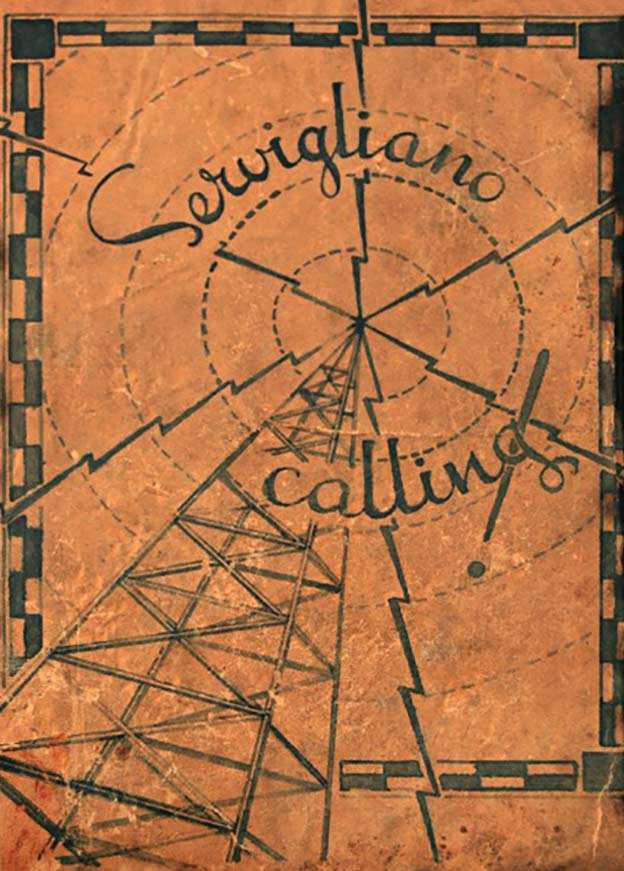
Robert Dickinson’s prison camp diary, Servigliano Calling, is filled not only with details about Robert’s daily life as a prisoner (a daily activity log, letters and cards sent and received, parcels received, lists of contents of Red Cross parcels, and more). It contains items of artistic merit—34 poems by several PG 59 camp poets, with titles in beautiful calligraphy and hand-lettering—often accompanied by clever illustrations.
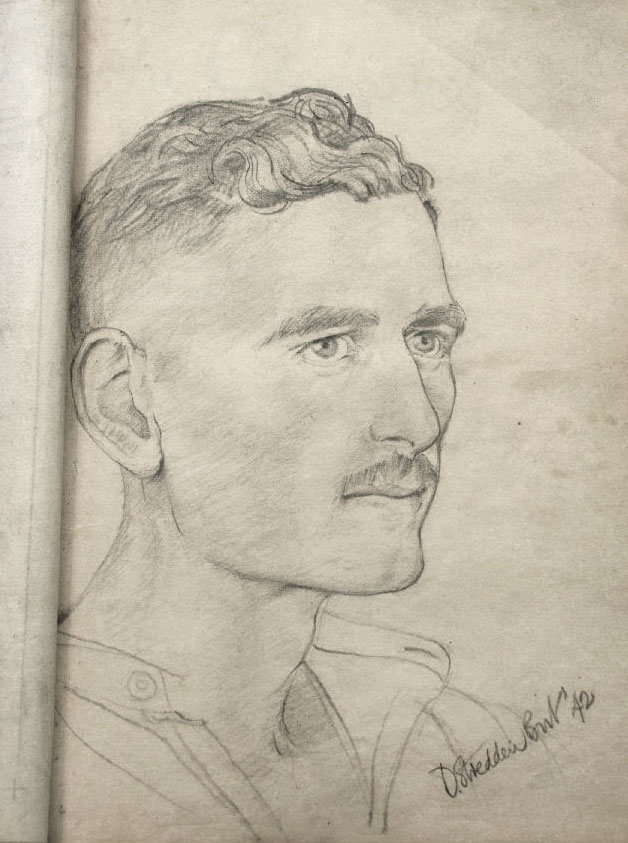
The most impressive illustrations are the front cover, the title page, and a full-page portrait of Robert signed by Sergeant D. Stredder Bist.
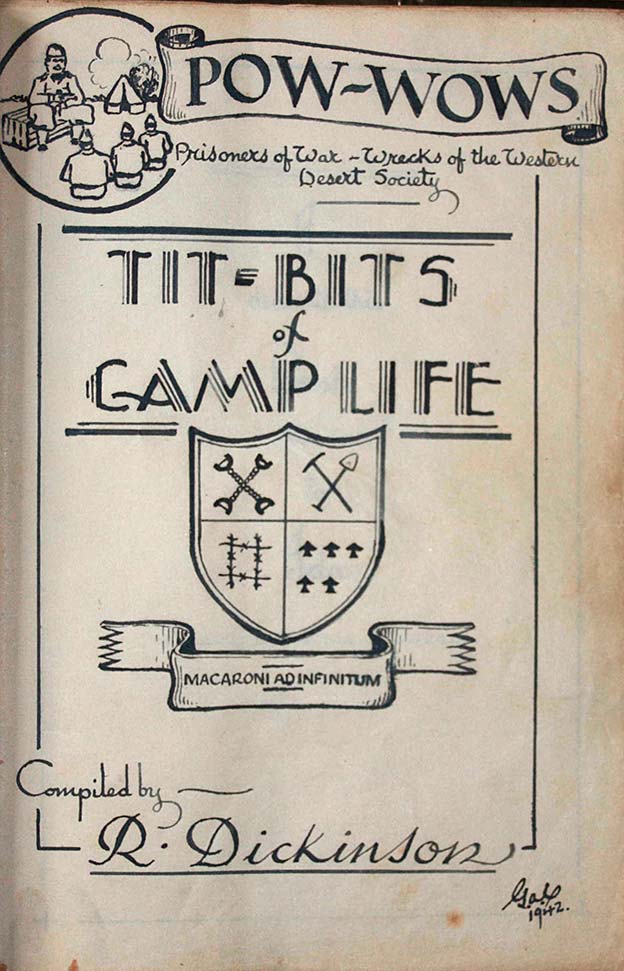
“The initials on the title page could be G.A.C.” said Steve Dickinson, Robert’s nephew. “In the address list there is a George A. Crawford.”
In Servigliano Calling, the address given for George A. Crawford is 259. Ivydale Road. Waverly Park. London. S.E. 15.
“G. A. Crawford” wrote two of the poems in the book: There’ll always be an England and If, with apologies to the late Rudyard Kipling.
Steve has recently learned a few things about D. Stredder Bist.
On the artbiogs.co.uk website dedicated to British and Irish artists of the 20th century, Steve found this description of Derek Stredder Bist: “Painter, who studied at the Croydon School of Art. Following war service, during which he was a prisoner of war for three and a half years, he became a freelance artist and illustrator.” The site indicates he died in 1988.
The catalogue description for Bist (WO 416/31/170) on the British National Archives website offers this information:
Derek Stredder Bist was born 24 July 1917 in Croydon, UK. He served as a sergeant in the Royal Armoured Corps of the British Army (service number 421032). He was captured on 21 November 1941 at Sidi Resegh. Ultimately, he was interned in Stalag IVB Muhlberg; his POW number was 228067.
Steve said, “He was captured two days before Robert in Sidi Resegh—the same battle Robert was in.
“I’ve never heard of Stredder or Bist as surnames. Bist seems to originate from India. Maybe one of his parents was Indian?”
Indeed, I learned from the site forebears.io, which is dedicated to names and genealogy resources, that “Bista was derived from bishishta, meaning distinguished in the Khas Nepali kingdom. Bista was a title given to feudal lords and baron landholders in the ancient Khas Kingdom. In Uttarakhand Bista has variants such as Bisht and Bist.”
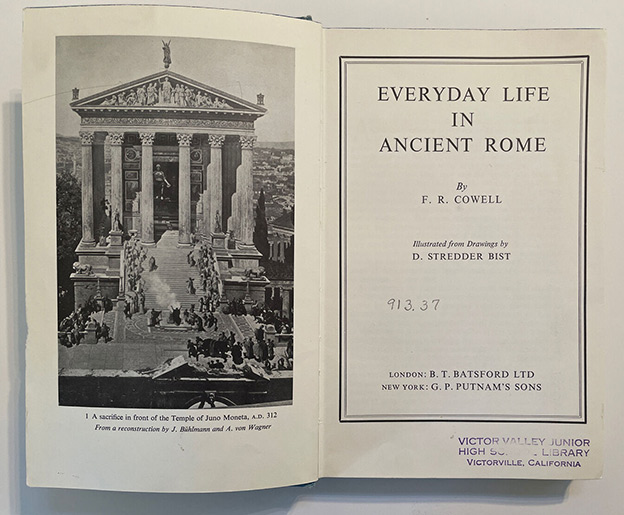
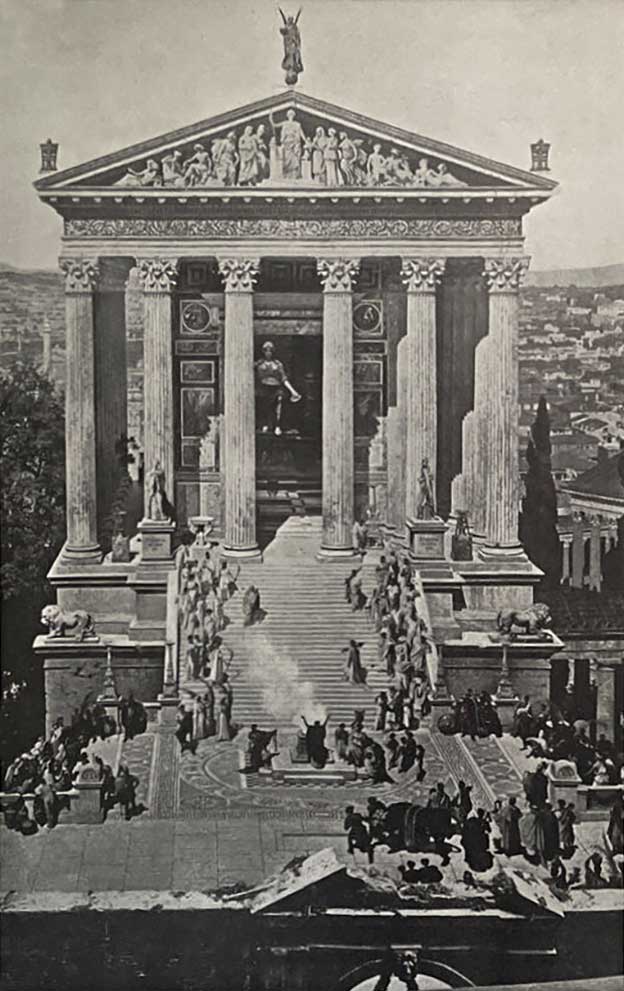
Steve also learned that after the war one of Bist’s projects was the illustration of the book Everyday Life in Ancient Rome, by F. R. Cowell (1961, London: B. T. Batsford, Ltd. / New York: G. P. Putnam’s Sons).
“I have purchased a hardback, eighth impression, from 1973” Steve said. “Not too bad condition, as it still has its dust cover.”
Robert mentioned Sgt. Bist twice in his diary: he noted the day Bist drew his portrait, and he mentioned the commencement of art lessons taught by the sergeant:
May 13th   [1942]
Portrait drawn by Sgt. Bist a London artist.

Jun 24th [1942]
First art lesson under Sgt. Bist.
Bist was noted in the “Alphabetical List” (Italy: Imperial Prisoners of War Alphabetical List, Section 1, British Army, issued by the War Office during the war) as being interned in PG 53 Macerata. Robert Dickinson and his best friend Denis Crooks were also listed as being interned in PG 53.
As the list does not contain a publication date, I’m uncertain of when it was released. It is, of course, a snapshot in time, since most POWs were held in more than one camp during their time of internment.
As Robert is identified in the list as being interned in PG 53, publication of the list would logically have been sometime during the four months Robert was in that camp (24 January–21 May 1943).
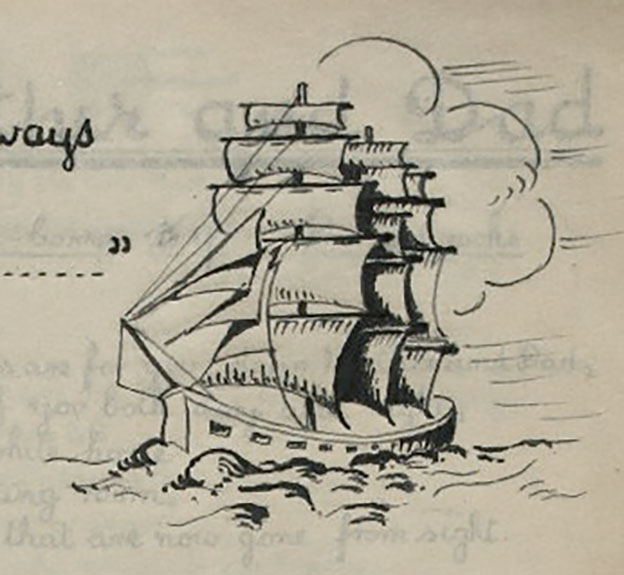
Apparently Robert himself was engaged in illustrating and hand-lettering, for he wrote in his diary on 18 July 1942: “Doing a lot of titles and sub titles for different chap’s books similar to this.”
Steve said, “From the above comment I think Robert did most of the titles in the diary. Cards sent home with similar images would also suggest Robert did most, as there are similarities.” See “The Christmas Ship.”

 Camp 59 Survivors